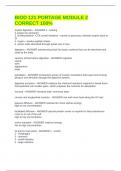
BIOD 121 PORTAGE MODULE 2
CORRECT 100%
protein digestion - ANSWER 1. cooking
2. pepsin (in stomach)
3. cholecystokinin -CCK (small intestine) - travels to pancreas, releases trypsin back to
SI
4. trypsin - breaks peptide chains
5. amino acids absorbed through portal vein to liver
digestion - ANSWER transforming food into basic nutrients that can be absorbed and
used by the body
sensory stimuli before digestion - ANSWER cognition
sound
odor
appearance
taste
peristalsis - ANSWER Involuntary waves of muscle contraction that keep food moving
along in one direction through the digestive system.
digestive enzymes - ANSWER catalyze the chemical reactions required to break down
food particles into smaller parts, which prepares the nutrients for absorption
mucosa - ANSWER intestinal wall, innermost layer
circular and longitudinal muscles - ANSWER mix and move food along the GI tract
passive diffusion - ANSWER substances move without energy
high to low concentration
facilitated diffusion - ANSWER special protein carrier is required to help substances
cross in or out of the cell
high to low concentration
active transport - ANSWER requires energy
low to high concentration
GI tract 6 main parts - ANSWER 1 - mouth
2 - esophagus
3 - stomach
4 - small intestine
5 - large intestine
, 6 - rectum
GI tract accessory organs - ANSWER salivary glands, liver, gallbladder, pancreas
mouth - ANSWER alter food particles for swallowing
mechanical and chemical digestion
saliva - ANSWER mucus plus digestive enzymes
mucus - ANSWER lubricates food particles for swallowing
salivary amylase - ANSWER Enzyme in saliva that breaks down starch
lingual lipase - ANSWER a fat-splitting enzyme secreted by cells at the base of the
tongue
esophagus - ANSWER transports food to the stomach
epiglottis - ANSWER a flap of cartilage that covers the trachea while swallowing
sphincter muscle - ANSWER circular muscle at the end of esophagus, prevents
backflow of food
stomach - ANSWER 4 cup capacity
holds food 2-4 hrs until ready to pass into the small intestine
store, mix, dissolve, and continue the digestion of food
gastric juice - ANSWER The acidic secretion of the stomach
prepares proteins for digestion and activates enzymes
pepsin - ANSWER An enzyme present in gastric juice that breaks down proteins
gastric lipase - ANSWER enzyme to digest fat
chyme - ANSWER Partially digested, semiliquid food mixed with digestive enzymes and
acids in the stomach
moves to small intestine over 1-4 hrs
gastrin - ANSWER hormone secreted in the stomach
controls acidity, counteracted by mucus
produced when we think about eating and during ingestion
Intrinsic factor - ANSWER vital glycoprotein produced in the stomach. In order for
vitamin B-12 to be absorbed, intrinsic factor must be present.
pyloric sphincter - ANSWER Controls passage of food from stomach to small intestine
CORRECT 100%
protein digestion - ANSWER 1. cooking
2. pepsin (in stomach)
3. cholecystokinin -CCK (small intestine) - travels to pancreas, releases trypsin back to
SI
4. trypsin - breaks peptide chains
5. amino acids absorbed through portal vein to liver
digestion - ANSWER transforming food into basic nutrients that can be absorbed and
used by the body
sensory stimuli before digestion - ANSWER cognition
sound
odor
appearance
taste
peristalsis - ANSWER Involuntary waves of muscle contraction that keep food moving
along in one direction through the digestive system.
digestive enzymes - ANSWER catalyze the chemical reactions required to break down
food particles into smaller parts, which prepares the nutrients for absorption
mucosa - ANSWER intestinal wall, innermost layer
circular and longitudinal muscles - ANSWER mix and move food along the GI tract
passive diffusion - ANSWER substances move without energy
high to low concentration
facilitated diffusion - ANSWER special protein carrier is required to help substances
cross in or out of the cell
high to low concentration
active transport - ANSWER requires energy
low to high concentration
GI tract 6 main parts - ANSWER 1 - mouth
2 - esophagus
3 - stomach
4 - small intestine
5 - large intestine
, 6 - rectum
GI tract accessory organs - ANSWER salivary glands, liver, gallbladder, pancreas
mouth - ANSWER alter food particles for swallowing
mechanical and chemical digestion
saliva - ANSWER mucus plus digestive enzymes
mucus - ANSWER lubricates food particles for swallowing
salivary amylase - ANSWER Enzyme in saliva that breaks down starch
lingual lipase - ANSWER a fat-splitting enzyme secreted by cells at the base of the
tongue
esophagus - ANSWER transports food to the stomach
epiglottis - ANSWER a flap of cartilage that covers the trachea while swallowing
sphincter muscle - ANSWER circular muscle at the end of esophagus, prevents
backflow of food
stomach - ANSWER 4 cup capacity
holds food 2-4 hrs until ready to pass into the small intestine
store, mix, dissolve, and continue the digestion of food
gastric juice - ANSWER The acidic secretion of the stomach
prepares proteins for digestion and activates enzymes
pepsin - ANSWER An enzyme present in gastric juice that breaks down proteins
gastric lipase - ANSWER enzyme to digest fat
chyme - ANSWER Partially digested, semiliquid food mixed with digestive enzymes and
acids in the stomach
moves to small intestine over 1-4 hrs
gastrin - ANSWER hormone secreted in the stomach
controls acidity, counteracted by mucus
produced when we think about eating and during ingestion
Intrinsic factor - ANSWER vital glycoprotein produced in the stomach. In order for
vitamin B-12 to be absorbed, intrinsic factor must be present.
pyloric sphincter - ANSWER Controls passage of food from stomach to small intestine