5/10/25, 6:20 PM AAAE ACE Operations Module 2
PATHOPHYSIOLOGY 6TH EDITION BANASIK TEST BANK EXAM
NEWEST VERSION WITH COMPLETE QUESTIONS AND
CORRECT DETAILED ANSWERS \\ACTUAL EXAM WITH
VERIFIED ANSWERS ASSURED PASS GRADED A+
\\BRAND NEW!
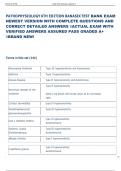
Terms in this set (144)
Rheumatoid Arthritis Type III hypersensitivity and Autoimmune
Asthma Type I hypersensitivity
Graves disease type II hypersensitivity and Autoimmune
Type II hypersensitivity
Hemolytic disease of the
newborn baby's red blood cells break down at an increased
rate
Contact dermatitis type IV hypersensitivity
Poststreptococcal Type III hypersensitivity
glomerulonephritis
type II hypersensitivity
type 1 diabetes mellitus
Autoimmune
Systemic Lupus Type III hypersensitivity
Erythematosus Autoimmune
allergic rhinitis type I hypersensitivity
type II hypersensitivity
myasthenia gravis
Autoimmune
/ 1/4
4
,5/10/25, 6:26 PM PATHOPHYSIOLOGY 6TH EDITION BANASIK TEST BANK:COMPLETE DOCUMENT |2024-2025 UPDATE Flashcards | Quizlet
Certain genotypes have a. major histocompatibility complex (MHC) genes
been shown to be
associated with a higher
risk of developing
autoimmune diseases.
These genes are of the
class:
a. major histocompatibility
complex (MHC) genes
b. T-cell recpeptor genes
c. B-cell anitbody genes
d. interleukin (IL)N genes
Antibiodies are the d. the type IV (delayed) reaction
mediators of all of the
hypersensitivity reactions
except:
a. the type I (anaphylactic)
reaction
b. they type II (cytotoxic)
reaction
c. the type III (immune
complex) reaction
d. the type IV (delayed)
reaction
… 2/44
,5/10/25, 6:26 PM PATHOPHYSIOLOGY 6TH EDITION BANASIK TEST BANK:COMPLETE DOCUMENT |2024-2025 UPDATE Flashcards | Quizlet
The antibody type IgE is a. Type I (anaphylactic) reaction
involved in which type of
hypersensitivity reaction?
a. Type I (anaphylactic)
reaction
b. Type II (cytotoxic)
reaction
c. Type III (immune
complex) reaction
d. Type IV (delayed)
reaction
Graft-versus-host disease d. Type IV (delayed) reaction
is an example of a
a. Type I (anaphylactic)
reaction
b. Type II (cytotoxic)
reaction
c. Type III (immune
complex) reaction
d. Type IV (delayed)
reaction
Severe Combined a. Type I (anaphylactic) reaction
Immunodeficiency (SCID)
is a disorder of:
a. Type I (anaphylactic)
reaction
b. Type II (cytotoxic)
reaction
c. Type III (immune
complex) reaction
d. Type IV (delayed)
reaction
… 3/44
, 5/10/25, 6:26 PM PATHOPHYSIOLOGY 6TH EDITION BANASIK TEST BANK:COMPLETE DOCUMENT |2024-2025 UPDATE Flashcards | Quizlet
Chronic stress may cause b. overproduction of cortisol
secondary
immunosuppression due
to:
a. overstimulation of the
bone marrow, leading to
failure
b. overproduction of
cortisol
c. impaired antibody
production
d. excessive
catecholamine release
Alterations in immune c. insufficient calorie and protein intake results in
function may be related to decreased numbers and function of T cells.
nutritional deficits or
excesses. An example of
this is:
a. deficiencies in Vit B12
affect production of
antibodies
b. excessive fat intake
decreases overall
lymphocyte production
c. insufficient calorie and
protein intake results in
decreased numbers and
function of T cells.
d. adequate amounts of
zinc and folate are
required for granulation
maturation
… 4/44
PATHOPHYSIOLOGY 6TH EDITION BANASIK TEST BANK EXAM
NEWEST VERSION WITH COMPLETE QUESTIONS AND
CORRECT DETAILED ANSWERS \\ACTUAL EXAM WITH
VERIFIED ANSWERS ASSURED PASS GRADED A+
\\BRAND NEW!
Terms in this set (144)
Rheumatoid Arthritis Type III hypersensitivity and Autoimmune
Asthma Type I hypersensitivity
Graves disease type II hypersensitivity and Autoimmune
Type II hypersensitivity
Hemolytic disease of the
newborn baby's red blood cells break down at an increased
rate
Contact dermatitis type IV hypersensitivity
Poststreptococcal Type III hypersensitivity
glomerulonephritis
type II hypersensitivity
type 1 diabetes mellitus
Autoimmune
Systemic Lupus Type III hypersensitivity
Erythematosus Autoimmune
allergic rhinitis type I hypersensitivity
type II hypersensitivity
myasthenia gravis
Autoimmune
/ 1/4
4
,5/10/25, 6:26 PM PATHOPHYSIOLOGY 6TH EDITION BANASIK TEST BANK:COMPLETE DOCUMENT |2024-2025 UPDATE Flashcards | Quizlet
Certain genotypes have a. major histocompatibility complex (MHC) genes
been shown to be
associated with a higher
risk of developing
autoimmune diseases.
These genes are of the
class:
a. major histocompatibility
complex (MHC) genes
b. T-cell recpeptor genes
c. B-cell anitbody genes
d. interleukin (IL)N genes
Antibiodies are the d. the type IV (delayed) reaction
mediators of all of the
hypersensitivity reactions
except:
a. the type I (anaphylactic)
reaction
b. they type II (cytotoxic)
reaction
c. the type III (immune
complex) reaction
d. the type IV (delayed)
reaction
… 2/44
,5/10/25, 6:26 PM PATHOPHYSIOLOGY 6TH EDITION BANASIK TEST BANK:COMPLETE DOCUMENT |2024-2025 UPDATE Flashcards | Quizlet
The antibody type IgE is a. Type I (anaphylactic) reaction
involved in which type of
hypersensitivity reaction?
a. Type I (anaphylactic)
reaction
b. Type II (cytotoxic)
reaction
c. Type III (immune
complex) reaction
d. Type IV (delayed)
reaction
Graft-versus-host disease d. Type IV (delayed) reaction
is an example of a
a. Type I (anaphylactic)
reaction
b. Type II (cytotoxic)
reaction
c. Type III (immune
complex) reaction
d. Type IV (delayed)
reaction
Severe Combined a. Type I (anaphylactic) reaction
Immunodeficiency (SCID)
is a disorder of:
a. Type I (anaphylactic)
reaction
b. Type II (cytotoxic)
reaction
c. Type III (immune
complex) reaction
d. Type IV (delayed)
reaction
… 3/44
, 5/10/25, 6:26 PM PATHOPHYSIOLOGY 6TH EDITION BANASIK TEST BANK:COMPLETE DOCUMENT |2024-2025 UPDATE Flashcards | Quizlet
Chronic stress may cause b. overproduction of cortisol
secondary
immunosuppression due
to:
a. overstimulation of the
bone marrow, leading to
failure
b. overproduction of
cortisol
c. impaired antibody
production
d. excessive
catecholamine release
Alterations in immune c. insufficient calorie and protein intake results in
function may be related to decreased numbers and function of T cells.
nutritional deficits or
excesses. An example of
this is:
a. deficiencies in Vit B12
affect production of
antibodies
b. excessive fat intake
decreases overall
lymphocyte production
c. insufficient calorie and
protein intake results in
decreased numbers and
function of T cells.
d. adequate amounts of
zinc and folate are
required for granulation
maturation
… 4/44