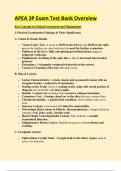
APEA 3P Exam Test Bank Overview
Key Concepts in Clinical Assessment and Management
I. Physical Examination Findings & Their Significance
A. Vision & Ocular Health
Visual Acuity Test: A result of 20/30 in the left eye and 20/40 in the right
eye on the Snellen eye chart indicates the need for further evaluation.
Puffiness of the Eyes: Dull, non-pitting periorbital edema suggests
nephrotic syndrome.
Papilledema: Swelling of the optic disc is due to increased intracranial
pressure.
Pterygium: A triangular conjunctival growth on the cornea.
Cataract: Clouding of the lens affecting vision.
B. Skin & Lesions
Lesion Characteristics: A dark, raised, and asymmetric lesion with an
irregular border is indicative of melanoma.
Scaling on the Scalp: Areas of scaling on the scalp with round patches of
alopecia are consistent with tinea capitis.
Keloid: A raised scar resulting from excessive collagen formation.
Cutaneous Cyst: A benign closed sac in the skin that may contain fluid.
Chondrodermatitis: A painful skin condition, often found on the ear or
nose.
Janeway Lesions: Associated with infective endocarditis.
Non-benign Skin Lesions in Elderly: Dermatophytosis, a fungal infection
causing a red, itchy, scaly, circular rash.
Hemorrhagic Vesiculopustular Lesions: May indicate a sexually
transmitted infection.
Inflammatory Breast Cancer: Rapidly progresses with erythema and
swelling.
C. Lymphatic System
Epitrochlear Lymph Node: A lymph node in the elbow region, used to
assess for infection.
, Right Lymph Duct Drainage: Drains lymphatic fluid from the right side
of the head, right upper thorax, and right arm, but not the right leg.
Epitrochlear Nodes: Located above the elbow, part of the lymphatic
system.
D. Musculoskeletal System
Calf Pain in Peripheral Artery Disease: A dull pain or cramp describes
lower extremity calf pain associated with peripheral artery disease
(claudication).
Kyphosis Findings: Symmetric thorax with decreased chest expansion
and diaphragm descending 2 cm bilaterally.
Osteosarcoma Symptoms: Commonly presents with bone pain and
tenderness.
Meniscal Tear: A positive McMurray's test indicates this injury.
Supraspinatus Muscle: Initiates shoulder abduction movement.
Scoliosis Concern: Greatest concern is a 13-year-old female with a 100°
curve.
E. Cardiovascular System
Jugular Venous Distention (JVD): A sign of heart failure, indicating
fluid overload.
Heart Failure: A condition with decreased cardiac output, causing
congestion.
Severe Acute Aortic Regurgitation Presentation: Includes sudden severe
shortness of breath and rapidly developing heart failure.
Cardiac Evaluation Indicators: An LDL of 190 mg/dL suggests further
evaluation.
F. Respiratory System
Common Finding in Asthma: Hypertrophy of smooth muscle.
Croup Symptom: Characteristic barking cough is common.
Atypical Pneumonia Findings: Includes low-grade fever, malaise, and
clear lung fields on auscultation.
G. Gastrointestinal System
Gastroesophageal Reflux (GERD): A condition with heartburn and
regurgitation symptoms.
Key Concepts in Clinical Assessment and Management
I. Physical Examination Findings & Their Significance
A. Vision & Ocular Health
Visual Acuity Test: A result of 20/30 in the left eye and 20/40 in the right
eye on the Snellen eye chart indicates the need for further evaluation.
Puffiness of the Eyes: Dull, non-pitting periorbital edema suggests
nephrotic syndrome.
Papilledema: Swelling of the optic disc is due to increased intracranial
pressure.
Pterygium: A triangular conjunctival growth on the cornea.
Cataract: Clouding of the lens affecting vision.
B. Skin & Lesions
Lesion Characteristics: A dark, raised, and asymmetric lesion with an
irregular border is indicative of melanoma.
Scaling on the Scalp: Areas of scaling on the scalp with round patches of
alopecia are consistent with tinea capitis.
Keloid: A raised scar resulting from excessive collagen formation.
Cutaneous Cyst: A benign closed sac in the skin that may contain fluid.
Chondrodermatitis: A painful skin condition, often found on the ear or
nose.
Janeway Lesions: Associated with infective endocarditis.
Non-benign Skin Lesions in Elderly: Dermatophytosis, a fungal infection
causing a red, itchy, scaly, circular rash.
Hemorrhagic Vesiculopustular Lesions: May indicate a sexually
transmitted infection.
Inflammatory Breast Cancer: Rapidly progresses with erythema and
swelling.
C. Lymphatic System
Epitrochlear Lymph Node: A lymph node in the elbow region, used to
assess for infection.
, Right Lymph Duct Drainage: Drains lymphatic fluid from the right side
of the head, right upper thorax, and right arm, but not the right leg.
Epitrochlear Nodes: Located above the elbow, part of the lymphatic
system.
D. Musculoskeletal System
Calf Pain in Peripheral Artery Disease: A dull pain or cramp describes
lower extremity calf pain associated with peripheral artery disease
(claudication).
Kyphosis Findings: Symmetric thorax with decreased chest expansion
and diaphragm descending 2 cm bilaterally.
Osteosarcoma Symptoms: Commonly presents with bone pain and
tenderness.
Meniscal Tear: A positive McMurray's test indicates this injury.
Supraspinatus Muscle: Initiates shoulder abduction movement.
Scoliosis Concern: Greatest concern is a 13-year-old female with a 100°
curve.
E. Cardiovascular System
Jugular Venous Distention (JVD): A sign of heart failure, indicating
fluid overload.
Heart Failure: A condition with decreased cardiac output, causing
congestion.
Severe Acute Aortic Regurgitation Presentation: Includes sudden severe
shortness of breath and rapidly developing heart failure.
Cardiac Evaluation Indicators: An LDL of 190 mg/dL suggests further
evaluation.
F. Respiratory System
Common Finding in Asthma: Hypertrophy of smooth muscle.
Croup Symptom: Characteristic barking cough is common.
Atypical Pneumonia Findings: Includes low-grade fever, malaise, and
clear lung fields on auscultation.
G. Gastrointestinal System
Gastroesophageal Reflux (GERD): A condition with heartburn and
regurgitation symptoms.