NURS 487 Midterm 1
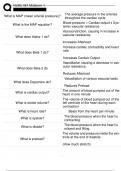
The average pressure in the arteries
What is MAP (mean arterial pressure)?
throughout the cardiac cycle
Blood pressure = Cardiac output x Sys-
What is the MAP equation?
temic vascular resistance
Vasoconstriction, causing in increase in
vascular resistance.
What does Alpha-1 do?
Increases Afterload
Increase cardiac contractility and heart
rate.
What does Beta-1 do?
Increases Cardaic Output
Vasodilation causing a decrease in vas-
cular resistance.
What does Beta-2 do
Reduces Afterload
Vasodilation of various vascular beds.
What does Dopamine do?
Reduces Preload
The amount of blood pumped out of the
What is cardiac output?
heart in one minute
The volume of blood pumped out of the
What is stroke volume? left ventricle of the heart during each
contraction
What is heart rate? Beats from the heart per minute
The blood pressure when the heart is
What is systole?
contracting.
The blood pressure when the heart is
What is distole?
relaxed and filling.
The volume and pressure inside the ven-
tricle at the end of diastole
What is preload?
(How much stretch)
, NURS 487 Midterm 1
The resistance to ejection of blood from
the left ventricle
What is afterload?
(How much resistance)
The ability of the myocardium to increase
the exent and force of muscle fibre short-
What is contractility? ening
(How much force)
- Kidney failure
- Fluid overload
- Heart failure
What could cause increased preload? - Aortic insufficiency
- Vasocontriction
- Inotropes
- Pregnancy
- Volume loss
What could cause decreased preload? - Vasodilation
- Loss of atrial kick
The last bit of blood pumped into the
What is atrial kick?
ventricles by the atria
Anything that decreased cardiac output
such as;
- Hypertension
What causes increased afterload?
- Vasoconstriction
- Aortic stenosis
- Pulmonic stenosis
Anything that decreases cardiac output
What causes decreased afterload?
and blood pressure
Hardening of the arteries from the accu-
What is atherosclerosis?
mulation of lipids
High cholesterol
Hypertension
What are risk factors for atherosclerosis? Smoking
Physical inactivity
Obesity
, NURS 487 Midterm 1
Diabetes
Sex (more common in men until 65, then
more common in women)
- Dizziness
- Lightheadedness
Clinical manifestations of atherosclero-
- Blurred vision
sis
- Palpitations
- Postural BP
Coronary artery disease, unstable angi-
What can atherosclerosis lead to?
na, stroke, and myocardial infarction
- Embolus
What are other causes of coronary - Vasculitis
artery disease? - Vasospasm
- Valve disease
- Lipid profile
- Homocysteine
What are labs they would do for athero-
- C-reactive protien
sclerosis?
- Chest xray
- Echocardiogram
What is angina? Chest pain from myocardial ischemia
Bloodflow to the heart muscle is obstruct-
What is myocardial ischemia
ed from a buildup of plaques
- Stable
Types of angina - Unstable
- Variant (prinzmetal)
Chest pain during exercise caused by
What is stable angina? chronic narrowing of coronary arteries
due to atherosclerosis
Chest pain that occurs at rest, caused by
What is unstable angina? a ruptured plaque activating the clotting
response
- Chest pain relieved at rest
- Pain is predictable
Clinical manifestations of stable angina
- Pain may radiate to neck, jaw, and left
arm
Clinical manifestations of unstable angi-
na
The average pressure in the arteries
What is MAP (mean arterial pressure)?
throughout the cardiac cycle
Blood pressure = Cardiac output x Sys-
What is the MAP equation?
temic vascular resistance
Vasoconstriction, causing in increase in
vascular resistance.
What does Alpha-1 do?
Increases Afterload
Increase cardiac contractility and heart
rate.
What does Beta-1 do?
Increases Cardaic Output
Vasodilation causing a decrease in vas-
cular resistance.
What does Beta-2 do
Reduces Afterload
Vasodilation of various vascular beds.
What does Dopamine do?
Reduces Preload
The amount of blood pumped out of the
What is cardiac output?
heart in one minute
The volume of blood pumped out of the
What is stroke volume? left ventricle of the heart during each
contraction
What is heart rate? Beats from the heart per minute
The blood pressure when the heart is
What is systole?
contracting.
The blood pressure when the heart is
What is distole?
relaxed and filling.
The volume and pressure inside the ven-
tricle at the end of diastole
What is preload?
(How much stretch)
, NURS 487 Midterm 1
The resistance to ejection of blood from
the left ventricle
What is afterload?
(How much resistance)
The ability of the myocardium to increase
the exent and force of muscle fibre short-
What is contractility? ening
(How much force)
- Kidney failure
- Fluid overload
- Heart failure
What could cause increased preload? - Aortic insufficiency
- Vasocontriction
- Inotropes
- Pregnancy
- Volume loss
What could cause decreased preload? - Vasodilation
- Loss of atrial kick
The last bit of blood pumped into the
What is atrial kick?
ventricles by the atria
Anything that decreased cardiac output
such as;
- Hypertension
What causes increased afterload?
- Vasoconstriction
- Aortic stenosis
- Pulmonic stenosis
Anything that decreases cardiac output
What causes decreased afterload?
and blood pressure
Hardening of the arteries from the accu-
What is atherosclerosis?
mulation of lipids
High cholesterol
Hypertension
What are risk factors for atherosclerosis? Smoking
Physical inactivity
Obesity
, NURS 487 Midterm 1
Diabetes
Sex (more common in men until 65, then
more common in women)
- Dizziness
- Lightheadedness
Clinical manifestations of atherosclero-
- Blurred vision
sis
- Palpitations
- Postural BP
Coronary artery disease, unstable angi-
What can atherosclerosis lead to?
na, stroke, and myocardial infarction
- Embolus
What are other causes of coronary - Vasculitis
artery disease? - Vasospasm
- Valve disease
- Lipid profile
- Homocysteine
What are labs they would do for athero-
- C-reactive protien
sclerosis?
- Chest xray
- Echocardiogram
What is angina? Chest pain from myocardial ischemia
Bloodflow to the heart muscle is obstruct-
What is myocardial ischemia
ed from a buildup of plaques
- Stable
Types of angina - Unstable
- Variant (prinzmetal)
Chest pain during exercise caused by
What is stable angina? chronic narrowing of coronary arteries
due to atherosclerosis
Chest pain that occurs at rest, caused by
What is unstable angina? a ruptured plaque activating the clotting
response
- Chest pain relieved at rest
- Pain is predictable
Clinical manifestations of stable angina
- Pain may radiate to neck, jaw, and left
arm
Clinical manifestations of unstable angi-
na