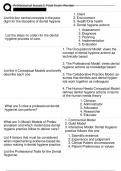
Professional Issues I: Final Exam Review
1. Client
List the four central concepts in the para- 2. Environment
digm for the discipline of dental hygiene. 3. Health/Oral health
4. Dental hygiene actions
1. Assessment
2. Diagnosis
List the steps (in order) for the dental
3. Planning
hygiene process of care.
4. Implementation
5. Evaluation
1. The Occupational Model: views the
concept of dental hygiene actions as
technically based
2. The Professional Model: views dental
hygiene actions as knowledge based
List the 4 Conceptual Models and briefly
describe each one. 3. The Collaborative Practice Model: as-
sumes that dentists and dental hygien-
ists work together as colleagues
4. The Human Needs Conceptual Model:
defines dental hygiene actions in terms
of the human needs theory
1. Clinician
2. Administrator
What are 5 roles a professional dental
3. Advocator
hygienist can perform?
4. Researcher
5. Educator
1. Commercial Model
What are 3 (Moral) Models of Profes-
2. Guild Model
sionalism and which model does dental
3. Interactive Model: Dental Hygiene
hygiene practice follow to deliver care?
practice follows this one
1. Scientific evidence
List 4 factors that must be considered
2. Experience and judgement
when implementing evidence-based de-
3. Clinical Patient circumstances
cision making in dental hygiene practice.
4. Patient Preferences or values
List the Professional Traits for the Dental
Hygienist.
, Professional Issues I: Final Exam Review
1. Clinical Competence
2. Communication skills = foundation of
trust, make sure the client is let to speak
and make sure you listen and hear them
3. Ethical and legal understanding
4. Critical thinking ability = sound judg-
ment for every client: technical, scientific,
ethical dimensions
5. Honesty & Integrity = trust
6. Caring & Compassion = empathy
7. Reliability & Responsibility = perform-
ing services to the best standard of
care, sound judgment, maintaining cur-
rent knowledge, CE
8. Maturity & Self-Analysis = improving or
changing skills when necessary
9. Respect For Self = maintain your own
physical and mental health
10. Loyalty = protecting and promoting
the interests of a person, group or or-
ganization. Promises made are carefully
made and kept.
11. Tolerance For Others = treat all
clients without discrimination
1. Excellence
What are the application of the principles 2. Humanism
of Professionalism? 3. Accountability
4.Altruism
List the 8 unmet human needs.
, Professional Issues I: Final Exam Review
1. Protection from Health Risks: Premed-
ication required, HBP uncontrolled, un-
controlled illness (anything that can risk
a Medical Emergency)
2. Freedom from Stress: bad experi-
ences in the past, anxiety, fear of treat-
ment, fear of needles
3. Wholesome Facial Image: facial dis-
figurement, yellow teeth, wearing Den-
tures, facial changes with age (can affect
self-worth)
4. Skin and Mucous Membrane Integri-
ty of Head and Neck: periodontal dis-
ease, gingival disease (focus here is ev-
idence of inflammation) intraoral/extrao-
ral lesions caused by? E.g. Nutritional
deficiencies, medications or poor OH?
5. Biologically Sound Dentition: anything
to do with the dentition (lacking) condi-
tion. Broken restorations, ill-fitting partial
dentures or crown and bridge, caries,
calculus, plaque and extrinsic stain
6. Conceptualization and Problem Solv-
ing: Client lacks understanding of
processes, this could be ADPIE or how
caries occur, how disease occurs.....the
clients level of knowledge of the subject
is low
7. Freedom from Head and Neck
Pain: pain during instrumentation (needs
anesthetic), jaw pain (maybe has limited
opening or TMJ issues...
8. Responsibility for Oral Health: If client
has poor OSC, no dental exam within
2 years, poor parental supervision for
child's OSC, client is performing inade-
quate OSC on a daily basis
List the 7 Characteristics of a True Pro-
fession.
, Professional Issues I: Final Exam Review
1. Specialized body of knowledge & skill
of great value to society
2. Intensive academic course of study
3. Standard of practice determined & reg-
ulated by the group
4. External recognition by society
5. Code of Ethics
6. Organized association
7. Service orientation
1. Income
2. Social support
3. Education and literacy
4. Employment and working conditions
5. Social environments
6. Physical environments
List the Determinants of Health. 7. Personal health practices and coping
skills
8. Healthy child development, biology
and genetic endowment
9. Health services
10. Gender
11. Culture
1. low socioeconomic status people
2. Aboriginal people
Who most commonly experiences health
3. Women
disparities?
4. Those who live in geographically re-
mote areas.
1. Volunteer at dental health fairs
2. Educate clients regarding the impor-
tance of public programs and practition-
ers
What are some roles a dental hygien-
3. Support research on oral health dis-
ist could do in order to alleviate dispari-
parities
ties and develop effective oral healthcare
4. Advocate for increased scope of prac-
systems?
tice regulations that would allow dental
hygienists to provide more care to the
underserved, in a variety of settings.
5. Collaborating among many stakehold-
1. Client
List the four central concepts in the para- 2. Environment
digm for the discipline of dental hygiene. 3. Health/Oral health
4. Dental hygiene actions
1. Assessment
2. Diagnosis
List the steps (in order) for the dental
3. Planning
hygiene process of care.
4. Implementation
5. Evaluation
1. The Occupational Model: views the
concept of dental hygiene actions as
technically based
2. The Professional Model: views dental
hygiene actions as knowledge based
List the 4 Conceptual Models and briefly
describe each one. 3. The Collaborative Practice Model: as-
sumes that dentists and dental hygien-
ists work together as colleagues
4. The Human Needs Conceptual Model:
defines dental hygiene actions in terms
of the human needs theory
1. Clinician
2. Administrator
What are 5 roles a professional dental
3. Advocator
hygienist can perform?
4. Researcher
5. Educator
1. Commercial Model
What are 3 (Moral) Models of Profes-
2. Guild Model
sionalism and which model does dental
3. Interactive Model: Dental Hygiene
hygiene practice follow to deliver care?
practice follows this one
1. Scientific evidence
List 4 factors that must be considered
2. Experience and judgement
when implementing evidence-based de-
3. Clinical Patient circumstances
cision making in dental hygiene practice.
4. Patient Preferences or values
List the Professional Traits for the Dental
Hygienist.
, Professional Issues I: Final Exam Review
1. Clinical Competence
2. Communication skills = foundation of
trust, make sure the client is let to speak
and make sure you listen and hear them
3. Ethical and legal understanding
4. Critical thinking ability = sound judg-
ment for every client: technical, scientific,
ethical dimensions
5. Honesty & Integrity = trust
6. Caring & Compassion = empathy
7. Reliability & Responsibility = perform-
ing services to the best standard of
care, sound judgment, maintaining cur-
rent knowledge, CE
8. Maturity & Self-Analysis = improving or
changing skills when necessary
9. Respect For Self = maintain your own
physical and mental health
10. Loyalty = protecting and promoting
the interests of a person, group or or-
ganization. Promises made are carefully
made and kept.
11. Tolerance For Others = treat all
clients without discrimination
1. Excellence
What are the application of the principles 2. Humanism
of Professionalism? 3. Accountability
4.Altruism
List the 8 unmet human needs.
, Professional Issues I: Final Exam Review
1. Protection from Health Risks: Premed-
ication required, HBP uncontrolled, un-
controlled illness (anything that can risk
a Medical Emergency)
2. Freedom from Stress: bad experi-
ences in the past, anxiety, fear of treat-
ment, fear of needles
3. Wholesome Facial Image: facial dis-
figurement, yellow teeth, wearing Den-
tures, facial changes with age (can affect
self-worth)
4. Skin and Mucous Membrane Integri-
ty of Head and Neck: periodontal dis-
ease, gingival disease (focus here is ev-
idence of inflammation) intraoral/extrao-
ral lesions caused by? E.g. Nutritional
deficiencies, medications or poor OH?
5. Biologically Sound Dentition: anything
to do with the dentition (lacking) condi-
tion. Broken restorations, ill-fitting partial
dentures or crown and bridge, caries,
calculus, plaque and extrinsic stain
6. Conceptualization and Problem Solv-
ing: Client lacks understanding of
processes, this could be ADPIE or how
caries occur, how disease occurs.....the
clients level of knowledge of the subject
is low
7. Freedom from Head and Neck
Pain: pain during instrumentation (needs
anesthetic), jaw pain (maybe has limited
opening or TMJ issues...
8. Responsibility for Oral Health: If client
has poor OSC, no dental exam within
2 years, poor parental supervision for
child's OSC, client is performing inade-
quate OSC on a daily basis
List the 7 Characteristics of a True Pro-
fession.
, Professional Issues I: Final Exam Review
1. Specialized body of knowledge & skill
of great value to society
2. Intensive academic course of study
3. Standard of practice determined & reg-
ulated by the group
4. External recognition by society
5. Code of Ethics
6. Organized association
7. Service orientation
1. Income
2. Social support
3. Education and literacy
4. Employment and working conditions
5. Social environments
6. Physical environments
List the Determinants of Health. 7. Personal health practices and coping
skills
8. Healthy child development, biology
and genetic endowment
9. Health services
10. Gender
11. Culture
1. low socioeconomic status people
2. Aboriginal people
Who most commonly experiences health
3. Women
disparities?
4. Those who live in geographically re-
mote areas.
1. Volunteer at dental health fairs
2. Educate clients regarding the impor-
tance of public programs and practition-
ers
What are some roles a dental hygien-
3. Support research on oral health dis-
ist could do in order to alleviate dispari-
parities
ties and develop effective oral healthcare
4. Advocate for increased scope of prac-
systems?
tice regulations that would allow dental
hygienists to provide more care to the
underserved, in a variety of settings.
5. Collaborating among many stakehold-