100% satisfaction guarantee Immediately available after payment Both online and in PDF No strings attached 4.2 TrustPilot
logo-home
Exam (elaborations)

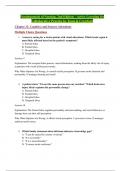
CHAPTER 32: Fundamentals of Nursing, 2nd Edition – Active Learning for Collaborative Practice by Yoost & Crawford

Rating
-
Sold
-
Pages
9
Grade
A+
Uploaded on
06-05-2025
Written in
2024/2025

Fundamentals of Nursing, 2nd Edition – Active Learning for Collaborative Practice by Yoost & Crawford Chapter 32: Stress and Coping Multiple Choice Questions 1. The nurse knows the one theory explaining the variation in response to stress among individuals is identified by which term? A. Stress appraisal. B. Sense of coherence. C. Allostasis. D. Homeostasis. Answer: B Explanation: Sense of coherence (SOC) explains individual differences in stress response by assessing one's perception of life as comprehensible, meaningful, and manageable. Why Other Options Are Wrong: A refers to initial stress evaluation, C describes the stress response itself, and D relates to physiological balance. 2. The nurse is caring for a patient with a new diagnosis of diabetes type 2. Which statement indicates a negative coping response? A. "I will look up information on the Internet about diabetes." B. "I will join a support group." C. "I will only focus on learning to manage my medication first." D. "I will make changes slowly so I can adapt to each change." Answer: C Explanation: Limiting learning to medication reflects avoidance, a maladaptive coping strategy. Why Other Options Are Wrong: A, B, and D demonstrate proactive, adaptive approaches to managing stress. 3. The nurse is caring for a patient undergoing a major cardiac procedure who complains of a racing heart and nausea. The nurse recognizes these as part of what hormone response? A. Sense of coherence. B. Stress appraisal. C. Fight or flight. D. Sympathoadrenal response. Answer: C Explanation: "Fight or flight" involves CRH and ACTH release, causing tachycardia and GI slowing. Why Other Options Are Wrong: A and B are cognitive processes. D involves adrenal medulla hormones. 4. When measuring a patient's blood glucose after an acute MI, the nurse knows this is based on which rationale? A. Damaged muscle tissue releases glucose. B. Corticosteroids increase glucose. C. MIs are often seen in diabetics. D. All patients should have glucose checked. Answer: B Explanation: Stress hormones like corticosteroids elevate blood glucose during physiological stress. Why Other Options Are Wrong: A is unrelated to glucose release. C and D are incorrect generalizations. 5. The nurse is teaching about mild vs. moderate anxiety. Which patient statement indicates a need for further education? A. "Mild anxiety can help me remember things." B. "Moderate anxiety will narrow my focus." C. "Mild anxiety will help me be creative." D. "Moderate anxiety will increase my perception." Answer: D Explanation: Moderate anxiety narrows focus and dulls perception, contrary to the patient's statement. Why Other Options Are Wrong: A, B, and C accurately describe anxiety effects. 6. Which discharge instruction for a multiple sclerosis patient aims to prevent future exacerbations? A. Engage in exercise as tolerated. B. Avoid highly stressful situations. C. Check skin for pressure sores. D. Eat a high-fiber diet. Answer: B Explanation: Stress exacerbates autoimmune conditions like MS. Why Other Options Are Wrong: A, C, and D address general health but not stress-induced exacerbations. 7. When assessing stress in a culturally diverse patient, which question is most appropriate? A. "Do you engage in prayer during stress?" B. "Do you attend organized worship?" C. "Do you have beliefs helpful during stress?" D. "Do you want spiritual counseling?" Answer: C Explanation: Open-ended questions about personal beliefs respect cultural diversity without assumptions. Why Other Options Are Wrong: A, B, and D impose specific religious frameworks prematurely. 8. During a bone marrow biopsy, which finding indicates patient stress? A. BP 120/84. B. Temp 99.5°F. C. HR 110 bpm. D. RR 10 breaths/min. Answer: C Explanation: Tachycardia reflects sympathetic activation during stress. Why Other Options Are Wrong: A is normal, B suggests infection, and D indicates decreased (not increased) respirations. 9. Which question best assesses a patient's coping skills? A. "Have you been evaluated for stress?" B. "Do you have someone to help when stressed?" C. "How have you managed past stressful situations?" D. "Does stress cause muscle tension?" Answer: C Explanation: Open-ended questions elicit detailed coping strategies. Why Other Options Are Wrong: A, B, and D yield limited yes/no or physical symptom responses. 10. A patient expresses suicidal ideation. What is the nurse's first action? A. Notify the provider. B. Refer to psychiatry. C. Implement one-on-one observation. D. Document in the EMR. Answer: C Explanation: Immediate safety measures take priority over referrals or documentation. Why Other Options Are Wrong: A, B, and D follow after ensuring patient safety. 11. Which goal is appropriate for the nursing diagnosis Difficulty coping? A. "The patient will remember discharge instructions." B. "The family will access respite care." C. "The patient will discuss coping strategies weekly." D. "The patient will attend an online support group weekly." Answer: C Explanation: Discussing strategies directly addresses ineffective coping. Why Other Options Are Wrong: A relates to anxiety, B to caregiver stress, and D is less specific than C. 12. Which goal is appropriate for the nursing diagnosis Anxiety? A. "The patient will attend a weekly support group." B. "The patient will discuss coping strategies weekly." C. "The patient will concentrate on discharge instructions." D. "The family will use respite care weekly." Answer: C Explanation: Improved concentration reflects reduced anxiety. Why Other Options Are Wrong: A and B address coping, and D targets caregiver stress. 13. Which goal is appropriate for Caregiver stress? A. "The patient will focus on discharge instructions." B. "The caregiver will attend coping classes weekly." C. "The caregiver will use respite care weekly." D. "The patient will discuss relationship violence strategies." Answer: C Explanation: Respite care directly alleviates caregiver burden. Why Other Options Are Wrong: A and D are unrelated, and B is less specific than C. 14. When coordinating multidisciplinary care, which role is utilized? A. Pastoral care. B. Case manager. C. Social worker. D. Dietitian. Answer: B Explanation: Case managers coordinate interdisciplinary care plans. Why Other Options Are Wrong: A, C, and D provide specialized services but do not coordinate teams. 15. Which anger management statement indicates a need for further teaching? A. "Exercise can help me deal with anger." B. "I can use humor." C. "I can punch things." D. "I can take a time-out." Answer: C Explanation: Violence is never an appropriate anger management strategy. Why Other Options Are Wrong: A, B, and D are evidence-based techniques. 16. Which statement about alternative therapies indicates a need for clarification? A. "They include relaxation techniques." B. "They are used with medical therapies." C. "They help during stress." D. "Some require certification." Answer: B Explanation: Alternative therapies replace (not complement) medical treatments. Why Other Options Are Wrong: A, C, and D are accurate descriptions. 17. Which relaxation therapy statement requires correction? A. "I relax muscles head to toe." B. "I visualize relaxed muscles." C. "I do this three times weekly." D. "I focus on tense muscles." Answer: C Explanation: Relaxation techniques should be practiced daily for optimal benefit. Why Other Options Are Wrong: A, B, and D describe proper technique. 18. During follow-up for Difficulty coping, which patient statement is concerning? A. "I sleep better most nights." B. "I feel less anxious." C. "I stopped relaxation exercises." D. "I exercise daily." Answer: C Explanation: Discontinuing stress-reduction practices risks relapse. Why Other Options Are Wrong: A, B, and D indicate positive outcomes. Multiple Response Questions 1. Which physiologic changes occur during stress? (Select all that apply.) A. Increased heart rate. B. Flaccid muscles. C. Pupil dilation. D. Decreased blood pressure. E. Increased respiratory rate. Answer: A, C, E Explanation: Stress activates the sympathetic nervous system, causing tachycardia, tachypnea, and pupil dilation. Why Other Options Are Wrong: B: Muscles tense during stress. D: Blood pressure rises. 2. Which "fight or flight" responses involve hormone release? (Select all that apply.) A. Decreased respiratory rate. B. Slowed digestion. C. Liver glucose mobilization. D. Pupil dilation. E. Bronchoconstriction. Answer: B, C, D Explanation: Hormones slow digestion, mobilize glucose, and dilate pupils to prioritize survival functions. Why Other Options Are Wrong: A: Respiration increases. E: Bronchodilation occurs. 3. Which personality traits buffer stress impact? (Select all that apply.) A. Resilience. B. Sense of coherence. C. Gender. D. Hardiness. E. Coping style. Answer: A, B, D Explanation: Resilience, SOC, and hardiness are traits that mitigate stress effects. Why Other Options Are Wrong: C: Gender is not a personality factor. E: Coping style is behavioral, not inherent. 4. Which factors relate to childhood school stress? (Select all that apply.) A. Goal achievement. B. Family dissolution. C. Life changes. D. Test anxiety. E. Competition. Answer: A, D, E Explanation: School stress stems from academic pressures like tests, competition, and achievement. Why Other Options Are Wrong: B and C are unrelated to school-specific stressors. 5. Which actions support healthy coping in older adults? (Select all that apply.) A. Installing boxing equipment. B. Facilitating reminiscence sessions. C. Offering gentle yoga. D. Creating distraction activities. E. Encouraging healthy snacks. Answer: B, C, E Explanation: Reminiscence, yoga, and nutrition address emotional, physical, and metabolic needs. Why Other Options Are Wrong: A may promote aggression. D can avoid rather than resolve stress. 6. Which signs indicate nurse compassion fatigue? (Select all that apply.) A. Unexplained emotional upset. B. Avoiding certain patients. C. Increased sick days. D. Working more overtime. E. Difficulty showing empathy. Answer: A, B, C, E Explanation: Mood swings, avoidance, absenteeism, and reduced empathy are hallmark symptoms. Why Other Options Are Wrong: D is unrelated to fatigue and may reflect workload demands. 7. Which interventions address nurse compassion fatigue? (Select all that apply.) A. On-unit support groups. B. Exercise competitions. C. Scheduled break times. D. Quiet relaxation spaces. E. Work-life balance promotion. Answer: A, B, C, D, E Explanation: Comprehensive programs include peer support, physical activity, rest breaks, quiet spaces, and boundary setting. Why Other Options Are Wrong: All options are evidence-based interventions.

Show more Read less
Institution
Fundamentals Of Nursing
Course
Fundamentals of Nursing


Whoops! We can’t load your doc right now. Try again or contact support.

Written for

Institution
Fundamentals of Nursing
Course
Fundamentals of Nursing

Document information

Uploaded on
May 6, 2025
Number of pages
9
Written in
2024/2025
Type
Exam (elaborations)
Contains
Questions & answers

Content preview

Fundamentals of Nursing, 2nd Edition – Active Learning for
Collaborative Practice by Yoost & Crawford
Chapter 32: Stress and Coping
Multiple Choice Questions
1. The nurse knows the one theory explaining the variation in response to stress among
individuals is identified by which term?
A. Stress appraisal.
B. Sense of coherence.
C. Allostasis.
D. Homeostasis.
Answer: B

Explanation: Sense of coherence (SOC) explains individual differences in stress response by
assessing one's perception of life as comprehensible, meaningful, and manageable.

Why Other Options Are Wrong: A refers to initial stress evaluation, C describes the stress
response itself, and D relates to physiological balance.


2. The nurse is caring for a patient with a new diagnosis of diabetes type 2. Which
statement indicates a negative coping response?
A. "I will look up information on the Internet about diabetes."
B. "I will join a support group."
C. "I will only focus on learning to manage my medication first."
D. "I will make changes slowly so I can adapt to each change."

Answer: C
Explanation: Limiting learning to medication reflects avoidance, a maladaptive coping strategy.

Why Other Options Are Wrong: A, B, and D demonstrate proactive, adaptive approaches to
managing stress.


3. The nurse is caring for a patient undergoing a major cardiac procedure who
complains of a racing heart and nausea. The nurse recognizes these as part of what
hormone response?
A. Sense of coherence.
B. Stress appraisal.

, C. Fight or flight.
D. Sympathoadrenal response.

Answer: C

Explanation: "Fight or flight" involves CRH and ACTH release, causing tachycardia and GI
slowing.

Why Other Options Are Wrong: A and B are cognitive processes. D involves adrenal medulla
hormones.


4. When measuring a patient's blood glucose after an acute MI, the nurse knows this is
based on which rationale?
A. Damaged muscle tissue releases glucose.
B. Corticosteroids increase glucose.
C. MIs are often seen in diabetics.
D. All patients should have glucose checked.

Answer: B

Explanation: Stress hormones like corticosteroids elevate blood glucose during physiological
stress.

Why Other Options Are Wrong: A is unrelated to glucose release. C and D are incorrect
generalizations.


5. The nurse is teaching about mild vs. moderate anxiety. Which patient statement
indicates a need for further education?
A. "Mild anxiety can help me remember things."
B. "Moderate anxiety will narrow my focus."
C. "Mild anxiety will help me be creative."
D. "Moderate anxiety will increase my perception."
Answer: D

Explanation: Moderate anxiety narrows focus and dulls perception, contrary to the patient's
statement.
Why Other Options Are Wrong: A, B, and C accurately describe anxiety effects.


6. Which discharge instruction for a multiple sclerosis patient aims to prevent future
exacerbations?

Get to know the seller

Seller avatar
Reputation scores are based on the amount of documents a seller has sold for a fee and the reviews they have received for those documents. There are three levels: Bronze, Silver and Gold. The better the reputation, the more your can rely on the quality of the sellers work.
bmm7203 Harvard University
View profile
Follow You need to be logged in order to follow users or courses
Sold
105
Member since
3 year
Number of followers
81
Documents
789
Last sold
2 weeks ago

3.0

24 reviews

5
8
4
3
3
3
2
1
1
9

Recently viewed by you

Why students choose Stuvia

Created by fellow students, verified by reviews

Quality you can trust: written by students who passed their tests and reviewed by others who've used these notes.

Didn't get what you expected? Choose another document

No worries! You can instantly pick a different document that better fits what you're looking for.

Pay as you like, start learning right away

No subscription, no commitments. Pay the way you're used to via credit card and download your PDF document instantly.

Student with book image

“Bought, downloaded, and aced it. It really can be that simple.”

Alisha Student

Frequently asked questions