

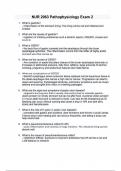
NUR 2063 Pathophysiology Exam 2
1. What is gastritis? - Inflammation of the stomach lining. The lining will be red and inflamed and irritated 2. What are the causes of gastritis? - Ingestion of irritating substances such a alcohol, aspirin, NSAIDS, viruses and bacteria 3. What is GERD? - the back flow of gastric contents into the esophagus through the lower esophageal sphincter. The inflammation occurs from the reflex of highly acidic stomach acid that comes up. 4. What are the causes of GERD? - Any condition or agent that alters closure of the lower esophageal sphincter or increases in abdominal pressure, fatty food, caffeine, large amounts of alcohol, smoking, pregnancy and anatomical features like hiatal hernia 5. What are complications of GERD? - Barrett's esophagus where columnar tissue replaces normal squamous tissue in the distal esophagus that carries a high risk for cancer. Progression can lead to ulcers and scarring. Esophageal strictures, pulmonary symptoms such as cough, asthma and laryngitis from reflux in breathing passages. 6. What are the signs and symptoms of peptic ulcer disease? - epigastric burning pain that is usually relieved by food or antacids (gastric ulcers present on empty stomach but can be after food, duodenal ulcers present 2-3 hours after food and is relieved by food). Can also be life threatening as GI bleeding can occur without warning and cause a drop in H/H and dark tarry stools and hematemesis. 7. What is the role of H.pylori in peptic ulcer disease? - promotes both gastric and duodenal ulcer formation and thrives in acidic areas. It slows down ulcer healing and can reoccur frequently, and taking it away can help ulcers heal. 8. What is pseudomembranous colitis?(C.diff) - acute inflammation and necrosis of large intestine. The intestinal lining cannot absorb well. 9. What is the cause of pseudomembranous colitis? - clostridium difficile, exposure to long term antibiotics that off set the and balance in intestine 10. What are the manifestations of pseudomembranous colitis? - foul smelling/bloody stool, abdominal pain, fever, leukocytosis, sepsis, colonic perforation. 11. How do we treat pseudomembranous colitis? - stop current antibiotics, treat ischemia and contributing conditions, give oral antibiotics like metronidazole or vancomycin, fecal transplant or colectomy if severe 12. How do we prevent the spread of pseudomembranous colitis? - wearing appropriate PPE and washing hands with soap and water only 13. What are the signs and symptoms of appendicitis? - Periumbilical pain, RLQ pain, presence of a positive McBurneys point with pain, nausea, vomiting, fever, diarrhea, RLQ tenderness, systemic signs of infection 14. How do we assess for appendicitis? - McBurney's point technique when pressing on the belly button and RLQ hip region and removing the pressure causes intense pain, indicates positive appendicitis 15. What are the causes of bowel obstructions? - previous surgery of the intestines with adhesions, congenital abnormalities of the bowel, metastatic cancer of the intestinal tract or female reproductive organs, accumulation of fluid, gas, water and electrolytes in the bowel. 16. What is a functional bowel obstruction? - a problem with the act of the bowel actually moving, such as things that inhibit movement from surgery, medications, opioids, low fiber diets that can slow motility or shut off the GI system from the SNS stimulation. 17. What is a mechanical bowel obstruction? - due to adhesions, hernia, tumors, impacted feces, volvus or twisting of the intestines, intussusception 18. What are the signs and symptoms of liver disease? - hepatocellular failure (jaundice, decreased clotting, hypoalbuminemia, decreased vitamin D and K) and portal hypertension (GI congestion due to blockage of blood, more esophageal or gastric varies, hemorrhoids, enlarged spleen,) 19. Explain what jaundice is? - green- yellow staining of tissues from increased level of bilirubin as the liver cannot metabolize extra bilirubin 20. Where can you find jaundice on assessment? - eyes, skin, and mouth 21. Explain what ascites is? - pathological accumulation of fluid in the peritoneal cavity due to the loss of albumin in the liver, causing fluid to be free amongst the cells. It can cause a lot of pain in the abdomen, and it must be drained with a parenthesis 22. Explain hepatic encephalopathy? - neuropsychiatric syndrome from too much ammonia in the blood as the liver cannot break it down. results in dementia and psychotic symptoms common along with jerking 23. What is another name for end stage liver disease? - cirrhosis 24. What are the signs and symptoms of gallstones? - sudden pain in the RUQ/ center of the abdomen, back pain, and nauseas and vomiting. 25. Why do gallstones occur? - due to often a blockage of a duct from a cholesterol filled stone 26. What are the three stages of gallstone formation? - supersaturation, nucleation, hypo motility 27. Explain supersaturation phase - bile is saturated with cholesterol, causing precipitation of cholesterol 28. Explain nucleation phase - the bile crystals begin to stick together and become larger stones 29. Explain hypo motility phase - the bile is stasis allowing the stones to grow more 30. What are some of the risk factors for gallstones? - prolonged fasting, rapid weight loss, pregnancy, estrogen, obesity 31. What are the signs and symptoms of pancreatitis? - steady and dull pain in the center or LUQ of abdomen, severe tenderness on palpation that radiates to the back, nausea and vomiting, abdominal distention with hypoactive bowel sounds, low grade fevers 32. What are the causes of pancreatitis? - alcoholism is most causes, biliary tract disease where the enzymes attack the pancreas, hypertriglyceridemia 33. What are the three function of the kidneys - excretion, elimination, regulation 34. Explain what excretion is? - removal of organic waste products from body fluids 35. Explain what elimination is? - discharge of the waste products from the body 36. Explain what regulation is? - regulating blood volume, ion concentration, blood pH and nutrients 37. What are signs and symptoms indicating one may have a renal disorder? - pain in the back flank area that is felt at the CVA angle on percussion, tenderness, abnormal urinalysis findings 38. What types of things are abnormal regarding urinalysis? - dark, strong-smelling urine, bacteria in the urine, cloudy urine, ketones or glucose or proteins in the urine, blood in the urine (except during menses) 39. What is polycystic kidney disease? - an inherited condition of the kidney resulting in one having fluid filled cysts on one or both kidneys. if left untreated renal failure with need for dialysis or kidney transplant occurring 40. What causes polycystic kidney disease? - it is inherited genetically 41. What are the types of polycystic kidney disease? - autosomal recessive and dominant 42. What is a nephron(s)? - they are in the kidney and helps to filter blood and remove waste products 43. How many nephrons do the kidneys have? - 1-2 million 44. What is hematuria? - blood found in the urine not due to menstruation 45. What is proteinuria? - protein found in the urine 46. What does it mean when one has ketones in their urine? - they have type 1 diabetes 47. What is nephrolithiasis? - kidney stones that obstruct the ureters and kidneys that cause lots of pained urinary stasis 48. What is another term for kidney stones? - renal calculi 49. What are kidney stones made up of? - calcium deposits and uric acid 50. What is pyelonephritis? - infected and inflamed kidneys 51. What causes pyelonephritis? - from the lower urinary tract that ascends 52. What are the signs and symptoms of pyelonephritis? - CVA tenderness most common, fever, chills, N/V, anorexia or not willing to eat 53. What can we do the prevent pyelonephritis? - remove catheters are early as possible to prevent UTIs and possible spread 54. What are the signs and symptoms of post infectious acute glomerulonephritis? - Smoky or coffee colored urine, proteinuria, edema as they cannot urinate, decreased output 55. What is the cause of post infectious acute glomerulonephritis? - type b hemolytic strep; follows impetigo and strep throat 56. What age group is most affected by post infectious acute glomerulonephritis? - children in developing countries 57. What are the signs and symptoms of acute kidney injury? - Sudden reduction in kidney function, decreased urine output, although occasionally urine output remains normal Fluid retention, causing swelling in your legs, ankles or feet Shortness of breath Fatigue Confusion Nausea Weakness Irregular heartbeat Chest pain or pressure Seizures or coma in severe cases 58. What are the 3 stages of causes of acute kidney injury - pre renal, intrarenal or intrinsic, post renal 59. What are the pre renal causes of AKI? - disruption in renal perfusion and blood flow. It can cause low blood pressure, low blood volume, heart failure, renal artery obstruction, fever, vomiting, diarrhea, burns that lead to dehydration, Drugs such as ACE inhibitors or angiotensin 2 blockers, NSAIDs that can drop the blood pressure or cause bleeding 60. What are the intrarenal/intrinsic causes of AKI? - damage or disruptions within the kidney blood vessels, tubules, or glomeruli. It can cause reduced blood supply within the kidneys, toxic injury with medications, chemo, and contrast medias, renal inflammation, or prolonged prostate/ stones/ in the post renal stage 61. What are the post renal causes of AKI? - caused by an obstruction in the urinary collecting system, urethra, bladder, or ureters due to stone, tumor, or enlarged prostate that results in elevated pressure in the Bowman's capsule that impedes glomerular filtration. Prolonged injury can lead to intrinsic injury and irreversible damage 62. What are the 3 stages of AKI presentation? - prodromal, oliguric, post oliguric 63. Explain what happens during prodromal presentation of AKI - normal or declining urine output, The BUN and creatinine levels rise, showing there is a problem. Duration of this phase depends on cause of injury, amount of toxin, duration of hypotension 64. Explain what happens during oliguric presentation of AKI - lasts up to 8 weeks with usual urine output being 50ml-400 mls, when normal output is 30 ml per hour. Characterized by oliguria, lower GFR, and hypovolemia. S/S of fluid excess, hyperkalemia, uremic syndrome. Dialysis may be needed. 65. Explain what happens during postoliguric presentation of AKI - Urine volume increases, leaving patient at risk for dehydration and electrolyte imbalances they are ridding themselves of too much fluids. Higher GFR, and can last 1 week-1 year. Full recovery when BUN and creatinine levels are normal, but renal insufficiency may occur. (early recovery of the condition, but not all recover) 66. What happens if AKI does not resolve? - chronic kidney disease
Document information
- Uploaded on
- May 5, 2025
- Number of pages
- 19
- Written in
- 2024/2025
- Type
- Exam (elaborations)
- Contains
- Questions & answers


