Midterm 2
Study Guide
CED 201
Spring 2025
Format
The exam will consist of:
• 20 multiple-choice questions that will be two (2) points each.
• 6 short answer questions that will be ten (10) points each.
Topics Covered
All the material on the exam will come from either:
• The textbook (Chapters 6, 7, 8, 12, and 13).
• Discussions we had in class.
o The presentation on ANWR
o The document called “Price_vs_Quantity_Abatement_Policy.pdf” posted on
CANVAS. (The test will contain a couple of multiple-choice questions related to this
document and one short answer question.)
o Discussion of recycling of carbon tax revenue and the double dividend hypothesis
Topics for the Short Answer Questions
1. Know what Willingness to Pay and Willingness to Accept are and explain one reason they
may not be equal when used to elicit values in a stated preference survey.
2. From the presentation on the Arctic National Wildlife Refuge, be able to explain why the
WTP* value in the problem changes as a function of oil company profits and the discount
rate.
3. Know what the difference between revealed and stated preference methods are and when
we may use one versus the other.
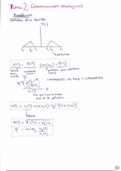
4. Understand VSL – i.e., what is the formula used to calculate it. Be able to plug in numbers
12 to derive a VSL value.
5. Understand Figure 8.5 in the book and why and how a market for pollutions permits will
emerge. What is the net gain to society?
6. Read and understand the document “Price_vs_Quantity_Abatement_Policy.pdf”. If I give
you one of the figures, be able to recognize whether it is case where the tax policy or the
quantity policy (cap-and-trade) would be best and be able to explain why.
time
1 e exposa period
per odds
lifetimeodds
Study Guide
CED 201
Spring 2025
Format
The exam will consist of:
• 20 multiple-choice questions that will be two (2) points each.
• 6 short answer questions that will be ten (10) points each.
Topics Covered
All the material on the exam will come from either:
• The textbook (Chapters 6, 7, 8, 12, and 13).
• Discussions we had in class.
o The presentation on ANWR
o The document called “Price_vs_Quantity_Abatement_Policy.pdf” posted on
CANVAS. (The test will contain a couple of multiple-choice questions related to this
document and one short answer question.)
o Discussion of recycling of carbon tax revenue and the double dividend hypothesis
Topics for the Short Answer Questions
1. Know what Willingness to Pay and Willingness to Accept are and explain one reason they
may not be equal when used to elicit values in a stated preference survey.
2. From the presentation on the Arctic National Wildlife Refuge, be able to explain why the
WTP* value in the problem changes as a function of oil company profits and the discount
rate.
3. Know what the difference between revealed and stated preference methods are and when
we may use one versus the other.
4. Understand VSL – i.e., what is the formula used to calculate it. Be able to plug in numbers
12 to derive a VSL value.
5. Understand Figure 8.5 in the book and why and how a market for pollutions permits will
emerge. What is the net gain to society?
6. Read and understand the document “Price_vs_Quantity_Abatement_Policy.pdf”. If I give
you one of the figures, be able to recognize whether it is case where the tax policy or the
quantity policy (cap-and-trade) would be best and be able to explain why.
time
1 e exposa period
per odds
lifetimeodds