INTRODUCTION TO SOCIAL SERVICES
FINAL EXAM QUESTIONS AND
ANSWERS
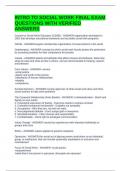
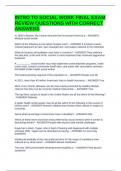
What are the key tasks and considerations when conducting an intake with a client?
- ANSWER-1.Gathering info on the client
2.Need to pay attention to the process and go at the clients pace
3. Incorporate the problem; the history and background, clients strengths, your
observations and impressions, goals and action plans, and next steps
What should and SSW consider when making an inclusive referral for a client? -
ANSWER-Assess client needs and preferences.
Assess for diversity and find a service that meets their needs and will be inclusive
and sensitive to their social location.
Make it as seamless as possible.
Refer to someone you know who is credible.
Make the call with the client.
Provide support.
Why is it important to be aware of your own social location as an SSW? - ANSWER-
To recognize your areas of marginalization/oppression and privilege.
To recognize your biases or way of viewing the world.
To prevent being discriminatory with clients.
To make you a better SSW.
What are some of the key principles SSW's should practice? - ANSWER-
Professional objectivity.
Respect human diversity.
Challenge social injustices.
Seek to enhance professional competence.
Do no harm.
Serve the most vulnerable members of society.
Treat the client with dignity.
Individualize the client.
Consider clients experts in their own lives.
Client self determination.
Build on client's strengths.
What is the Purpose of the Code of Ethics? - ANSWER-Set forth values and
principles to guide the social worker's professional conduct.
It guides social workers as they act in good faith and a genuine desire to make
sound decisions.
Protects the public (clients) from negligence and malpractice, i.e. a mechanism for
accountability.
Educates workers and the public about helping responsibilities.
Enforces standards of practice.
Provides a basis for improving practice
, What is a limitation of the Code of Ethics? - ANSWER-General guidelines, not
precise action steps.
Does not always address the increasing complexity and diversity of life in the 21st
century.
Opposing values create tension.
Ethical reasoning takes time, courage & effort.
Unethical behaviour may still go undetected.
What does the Code of Ethics state about relationships with clients? - ANSWER-8.8
Sexual relations between college members and clients to whom the members have
provided social work or social services work services, other than psychotherapy or
counseling services, are prohibited for a period of 1 year following termination of the
professional relationship.
8.7 Sexual relations between college members and clients to whom the members
have provided psychotherapy and/or counseling services are prohibited at any time
following termination of the professional relationship.
Why is confidentiality important? - ANSWER-To build trust with clients.
To protect clients.
To protect the agency/worker.
In what situations would you be legally obligated to breach confidentiality as an
SSW? - ANSWER-Risk of harm to self - suicide
Risk of harm to others - homicide
Suspected child abuse
Elder abuse - the "silent" crime
Subpoena for you and/or your records to attend court
Communicable disease (HIV, TB) - report to health dept.
What provincial legislation covers child abuse? - ANSWER-Child and Family
Services Act; children under the age of 16 abused by someone in a position of
power, trust and authority.
Why is self reflection and self care important as an SSW? - ANSWER-To be aware
of biases, triggers, tender spots, issues you have not dealt with in your own life.
To debrief.
To prevent burnout.
For your own emotional and physical well being.
To prevent disconnection from clients-to stay empathetic.
What is vicarious trauma? - ANSWER-A transformation of the helper's inner
experience, resulting from empathic engagement with client's trauma material. The
changes experienced by the helper parallel those experienced by trauma survivors"
Other commonly used terms include burnout, compassion fatigue, secondary
traumatic stress.
What are the 5 Purposes of Social Service Interviews? - ANSWER-Information-
gathering
FINAL EXAM QUESTIONS AND
ANSWERS
What are the key tasks and considerations when conducting an intake with a client?
- ANSWER-1.Gathering info on the client
2.Need to pay attention to the process and go at the clients pace
3. Incorporate the problem; the history and background, clients strengths, your
observations and impressions, goals and action plans, and next steps
What should and SSW consider when making an inclusive referral for a client? -
ANSWER-Assess client needs and preferences.
Assess for diversity and find a service that meets their needs and will be inclusive
and sensitive to their social location.
Make it as seamless as possible.
Refer to someone you know who is credible.
Make the call with the client.
Provide support.
Why is it important to be aware of your own social location as an SSW? - ANSWER-
To recognize your areas of marginalization/oppression and privilege.
To recognize your biases or way of viewing the world.
To prevent being discriminatory with clients.
To make you a better SSW.
What are some of the key principles SSW's should practice? - ANSWER-
Professional objectivity.
Respect human diversity.
Challenge social injustices.
Seek to enhance professional competence.
Do no harm.
Serve the most vulnerable members of society.
Treat the client with dignity.
Individualize the client.
Consider clients experts in their own lives.
Client self determination.
Build on client's strengths.
What is the Purpose of the Code of Ethics? - ANSWER-Set forth values and
principles to guide the social worker's professional conduct.
It guides social workers as they act in good faith and a genuine desire to make
sound decisions.
Protects the public (clients) from negligence and malpractice, i.e. a mechanism for
accountability.
Educates workers and the public about helping responsibilities.
Enforces standards of practice.
Provides a basis for improving practice
, What is a limitation of the Code of Ethics? - ANSWER-General guidelines, not
precise action steps.
Does not always address the increasing complexity and diversity of life in the 21st
century.
Opposing values create tension.
Ethical reasoning takes time, courage & effort.
Unethical behaviour may still go undetected.
What does the Code of Ethics state about relationships with clients? - ANSWER-8.8
Sexual relations between college members and clients to whom the members have
provided social work or social services work services, other than psychotherapy or
counseling services, are prohibited for a period of 1 year following termination of the
professional relationship.
8.7 Sexual relations between college members and clients to whom the members
have provided psychotherapy and/or counseling services are prohibited at any time
following termination of the professional relationship.
Why is confidentiality important? - ANSWER-To build trust with clients.
To protect clients.
To protect the agency/worker.
In what situations would you be legally obligated to breach confidentiality as an
SSW? - ANSWER-Risk of harm to self - suicide
Risk of harm to others - homicide
Suspected child abuse
Elder abuse - the "silent" crime
Subpoena for you and/or your records to attend court
Communicable disease (HIV, TB) - report to health dept.
What provincial legislation covers child abuse? - ANSWER-Child and Family
Services Act; children under the age of 16 abused by someone in a position of
power, trust and authority.
Why is self reflection and self care important as an SSW? - ANSWER-To be aware
of biases, triggers, tender spots, issues you have not dealt with in your own life.
To debrief.
To prevent burnout.
For your own emotional and physical well being.
To prevent disconnection from clients-to stay empathetic.
What is vicarious trauma? - ANSWER-A transformation of the helper's inner
experience, resulting from empathic engagement with client's trauma material. The
changes experienced by the helper parallel those experienced by trauma survivors"
Other commonly used terms include burnout, compassion fatigue, secondary
traumatic stress.
What are the 5 Purposes of Social Service Interviews? - ANSWER-Information-
gathering