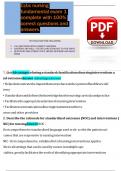
Ccbc nursing
fundamental exam 1
complete with 100%
correct questions and
answers.
YOU WIL FIND THE FOLLOWING
150 QUESTIONS WITH CORRECT ANSWERS.
ANSWERS ARE WELL STATED LONG STRAIGHT TO THE POINT
QUESTIONS ARE EITHER STATE, DEFINE DESCRIBE AND MANY
MORE
1. List Advantages of using a standard classification of nursing interventions a
DFG DFG DFG DFG DFG DFG DFG DFG DFG DFG
nd outcomesAnswer AdvantagesAnswer
DFG DFG
• Helps demonstrate the impact that nurses have on the system of healthcare del
DFG DFG DFG DFG DFG DFG DFG DFG DFG DFG DFG DFG
ivery
• Standardizes and defines the knowledge base for nursing curricula and practice DFG DFG DFG DFG DFG DFG DFG DFG DFG DFG
• Facilitates the appropriate selection of a nursing intervention DFG DFG DFG DFG DFG DFG DFG
• Facilitatescommunicationofnursingtreatmentstoother n DFG DFG DFG DGF DFG DGF DFG
urses and other providers DFG DFG DFG
2. Describe the rationale for standardized outcomes (NOC) and interventions ( DFG DFG DFG DFG DFG DFG DFG DFG DFG
NIC) for nursingAnswer NOC -DFG DFG DFG DFG
first comprehensive standardized language used to de- scribe the patient out-
DFG DFG DFG DFG DFG DFG DFG DFG DFG DFG DFG
DFG comes that are responsive to nursing intervention
DFG DFG DFG DFG DFG DFG
NIC - first comprehensive, validated list of nursing interventions applica-
DFG DFG DFG DFG DFG DFG DFG DFG DFG
DFG ble to all settings that can be used by nurses in multiple spe-
DFG DFG DFG DFG DFG DFG DFG DFG DFG DFG DFG DFG
DFG cialties, greatly facilitates the work of identifying appropriate interventions
DFG DFG DFG DFG DFG DFG DFG DFG
,3. Describe how patient goals/expected outcomes and nursing orders are d
DFG DFG DFG DFG DFG DFG DFG DFG DFG
erived from nursing diagnosesAnswer Initial Planning
DFG DFG DFG DFG DFG
1. Developed by the nurse who performs the nursing history and physical assess-
DFG DFG DFG DFG DFG DFG DFG DFG DFG DFG DFG
DFG ment
2. Addresses each problem listed in the prioritized nursing diagnoses
DFG DFG DFG DFG DFG DFG DFG DFG
3. Identifies appropriate patient goals and related nursing care
DFG DFG DFG DFG DFG DFG DFG
Ongoing Planning DFG
1. Carried out by any nurse who interacts with patient
DFG DFG DFG DFG DFG DFG DFG DFG
2. Keeps the plan up to date
DFG DFG DFG DFG DFG
,3. States nursing diagnoses more clearly
DFG DFG DFG DFG
3. Develops new diagnoses DFG DFG
4. Makesoutcomes more realistic and develops new outcomes as needed
DGF DFG DFG DFG DFG DFG DFG DFG DFG
5. Identifies nursing interventions to accomplish patient goals DFG DFG DFG DFG DFG DFG
DischargePlanning DGF
1. Carried out by the nurse who worked most closely with the patient
DFG DFG DFG DFG DFG DFG DFG DFG DFG DFG DFG
2. Begins when the patient is admitted for treatment
DFG DFG DFG DFG DFG DFG DFG
3. Usesteachingandcounselingskillseffectivelytoensurehomecarebehaviorsare per
DFG DFG DFG DFG DFG DFG DFG DFG DFG DFG DFG DFG
formed competently DFG
4. Describe how patient goals/expected outcomes and nursing orders are der
DFG DFG DFG DFG DFG DFG DFG DFG DFG
ivedfrom nursing diagnoses?Answer Fromtheproblemstatementyougetthe goals,
DFG DFG DFG DFG DFG DFG DFG DFG DFG DFG DFG DFG
outcomes, objectives. Etiology we get our interventions.
DFG DFG DFG DFG DFG DFG
Patientgoals/expectedoutcomes-nursing ordersarederivedfromnursing Dx.
GDF DGF DGF DFG DGF DGF DGF DGF DFG
, Cognitive-
describing increases in Ptknowledge orintellectual behaviors. Psycho motor-
DGF DFG DFG DFG DGF DGF DGF DFG DFG DFG
DFG describes pts. achievements of new skills. DFG DFG DFG DFG DFG
Affective-describes changes in pt values, beliefs and attitudes. DGF DFG DFG DFG DFG DFG DFG DFG
5. Prioritize patient health problems and nursing responses.Answer High p DFG DFG DFG DFG DFG DFG DFG DFG
riori- ty—greatest threat to patient well-being
DFG DFG DFG DFG DFG
Mediumpriority—nonthreateningdiagnoses DFG DGF
Low priority—diagnoses not specifically related to current health problem
DFG DFG DFG DFG DFG DFG DFG DFG
Take into account all of the patient's health needs for general problem list when prioritizing
DFG DFG DFG DFG DFG DFG DFG DFG DFG DFG DFG DFG DFG DFG
are (medical problems are 1st)
DFG DFG DFG DFG
Consider the followingAnswer DFG DFG
1. Maslow'sHierarchyofNeeds DFG DFG DFG
a. PhysiologicneedsHigh DFG DFG
b. Safety needs DFG
c. Loveand belonging needs GDF DFG DFG
d. Self-esteem needs DFG
e. Self-actualizationneedsLow DGF DGF
2. Patient preference- DFG
meet needs that the patient thinks are most important 1st as long as it doesn't interfer
DFG DFG DFG DFG DFG DFG DFG DFG DFG DFG DFG DFG DFG DFG DFG
e with anything vital
DFG DFG DFG
3. Anticipationof future problems-consider future problems, evenif patient isreluc- DGF DFG DFG DFG DFG DFG DFG DFG DFG DFG
DFG tant to comply you must educate as to avoid charges of negligence
DFG DFG DFG DFG DFG DFG DFG DFG DFG DFG DFG
fundamental exam 1
complete with 100%
correct questions and
answers.
YOU WIL FIND THE FOLLOWING
150 QUESTIONS WITH CORRECT ANSWERS.
ANSWERS ARE WELL STATED LONG STRAIGHT TO THE POINT
QUESTIONS ARE EITHER STATE, DEFINE DESCRIBE AND MANY
MORE
1. List Advantages of using a standard classification of nursing interventions a
DFG DFG DFG DFG DFG DFG DFG DFG DFG DFG
nd outcomesAnswer AdvantagesAnswer
DFG DFG
• Helps demonstrate the impact that nurses have on the system of healthcare del
DFG DFG DFG DFG DFG DFG DFG DFG DFG DFG DFG DFG
ivery
• Standardizes and defines the knowledge base for nursing curricula and practice DFG DFG DFG DFG DFG DFG DFG DFG DFG DFG
• Facilitates the appropriate selection of a nursing intervention DFG DFG DFG DFG DFG DFG DFG
• Facilitatescommunicationofnursingtreatmentstoother n DFG DFG DFG DGF DFG DGF DFG
urses and other providers DFG DFG DFG
2. Describe the rationale for standardized outcomes (NOC) and interventions ( DFG DFG DFG DFG DFG DFG DFG DFG DFG
NIC) for nursingAnswer NOC -DFG DFG DFG DFG
first comprehensive standardized language used to de- scribe the patient out-
DFG DFG DFG DFG DFG DFG DFG DFG DFG DFG DFG
DFG comes that are responsive to nursing intervention
DFG DFG DFG DFG DFG DFG
NIC - first comprehensive, validated list of nursing interventions applica-
DFG DFG DFG DFG DFG DFG DFG DFG DFG
DFG ble to all settings that can be used by nurses in multiple spe-
DFG DFG DFG DFG DFG DFG DFG DFG DFG DFG DFG DFG
DFG cialties, greatly facilitates the work of identifying appropriate interventions
DFG DFG DFG DFG DFG DFG DFG DFG
,3. Describe how patient goals/expected outcomes and nursing orders are d
DFG DFG DFG DFG DFG DFG DFG DFG DFG
erived from nursing diagnosesAnswer Initial Planning
DFG DFG DFG DFG DFG
1. Developed by the nurse who performs the nursing history and physical assess-
DFG DFG DFG DFG DFG DFG DFG DFG DFG DFG DFG
DFG ment
2. Addresses each problem listed in the prioritized nursing diagnoses
DFG DFG DFG DFG DFG DFG DFG DFG
3. Identifies appropriate patient goals and related nursing care
DFG DFG DFG DFG DFG DFG DFG
Ongoing Planning DFG
1. Carried out by any nurse who interacts with patient
DFG DFG DFG DFG DFG DFG DFG DFG
2. Keeps the plan up to date
DFG DFG DFG DFG DFG
,3. States nursing diagnoses more clearly
DFG DFG DFG DFG
3. Develops new diagnoses DFG DFG
4. Makesoutcomes more realistic and develops new outcomes as needed
DGF DFG DFG DFG DFG DFG DFG DFG DFG
5. Identifies nursing interventions to accomplish patient goals DFG DFG DFG DFG DFG DFG
DischargePlanning DGF
1. Carried out by the nurse who worked most closely with the patient
DFG DFG DFG DFG DFG DFG DFG DFG DFG DFG DFG
2. Begins when the patient is admitted for treatment
DFG DFG DFG DFG DFG DFG DFG
3. Usesteachingandcounselingskillseffectivelytoensurehomecarebehaviorsare per
DFG DFG DFG DFG DFG DFG DFG DFG DFG DFG DFG DFG
formed competently DFG
4. Describe how patient goals/expected outcomes and nursing orders are der
DFG DFG DFG DFG DFG DFG DFG DFG DFG
ivedfrom nursing diagnoses?Answer Fromtheproblemstatementyougetthe goals,
DFG DFG DFG DFG DFG DFG DFG DFG DFG DFG DFG DFG
outcomes, objectives. Etiology we get our interventions.
DFG DFG DFG DFG DFG DFG
Patientgoals/expectedoutcomes-nursing ordersarederivedfromnursing Dx.
GDF DGF DGF DFG DGF DGF DGF DGF DFG
, Cognitive-
describing increases in Ptknowledge orintellectual behaviors. Psycho motor-
DGF DFG DFG DFG DGF DGF DGF DFG DFG DFG
DFG describes pts. achievements of new skills. DFG DFG DFG DFG DFG
Affective-describes changes in pt values, beliefs and attitudes. DGF DFG DFG DFG DFG DFG DFG DFG
5. Prioritize patient health problems and nursing responses.Answer High p DFG DFG DFG DFG DFG DFG DFG DFG
riori- ty—greatest threat to patient well-being
DFG DFG DFG DFG DFG
Mediumpriority—nonthreateningdiagnoses DFG DGF
Low priority—diagnoses not specifically related to current health problem
DFG DFG DFG DFG DFG DFG DFG DFG
Take into account all of the patient's health needs for general problem list when prioritizing
DFG DFG DFG DFG DFG DFG DFG DFG DFG DFG DFG DFG DFG DFG
are (medical problems are 1st)
DFG DFG DFG DFG
Consider the followingAnswer DFG DFG
1. Maslow'sHierarchyofNeeds DFG DFG DFG
a. PhysiologicneedsHigh DFG DFG
b. Safety needs DFG
c. Loveand belonging needs GDF DFG DFG
d. Self-esteem needs DFG
e. Self-actualizationneedsLow DGF DGF
2. Patient preference- DFG
meet needs that the patient thinks are most important 1st as long as it doesn't interfer
DFG DFG DFG DFG DFG DFG DFG DFG DFG DFG DFG DFG DFG DFG DFG
e with anything vital
DFG DFG DFG
3. Anticipationof future problems-consider future problems, evenif patient isreluc- DGF DFG DFG DFG DFG DFG DFG DFG DFG DFG
DFG tant to comply you must educate as to avoid charges of negligence
DFG DFG DFG DFG DFG DFG DFG DFG DFG DFG DFG