Nevada Food Handlers Card
Study online at https://quizlet.com/_6ll8yh
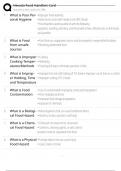
1. What is Poor Per- •Improper hand washing
sonal Hygiene • Bare hand contact with ready-to-eat (RTE) foods
• Food handlers working while ill with the following
symptoms: vomiting, diarrhea, sore throat with a fever, infected cuts on the hands,
and jaundice
2. What is Food • Food from an unapproved source and/or prepared in unpermitted locations
from unsafe • Receiving adulterated food
sources
3. What is Improper • Cooking
Cooking Temper- • Reheating
atures/Methods • Freezing (kill step to eliminate parasites in fish)
4. What is Improp- • Improper hot and cold holding of TCS foods • Improper use of time as a control
er Holding, Time • Improper cooling of TCS foods
and Temperature
5. What is Food • Use of contaminated/improperly constructed equipment
Contamination • Poor employee practices
• Improper food storage/preparation
• Exposure to chemicals
6. What is a Biologi- • Microorganisms that can cause foodborne illness
cal Food Hazard • Bacteria, viruses, parasites, and fungi
7. What is a Chemi- • Chemicals not meant to be consumed
cal Food Hazard • Sanitizers, cleaning agents, or pest control
products must be separated from food
8. What is a Physical • Foreign objects that can cause injury
Food Hazard • Glass, metal, or bone
, Nevada Food Handlers Card
Study online at https://quizlet.com/_6ll8yh
9. PROPER HAND- Wash your hands in a DESIGNATED HAND WASHING SINK for hand washing ONLY
WASHING TECH- and should have liquid soap, paper towels, and a trash can
NIQUE
AREA
10. PROPER HAND- 1. WET HANDS (with warm water) MIN 100 ° F
WASHING TECH- 2. SOAP
NIQUE STEPS 3. RUB VIGOROUSLY (for 15 seconds)
4. RINSE
5. DRY
6. TURN OFF WATER (with paper towel)
11. When should When entering the kitchen
you WASH YOUR After touching your face, hair, or skin
HANDS... After using the restroom
After handling raw animal products
After taking out the trash or cleaning
After handling ANYTHING dirty
12. If you have a cut •Wash your hands
on your hand... •Put on clean bandage
•Wear gloves
13. If you can- YOU CANNOT WORK WITH FOOD
not wash your
hands because
of a splint,
wound, bandage,
or brace...
14. What should you NO BARE HAND CONTACT WITH READY TO EAT FOODS and Use a physical barrier
do with READY TO to prevent
EAT FOODS contamination from germs that have the potential to cause foodborne illness
Study online at https://quizlet.com/_6ll8yh
1. What is Poor Per- •Improper hand washing
sonal Hygiene • Bare hand contact with ready-to-eat (RTE) foods
• Food handlers working while ill with the following
symptoms: vomiting, diarrhea, sore throat with a fever, infected cuts on the hands,
and jaundice
2. What is Food • Food from an unapproved source and/or prepared in unpermitted locations
from unsafe • Receiving adulterated food
sources
3. What is Improper • Cooking
Cooking Temper- • Reheating
atures/Methods • Freezing (kill step to eliminate parasites in fish)
4. What is Improp- • Improper hot and cold holding of TCS foods • Improper use of time as a control
er Holding, Time • Improper cooling of TCS foods
and Temperature
5. What is Food • Use of contaminated/improperly constructed equipment
Contamination • Poor employee practices
• Improper food storage/preparation
• Exposure to chemicals
6. What is a Biologi- • Microorganisms that can cause foodborne illness
cal Food Hazard • Bacteria, viruses, parasites, and fungi
7. What is a Chemi- • Chemicals not meant to be consumed
cal Food Hazard • Sanitizers, cleaning agents, or pest control
products must be separated from food
8. What is a Physical • Foreign objects that can cause injury
Food Hazard • Glass, metal, or bone
, Nevada Food Handlers Card
Study online at https://quizlet.com/_6ll8yh
9. PROPER HAND- Wash your hands in a DESIGNATED HAND WASHING SINK for hand washing ONLY
WASHING TECH- and should have liquid soap, paper towels, and a trash can
NIQUE
AREA
10. PROPER HAND- 1. WET HANDS (with warm water) MIN 100 ° F
WASHING TECH- 2. SOAP
NIQUE STEPS 3. RUB VIGOROUSLY (for 15 seconds)
4. RINSE
5. DRY
6. TURN OFF WATER (with paper towel)
11. When should When entering the kitchen
you WASH YOUR After touching your face, hair, or skin
HANDS... After using the restroom
After handling raw animal products
After taking out the trash or cleaning
After handling ANYTHING dirty
12. If you have a cut •Wash your hands
on your hand... •Put on clean bandage
•Wear gloves
13. If you can- YOU CANNOT WORK WITH FOOD
not wash your
hands because
of a splint,
wound, bandage,
or brace...
14. What should you NO BARE HAND CONTACT WITH READY TO EAT FOODS and Use a physical barrier
do with READY TO to prevent
EAT FOODS contamination from germs that have the potential to cause foodborne illness