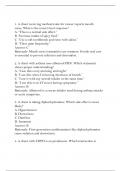
1. A post-op client is given ondansetron. Which is an expected
outcome?
A. Decreased heart rate
B. Absence of nausea
C. Increased bowel sounds
D. Sedation
Answer: B
Rationale: Ondansetron is a serotonin antagonist used to prevent
or treat nausea and vomiting.
2. A client is started on lorazepam for anxiety. Which teaching
point is essential?
A. “Avoid grapefruit juice.”
B. “Take with NSAIDs.”
C. “Do not stop abruptly.”
D. “It may take weeks to work.”
Answer: C
Rationale: Benzodiazepines must be tapered to prevent
withdrawal symptoms and seizures.
3. A client taking carbidopa/levodopa reports facial twitching
and eye spasms. What should the nurse do?
A. Reassure the client this is expected
B. Hold the dose and notify the provider
C. Administer diphenhydramine
D. Document and continue monitoring
Answer: B
Rationale: Facial twitching and spasms are signs of toxicity. Notify
the provider to adjust dosage.
4. A client is using a scopolamine patch for motion sickness.
,What side effect should the nurse monitor?
A. Diarrhea
B. Blurred vision and dry mouth
C. Rash
D. Hearing loss
Answer: B
Rationale: Scopolamine has anticholinergic effects like dry mouth,
blurred vision, and urinary retention.
5. A client receiving methotrexate for cancer reports mouth
sores. What is the nurse's best response?
A. “This is a normal side effect.”
B. “Increase intake of spicy food.”
C. “Use a soft toothbrush and rinse with saline.”
D. “Chew gum frequently.”
Answer: C
Rationale: Mouth sores (stomatitis) are common. Gentle oral care
is essential to prevent infection and discomfort.
6. A nurse is caring for a client prescribed lisinopril. Which lab
result should the nurse report to the provider?
A. Sodium 138 mEq/L
B. Potassium 5.8 mEq/L
C. Hemoglobin 14 g/dL
D. BUN 18 mg/dL
Answer: B
Rationale: Lisinopril, an ACE inhibitor, can cause hyperkalemia. A
potassium level of 5.8 is elevated and should be reported.
7. A client with a penicillin allergy is prescribed cephalexin. What
is the nurse’s priority?
A. Administer as ordered
B. Ask about previous reaction type
, C. Hold the dose for 30 minutes
D. Give with food
Answer: B
Rationale: Cross-sensitivity may occur. Ask if the client had a true
anaphylactic reaction before administering.
8. A client prescribed clopidogrel should avoid which over-the
counter medication?
A. Acetaminophen
B. Ibuprofen
C. Famotidine
D. Guaifenesin
Answer: B
Rationale: NSAIDs like ibuprofen increase bleeding risk when
combined with antiplatelet agents like clopidogrel.
9. A nurse monitors a client taking lamotrigine. What adverse
effect should prompt discontinuation?
A. Rash
B. Constipation
C. Nausea
D. Drowsiness
Answer: A
Rationale: Lamotrigine can cause a life-threatening rash (e.g.,
Stevens-Johnson syndrome). Report immediately.
10. A client on lithium therapy has a sodium level of 128 mEq/L.
What is the nurse's best action?
A. Encourage low-sodium diet
B. Administer next dose
C. Hold the dose and notify the provider
D. Increase fluid restriction
Answer: C
outcome?
A. Decreased heart rate
B. Absence of nausea
C. Increased bowel sounds
D. Sedation
Answer: B
Rationale: Ondansetron is a serotonin antagonist used to prevent
or treat nausea and vomiting.
2. A client is started on lorazepam for anxiety. Which teaching
point is essential?
A. “Avoid grapefruit juice.”
B. “Take with NSAIDs.”
C. “Do not stop abruptly.”
D. “It may take weeks to work.”
Answer: C
Rationale: Benzodiazepines must be tapered to prevent
withdrawal symptoms and seizures.
3. A client taking carbidopa/levodopa reports facial twitching
and eye spasms. What should the nurse do?
A. Reassure the client this is expected
B. Hold the dose and notify the provider
C. Administer diphenhydramine
D. Document and continue monitoring
Answer: B
Rationale: Facial twitching and spasms are signs of toxicity. Notify
the provider to adjust dosage.
4. A client is using a scopolamine patch for motion sickness.
,What side effect should the nurse monitor?
A. Diarrhea
B. Blurred vision and dry mouth
C. Rash
D. Hearing loss
Answer: B
Rationale: Scopolamine has anticholinergic effects like dry mouth,
blurred vision, and urinary retention.
5. A client receiving methotrexate for cancer reports mouth
sores. What is the nurse's best response?
A. “This is a normal side effect.”
B. “Increase intake of spicy food.”
C. “Use a soft toothbrush and rinse with saline.”
D. “Chew gum frequently.”
Answer: C
Rationale: Mouth sores (stomatitis) are common. Gentle oral care
is essential to prevent infection and discomfort.
6. A nurse is caring for a client prescribed lisinopril. Which lab
result should the nurse report to the provider?
A. Sodium 138 mEq/L
B. Potassium 5.8 mEq/L
C. Hemoglobin 14 g/dL
D. BUN 18 mg/dL
Answer: B
Rationale: Lisinopril, an ACE inhibitor, can cause hyperkalemia. A
potassium level of 5.8 is elevated and should be reported.
7. A client with a penicillin allergy is prescribed cephalexin. What
is the nurse’s priority?
A. Administer as ordered
B. Ask about previous reaction type
, C. Hold the dose for 30 minutes
D. Give with food
Answer: B
Rationale: Cross-sensitivity may occur. Ask if the client had a true
anaphylactic reaction before administering.
8. A client prescribed clopidogrel should avoid which over-the
counter medication?
A. Acetaminophen
B. Ibuprofen
C. Famotidine
D. Guaifenesin
Answer: B
Rationale: NSAIDs like ibuprofen increase bleeding risk when
combined with antiplatelet agents like clopidogrel.
9. A nurse monitors a client taking lamotrigine. What adverse
effect should prompt discontinuation?
A. Rash
B. Constipation
C. Nausea
D. Drowsiness
Answer: A
Rationale: Lamotrigine can cause a life-threatening rash (e.g.,
Stevens-Johnson syndrome). Report immediately.
10. A client on lithium therapy has a sodium level of 128 mEq/L.
What is the nurse's best action?
A. Encourage low-sodium diet
B. Administer next dose
C. Hold the dose and notify the provider
D. Increase fluid restriction
Answer: C