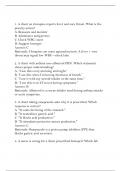
1. A client taking furosemide reports muscle cramps. Which lab
value correlates with this symptom?
A. Sodium 142
B. Potassium 2.9
C. Chloride 101
D. Magnesium 2.0
Answer: B
Rationale: Furosemide can cause hypokalemia, which leads to
muscle cramps. Normal potassium: 3.5–5.0.
2. A client taking carbidopa/levodopa reports facial twitching
and eye spasms. What should the nurse do?
A. Reassure the client this is expected
B. Hold the dose and notify the provider
C. Administer diphenhydramine
D. Document and continue monitoring
Answer: B
Rationale: Facial twitching and spasms are signs of toxicity. Notify
the provider to adjust dosage.
3. A client taking warfarin has an INR of 4.2. Which action should
the nurse take?
A. Administer the next dose of warfarin
B. Hold the dose and notify the provider
C. Give vitamin K IV immediately
D. Prepare for platelet transfusion
Answer: B
Rationale: An INR >3.0 indicates increased bleeding risk. The
nurse should hold the medication and notify the provider.
4. A nurse is educating a client on atorvastatin. What side effect
,should the client report immediately?
A. Headache
B. Muscle pain
C. Drowsiness
D. Constipation
Answer: B
Rationale: Myopathy can occur with statins and may progress to
rhabdomyolysis. Report muscle pain immediately.
Answer Key
51.
2.
3.
4.
5.
6.
7.
8.
9.
10.
11.
12.
13.
14.
15.
16.
17.
18.
19.
20.
21.
22.
23.
24.
, 25.
26.
27.
28.
29.
30.
31.
32.
33.
34.
35.
36.
37.
38.
39.
40.
41.
42.
43.
44.
45.
46.
47.
48.
49.
50.
5. Which lab value should be monitored regularly for a client on
statins?
A. BUN
B. AST and ALT
C. Sodium
D. Hematocrit
value correlates with this symptom?
A. Sodium 142
B. Potassium 2.9
C. Chloride 101
D. Magnesium 2.0
Answer: B
Rationale: Furosemide can cause hypokalemia, which leads to
muscle cramps. Normal potassium: 3.5–5.0.
2. A client taking carbidopa/levodopa reports facial twitching
and eye spasms. What should the nurse do?
A. Reassure the client this is expected
B. Hold the dose and notify the provider
C. Administer diphenhydramine
D. Document and continue monitoring
Answer: B
Rationale: Facial twitching and spasms are signs of toxicity. Notify
the provider to adjust dosage.
3. A client taking warfarin has an INR of 4.2. Which action should
the nurse take?
A. Administer the next dose of warfarin
B. Hold the dose and notify the provider
C. Give vitamin K IV immediately
D. Prepare for platelet transfusion
Answer: B
Rationale: An INR >3.0 indicates increased bleeding risk. The
nurse should hold the medication and notify the provider.
4. A nurse is educating a client on atorvastatin. What side effect
,should the client report immediately?
A. Headache
B. Muscle pain
C. Drowsiness
D. Constipation
Answer: B
Rationale: Myopathy can occur with statins and may progress to
rhabdomyolysis. Report muscle pain immediately.
Answer Key
51.
2.
3.
4.
5.
6.
7.
8.
9.
10.
11.
12.
13.
14.
15.
16.
17.
18.
19.
20.
21.
22.
23.
24.
, 25.
26.
27.
28.
29.
30.
31.
32.
33.
34.
35.
36.
37.
38.
39.
40.
41.
42.
43.
44.
45.
46.
47.
48.
49.
50.
5. Which lab value should be monitored regularly for a client on
statins?
A. BUN
B. AST and ALT
C. Sodium
D. Hematocrit