

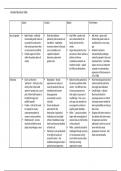
Feminist Branches Table
Liberal Socialist Radical Post-Modern
Sex and gender Betty Friedan – artificially Sheila Row Botham – Kate Millet – gender roles bell Hooks – agrees with
constructed gender roles are patriarchy and economics are were constructed by the Gilman that gender roles are
so powerful and pervasive interlinked – exploitative family and mirrored by socialised from a very young
that society perceives them economic systems in the past society age
as normal and not artificial such as feudalism and Argue that patriarchy is too Kimberle Crenshaw’s
Freidan argues for reform capitalism helped to pervasive to reform and has a intersectionality challenges
within the public sphere of determine subservient plethora of diverse notion that gender is the most
society gender roles revolutionary solutions to important factor – bell Hooks
transform society – argued argues race was as important
by Millet and Rowbotham as gender in understanding
oppression of black women in
US in 1980s
Patriarchy Don’t use the term Rowbotham – female Believe that the patriarchy is Most feminist goals have been
‘patriarchy’ – if they do, they oppression was not just a the primary problem within achieved and the patriarchy
strictly refer to the public result of patriarchy but was society – the different roles has largely been defeated
sphere of society since a core interlinked with women of men and women have Camille Paglia – criticised
part of their belief system is being oppressed their origin in a process of liberal and radicals for
the fight for legal and economically as well as conditioning – from a very portraying women as ‘victims’
political equality culturally early age, boys and girls are and argues women needed to
Freidan – talks of this need Simone de Beauvoir – encouraged to conform to take responsibility and not just
for equality in society – advocated for the specific gender identities blame men
underrepresentation of destruction of patriarchal Millet – ‘a sexual revolution Disagree with other strands as
women in senior positions institutions and was highly begins with emancipation of they believe that other modes
Wollstonecraft – women critical of traditional nuclear women who are chief victims of oppression need to be
should be entitled to same family and favoured abolition of the patriarchy’ addressed in order to come to
rights and privileges as men of family unit Millet – patriarchy should be terms with the sexual
Patriarchy can be understood challenged through a process oppressions of women – bell
in the light of social and of ‘consciousness-raising’ – Hooks intersectionality
economic factors – the one in which women realise
traditional bourgeois family is that they are being
patriarchal and oppressive oppressed in society
, Feminist Branches Table
because men wish to ensure
their property will be passed
onto their sons
Rowbotham – only way to
destroy capitalism and
patriarchy is through cultural
conditioning od humanity
regarding child-rearinf,
homes, laws and workplace
Person is Challenge the public sphere Advocates ‘the person is Carol Hanisch – ‘the person is Gilman and Hooks also argue
political only political’ with women political’ and Millet built on that socialisation of gender
Refusal to challenge the regarded as a reserve army this idea – patriarchal father roles begin within the private
private sphere of family life is of labour dominates the family and the sphere of the family
the traditional schism with Rowbotham – women are mother socialises children Hooks discusses ‘the person is
equality feminism for dealing oppressed economically and into gender roles – which political’ as one of the multi-
with the consequences of culturally – society contains gives men the power that it faceted factors for how women
patriarchy cultural conditioning in denies women are oppressed – argued that
Gender stereotypes will regard to child rearing and Argue that liberal feminists young girls are taught to be
disappear once that women are doubly attempt to reform society compliant and to please others
discrimination int the oppressed by both capitalism will fail unless they also as part of socialisation, while
workplace does – young girls and domestic work in the reform private sphere boys socialised to deny they
and boys will view women in home patriarchy even have emotions
charge as the norm Kate Millet – arguing that Not OVERLY concerned with
familt is a key tool of the person is political – arguing
patriarchy as it socialises these issues have been settles
boys and girls into hierarchal and that women must stop
gender roles portraying themselves as
There must be a revolution in victims
society to dismantle Mocked radical feminism’s
patriarchy within family life revolutionary ideas for
Millet – sexual revolution alternative societies as being
where nuclear family completely irrelevant and out
replaces with communal of touch with what modern
living and child rearing women want
Dworkin and Bunch –
Liberal Socialist Radical Post-Modern
Sex and gender Betty Friedan – artificially Sheila Row Botham – Kate Millet – gender roles bell Hooks – agrees with
constructed gender roles are patriarchy and economics are were constructed by the Gilman that gender roles are
so powerful and pervasive interlinked – exploitative family and mirrored by socialised from a very young
that society perceives them economic systems in the past society age
as normal and not artificial such as feudalism and Argue that patriarchy is too Kimberle Crenshaw’s
Freidan argues for reform capitalism helped to pervasive to reform and has a intersectionality challenges
within the public sphere of determine subservient plethora of diverse notion that gender is the most
society gender roles revolutionary solutions to important factor – bell Hooks
transform society – argued argues race was as important
by Millet and Rowbotham as gender in understanding
oppression of black women in
US in 1980s
Patriarchy Don’t use the term Rowbotham – female Believe that the patriarchy is Most feminist goals have been
‘patriarchy’ – if they do, they oppression was not just a the primary problem within achieved and the patriarchy
strictly refer to the public result of patriarchy but was society – the different roles has largely been defeated
sphere of society since a core interlinked with women of men and women have Camille Paglia – criticised
part of their belief system is being oppressed their origin in a process of liberal and radicals for
the fight for legal and economically as well as conditioning – from a very portraying women as ‘victims’
political equality culturally early age, boys and girls are and argues women needed to
Freidan – talks of this need Simone de Beauvoir – encouraged to conform to take responsibility and not just
for equality in society – advocated for the specific gender identities blame men
underrepresentation of destruction of patriarchal Millet – ‘a sexual revolution Disagree with other strands as
women in senior positions institutions and was highly begins with emancipation of they believe that other modes
Wollstonecraft – women critical of traditional nuclear women who are chief victims of oppression need to be
should be entitled to same family and favoured abolition of the patriarchy’ addressed in order to come to
rights and privileges as men of family unit Millet – patriarchy should be terms with the sexual
Patriarchy can be understood challenged through a process oppressions of women – bell
in the light of social and of ‘consciousness-raising’ – Hooks intersectionality
economic factors – the one in which women realise
traditional bourgeois family is that they are being
patriarchal and oppressive oppressed in society
, Feminist Branches Table
because men wish to ensure
their property will be passed
onto their sons
Rowbotham – only way to
destroy capitalism and
patriarchy is through cultural
conditioning od humanity
regarding child-rearinf,
homes, laws and workplace
Person is Challenge the public sphere Advocates ‘the person is Carol Hanisch – ‘the person is Gilman and Hooks also argue
political only political’ with women political’ and Millet built on that socialisation of gender
Refusal to challenge the regarded as a reserve army this idea – patriarchal father roles begin within the private
private sphere of family life is of labour dominates the family and the sphere of the family
the traditional schism with Rowbotham – women are mother socialises children Hooks discusses ‘the person is
equality feminism for dealing oppressed economically and into gender roles – which political’ as one of the multi-
with the consequences of culturally – society contains gives men the power that it faceted factors for how women
patriarchy cultural conditioning in denies women are oppressed – argued that
Gender stereotypes will regard to child rearing and Argue that liberal feminists young girls are taught to be
disappear once that women are doubly attempt to reform society compliant and to please others
discrimination int the oppressed by both capitalism will fail unless they also as part of socialisation, while
workplace does – young girls and domestic work in the reform private sphere boys socialised to deny they
and boys will view women in home patriarchy even have emotions
charge as the norm Kate Millet – arguing that Not OVERLY concerned with
familt is a key tool of the person is political – arguing
patriarchy as it socialises these issues have been settles
boys and girls into hierarchal and that women must stop
gender roles portraying themselves as
There must be a revolution in victims
society to dismantle Mocked radical feminism’s
patriarchy within family life revolutionary ideas for
Millet – sexual revolution alternative societies as being
where nuclear family completely irrelevant and out
replaces with communal of touch with what modern
living and child rearing women want
Dworkin and Bunch –


