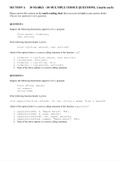
1. A client on sertraline reports increased restlessness and
confusion. What should the nurse suspect?
A. Extrapyramidal symptoms
B. Lithium toxicity
C. Serotonin syndrome
D. Neuroleptic malignant syndrome
Answer: C
Rationale: Serotonin syndrome includes agitation, confusion,
tachycardia, and hyperreflexia.
2. A client with a penicillin allergy is prescribed cephalexin. What
is the nurse’s priority?
A. Administer as ordered
B. Ask about previous reaction type
C. Hold the dose for 30 minutes
D. Give with food
Answer: B
Rationale: Cross-sensitivity may occur. Ask if the client had a true
anaphylactic reaction before administering.
3. A client is prescribed exenatide. What is a common side
effect?
A. Hyperglycemia
B. Constipation
C. Nausea
D. Tachycardia
Answer: C
Rationale: Exenatide can cause nausea, especially when initiating
therapy. It’s an injectable incretin mimetic.
4. A client taking phenytoin shows swollen, bleeding gums. What
,should the nurse recommend?
A. Discontinue the drug
B. Increase fluid intake
C. Practice good oral hygiene
D. Reduce dietary sugar
Answer: C
Rationale: Gingival hyperplasia is a known side effect. Encourage
oral care, not discontinuation.
5. Which lab value should be monitored regularly for a client on
statins?
A. BUN
B. AST and ALT
C. Sodium
D. Hematocrit
Answer: B
Rationale: Statins can cause liver damage. Monitor liver enzymes
(AST/ALT).
6. What lab value should be monitored in a client receiving
propylthiouracil (PTU)?
A. Glucose
B. TSH and T3/T4
C. Calcium
D. Sodium
Answer: B
Rationale: PTU suppresses thyroid hormone. Monitor TSH, T3, and
T4 to assess effectiveness.
7. A client taking omeprazole asks why it is prescribed. Which
response is correct?
A. "It coats the lining of the stomach."
B. "It neutralizes gastric acid."
, C. "It blocks acid production."
D. "It stimulates protective mucus production."
Answer: C
Rationale: Omeprazole is a proton pump inhibitor (PPI) that
blocks gastric acid secretion.
8. Which statement indicates proper understanding of
enoxaparin (Lovenox) administration?
A. “I will inject it into my thigh muscle.”
B. “I will rub the site after injection.”
C. “I will inject it into my belly fat.”
D. “I must monitor my INR daily.”
Answer: C
Rationale: Enoxaparin is given subcutaneously, preferably in the
abdomen, and INR monitoring is not required.
9. A client taking isoniazid (INH) for tuberculosis develops
numbness and tingling in their hands and feet. What should the
nurse anticipate?
A. The need for increased calcium
B. Administration of pyridoxine (vitamin B6)
C. Discontinuation of therapy
D. Addition of prednisone
Answer: B
Rationale: Isoniazid can cause peripheral neuropathy, often
prevented or treated with vitamin B6.
10. A client on sildenafil experiences chest pain during
intercourse. What is the nurse’s next action?
A. Administer nitroglycerin
B. Encourage rest and fluids
C. Call emergency services
D. Administer aspirin
confusion. What should the nurse suspect?
A. Extrapyramidal symptoms
B. Lithium toxicity
C. Serotonin syndrome
D. Neuroleptic malignant syndrome
Answer: C
Rationale: Serotonin syndrome includes agitation, confusion,
tachycardia, and hyperreflexia.
2. A client with a penicillin allergy is prescribed cephalexin. What
is the nurse’s priority?
A. Administer as ordered
B. Ask about previous reaction type
C. Hold the dose for 30 minutes
D. Give with food
Answer: B
Rationale: Cross-sensitivity may occur. Ask if the client had a true
anaphylactic reaction before administering.
3. A client is prescribed exenatide. What is a common side
effect?
A. Hyperglycemia
B. Constipation
C. Nausea
D. Tachycardia
Answer: C
Rationale: Exenatide can cause nausea, especially when initiating
therapy. It’s an injectable incretin mimetic.
4. A client taking phenytoin shows swollen, bleeding gums. What
,should the nurse recommend?
A. Discontinue the drug
B. Increase fluid intake
C. Practice good oral hygiene
D. Reduce dietary sugar
Answer: C
Rationale: Gingival hyperplasia is a known side effect. Encourage
oral care, not discontinuation.
5. Which lab value should be monitored regularly for a client on
statins?
A. BUN
B. AST and ALT
C. Sodium
D. Hematocrit
Answer: B
Rationale: Statins can cause liver damage. Monitor liver enzymes
(AST/ALT).
6. What lab value should be monitored in a client receiving
propylthiouracil (PTU)?
A. Glucose
B. TSH and T3/T4
C. Calcium
D. Sodium
Answer: B
Rationale: PTU suppresses thyroid hormone. Monitor TSH, T3, and
T4 to assess effectiveness.
7. A client taking omeprazole asks why it is prescribed. Which
response is correct?
A. "It coats the lining of the stomach."
B. "It neutralizes gastric acid."
, C. "It blocks acid production."
D. "It stimulates protective mucus production."
Answer: C
Rationale: Omeprazole is a proton pump inhibitor (PPI) that
blocks gastric acid secretion.
8. Which statement indicates proper understanding of
enoxaparin (Lovenox) administration?
A. “I will inject it into my thigh muscle.”
B. “I will rub the site after injection.”
C. “I will inject it into my belly fat.”
D. “I must monitor my INR daily.”
Answer: C
Rationale: Enoxaparin is given subcutaneously, preferably in the
abdomen, and INR monitoring is not required.
9. A client taking isoniazid (INH) for tuberculosis develops
numbness and tingling in their hands and feet. What should the
nurse anticipate?
A. The need for increased calcium
B. Administration of pyridoxine (vitamin B6)
C. Discontinuation of therapy
D. Addition of prednisone
Answer: B
Rationale: Isoniazid can cause peripheral neuropathy, often
prevented or treated with vitamin B6.
10. A client on sildenafil experiences chest pain during
intercourse. What is the nurse’s next action?
A. Administer nitroglycerin
B. Encourage rest and fluids
C. Call emergency services
D. Administer aspirin