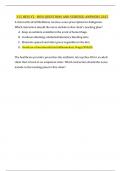
315 HESI V2 - HESI QUESTIONS AND VERIFIED ANSWERS 2025
A client with atrial fibrillation receives a new prescription for dabigatran.
Which instruction should the nurse include in this client's teaching plan?
A. Keep an antidote available in the event of hemorrhage.
B. Continue obtaining scheduled laboratory bleeding tests.
C. Eliminate spinach and other green vegetables in the diet.
D. Avoid use of nonsteroidal antiinflammatory drugs (NSAID)
The healthcare provider prescribes the antibiotic tetracycline HI for an adult
client that arrived at an outpatient clinic. Which instruction should the nurse
include in the teaching plan for this client?
, A. Protect the skin from sunlight while taking the drug.
B. Take with orange juice to enhance Gl absorption.
C. Take with milk or antacids to prevent gastrointestinal (G) irritation.
D. Return to the clinic weekly to obtain serum drug levels.
A client in the surgical recovery area asks the nurse to bring the largest
possible dose of pain medication available. Which action should the nurse
implement first?
A. Review the history for a past use of recreational drugs.
B. Determine when the last dose was administered.
C. Ask the client to rate the current level of pain using a pain scale.
D. Encourage the client to use diversional thoughts to manage pain.
The nurse is planning care for a client with major depression who is receiving
a new prescription for duloxetine. Which information is most important for
the nurse to obtain?
A. Recent use of other antidepressants.
B. Family history of mental illness.
C. Weight change in the last month
D. Liver function laboratory results.
The nurse administers naloxone to a client with opioid-induced respiratory
depression. One hour later, nursing assessment reveals that the client has a
respiratory rate of 4 breaths/minute, oxygen saturation of 75%, and is unable
to be aroused. Which action should the nurse
implement?
A. Initiate cardiopulmonary resuscitation (CPR).
B. Administer a second dose of naloxone.
A client with atrial fibrillation receives a new prescription for dabigatran.
Which instruction should the nurse include in this client's teaching plan?
A. Keep an antidote available in the event of hemorrhage.
B. Continue obtaining scheduled laboratory bleeding tests.
C. Eliminate spinach and other green vegetables in the diet.
D. Avoid use of nonsteroidal antiinflammatory drugs (NSAID)
The healthcare provider prescribes the antibiotic tetracycline HI for an adult
client that arrived at an outpatient clinic. Which instruction should the nurse
include in the teaching plan for this client?
, A. Protect the skin from sunlight while taking the drug.
B. Take with orange juice to enhance Gl absorption.
C. Take with milk or antacids to prevent gastrointestinal (G) irritation.
D. Return to the clinic weekly to obtain serum drug levels.
A client in the surgical recovery area asks the nurse to bring the largest
possible dose of pain medication available. Which action should the nurse
implement first?
A. Review the history for a past use of recreational drugs.
B. Determine when the last dose was administered.
C. Ask the client to rate the current level of pain using a pain scale.
D. Encourage the client to use diversional thoughts to manage pain.
The nurse is planning care for a client with major depression who is receiving
a new prescription for duloxetine. Which information is most important for
the nurse to obtain?
A. Recent use of other antidepressants.
B. Family history of mental illness.
C. Weight change in the last month
D. Liver function laboratory results.
The nurse administers naloxone to a client with opioid-induced respiratory
depression. One hour later, nursing assessment reveals that the client has a
respiratory rate of 4 breaths/minute, oxygen saturation of 75%, and is unable
to be aroused. Which action should the nurse
implement?
A. Initiate cardiopulmonary resuscitation (CPR).
B. Administer a second dose of naloxone.