PMHNP Certification Exam
Study online at https://quizlet.com/_bnetcg
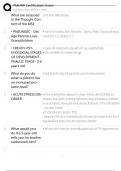
1. What are assessed SI/HI, Plan, Hallucinations
in the Thought Con-
tent of the MSE
2. • PNEUMOIC - Old • Oral (0-18 months), Anal (18 months - 3 years), Phallic (3 years to 6 years),
Age Parents Love Latent (6 to 12), Genital (12 +)
Grandchildren
3. • FREUD's PSY- • 3-year-old masturbates, play with self, says naughty things
CHOSOCIAL STAGES • This is NORMAL for children this age.
OF DEVELOPMENT -
PHALLIC STAGE - 3-6
years old
4. What do you do • Stop prolactin (stop the agent that cause increase prolactin)
when a patient has
an increased pro-
lactin level?
5. • ACUTE STRESS DIS- • A d/o resulting from exposure to a major stressor, with SX of ANX, de-
ORDER pression, dissociation, recurring nightmares, sleep disturbances, problems
in concentrations, reliving the event, dreams, flashbacks - UP to ONE MONTH
- Less than 1 month.
• If LONGER than 1 month = PTSD
- Symptoms that occur immediately after the event but resolve in less than 3
days would not meet criteria for acute stress disorder
6. What would you • Tell mom don't leave him alone with patient and call CPS implement crisis
do if a 5-year-old
tells you his brother
sodomized him?
7.
, PMHNP Certification Exam
Study online at https://quizlet.com/_bnetcg
If a child is playing • You SUSPECT sexual abuse - Perform FURTHER ASSESSMENT and GATHER
with doll in a sexual ENOUGH INFO BEFORE Calling CPS to report suspected Sexual Abuse - You
way, what do you do HAVE to report but you have to have something (assessment data) to report
first? - Assess = FIRST
8. If a 13-year-old tells • Ask him of his plan to stop smoking
you he want to
smoke, what would
be an appropriate
response?
9. If a 14-year-old girl • Cranial nerve V-Trigeminal nerve (FIVE)
clenching her teeth,
what cranial nerve
would you suspect?
10. What cranial nerve 7 = Facial Paralysis
is responsible for
Bells Palsy?
11. What cranial nerves Nerves 5 & 7
do you assess for
corneal sensation
12. What cranial nerves Nerves 3,4,& 6
do you assess for
papillary reaction to
light and accommo-
dation?
13. What cranial nerves Nerves 3, 4, & 6
do you assess for
6 cardinal fields of
, PMHNP Certification Exam
Study online at https://quizlet.com/_bnetcg
gaze & extra-ocular
movements?
14. What cranial nerves 3, 4, & 6
do you assess for
corneal light reflex?
15. Cranial Nerve 1 Olfactory (smell)
16. Cranial Nerve 2 Optic - vision
17. Cranial Nerve 3 Oculomotor (eye movement): The occulomotor nerve is responsible for motor
enervation of upper eyelid muscle, extraocular muscle and pupillary muscle.
18. Cranial Nerve 4 Trochlear (eye movement): The trochlear nerve controls an extraocular mus-
cle.
19. Cranial Nerve 5 Trigeminal: The trigeminal nerve is responsible for sensory enervation of the
face and motor enervation to muscles of mastication (chewing).
20. Cranial Nerve 6 Abducens (motor): The abducent nerve enervates a muscle, which moves the
eyeball.
21. Cranial Nerve 7 Facial nerve: The facial nerve enervates the muscles of the face (facial expres-
sion).
22. Cranial Nerve 8 Vestibulocochlear (hearing and balance): The vestibulocochlear nerve is re-
sponsible for the sense of hearing and balance (body position sense).
23. Cranial Nerve 9 Glossopharyngeal: The glossopharyngeal nerve enervates muscles involved
in swallowing and taste. Lesions of the ninth nerve result in difficulty swal-
lowing and disturbance of taste.
24. Cranial Nerve 10
, PMHNP Certification Exam
Study online at https://quizlet.com/_bnetcg
vagus nerve: The vagus nerve enervates the gut (gastrointestinal tract), heart
and larynx.
25. Cranial Nerve 11 accessory: The accessory nerve enervates the sternocleidomastoid muscles
and the trapezius muscles.
26. Cranial Nerve 12 Hypoglossal (tongue movement): The hypoglossal nerve enervates the mus-
cles of the tongue.
27. What is the best ac- • Send to psych specialist for acting out kids - Referrals - Have to see if you
tion for a 16 y/o are going to refer the same patient to the same provider - Cannot refer the
with conduct disor- patient to another provider that is the same as you (ie psych) - you must refer
der that refuses tx? to a neurologist or another specialist or PCP
28. What is a pri- • Confidentiality (ex. mom sits in lobby)
ority consideration
for a 16-year-old
that shows up with
mother for first
therapy?
29. What is important • This medication can cause increased lithium levels to toxic levels - must
to know about ACE collaborate with PCP to determine whether to change ACE or change Lithium
inhibitors (Meds for - Can't use both
Heart failure/HTN)
30. What medication Ibuprofen
INCREASES Lithium
serum level up to
double
31. Why is Lithium • First-line neuro-protective for bipolar
used?
Study online at https://quizlet.com/_bnetcg
1. What are assessed SI/HI, Plan, Hallucinations
in the Thought Con-
tent of the MSE
2. • PNEUMOIC - Old • Oral (0-18 months), Anal (18 months - 3 years), Phallic (3 years to 6 years),
Age Parents Love Latent (6 to 12), Genital (12 +)
Grandchildren
3. • FREUD's PSY- • 3-year-old masturbates, play with self, says naughty things
CHOSOCIAL STAGES • This is NORMAL for children this age.
OF DEVELOPMENT -
PHALLIC STAGE - 3-6
years old
4. What do you do • Stop prolactin (stop the agent that cause increase prolactin)
when a patient has
an increased pro-
lactin level?
5. • ACUTE STRESS DIS- • A d/o resulting from exposure to a major stressor, with SX of ANX, de-
ORDER pression, dissociation, recurring nightmares, sleep disturbances, problems
in concentrations, reliving the event, dreams, flashbacks - UP to ONE MONTH
- Less than 1 month.
• If LONGER than 1 month = PTSD
- Symptoms that occur immediately after the event but resolve in less than 3
days would not meet criteria for acute stress disorder
6. What would you • Tell mom don't leave him alone with patient and call CPS implement crisis
do if a 5-year-old
tells you his brother
sodomized him?
7.
, PMHNP Certification Exam
Study online at https://quizlet.com/_bnetcg
If a child is playing • You SUSPECT sexual abuse - Perform FURTHER ASSESSMENT and GATHER
with doll in a sexual ENOUGH INFO BEFORE Calling CPS to report suspected Sexual Abuse - You
way, what do you do HAVE to report but you have to have something (assessment data) to report
first? - Assess = FIRST
8. If a 13-year-old tells • Ask him of his plan to stop smoking
you he want to
smoke, what would
be an appropriate
response?
9. If a 14-year-old girl • Cranial nerve V-Trigeminal nerve (FIVE)
clenching her teeth,
what cranial nerve
would you suspect?
10. What cranial nerve 7 = Facial Paralysis
is responsible for
Bells Palsy?
11. What cranial nerves Nerves 5 & 7
do you assess for
corneal sensation
12. What cranial nerves Nerves 3,4,& 6
do you assess for
papillary reaction to
light and accommo-
dation?
13. What cranial nerves Nerves 3, 4, & 6
do you assess for
6 cardinal fields of
, PMHNP Certification Exam
Study online at https://quizlet.com/_bnetcg
gaze & extra-ocular
movements?
14. What cranial nerves 3, 4, & 6
do you assess for
corneal light reflex?
15. Cranial Nerve 1 Olfactory (smell)
16. Cranial Nerve 2 Optic - vision
17. Cranial Nerve 3 Oculomotor (eye movement): The occulomotor nerve is responsible for motor
enervation of upper eyelid muscle, extraocular muscle and pupillary muscle.
18. Cranial Nerve 4 Trochlear (eye movement): The trochlear nerve controls an extraocular mus-
cle.
19. Cranial Nerve 5 Trigeminal: The trigeminal nerve is responsible for sensory enervation of the
face and motor enervation to muscles of mastication (chewing).
20. Cranial Nerve 6 Abducens (motor): The abducent nerve enervates a muscle, which moves the
eyeball.
21. Cranial Nerve 7 Facial nerve: The facial nerve enervates the muscles of the face (facial expres-
sion).
22. Cranial Nerve 8 Vestibulocochlear (hearing and balance): The vestibulocochlear nerve is re-
sponsible for the sense of hearing and balance (body position sense).
23. Cranial Nerve 9 Glossopharyngeal: The glossopharyngeal nerve enervates muscles involved
in swallowing and taste. Lesions of the ninth nerve result in difficulty swal-
lowing and disturbance of taste.
24. Cranial Nerve 10
, PMHNP Certification Exam
Study online at https://quizlet.com/_bnetcg
vagus nerve: The vagus nerve enervates the gut (gastrointestinal tract), heart
and larynx.
25. Cranial Nerve 11 accessory: The accessory nerve enervates the sternocleidomastoid muscles
and the trapezius muscles.
26. Cranial Nerve 12 Hypoglossal (tongue movement): The hypoglossal nerve enervates the mus-
cles of the tongue.
27. What is the best ac- • Send to psych specialist for acting out kids - Referrals - Have to see if you
tion for a 16 y/o are going to refer the same patient to the same provider - Cannot refer the
with conduct disor- patient to another provider that is the same as you (ie psych) - you must refer
der that refuses tx? to a neurologist or another specialist or PCP
28. What is a pri- • Confidentiality (ex. mom sits in lobby)
ority consideration
for a 16-year-old
that shows up with
mother for first
therapy?
29. What is important • This medication can cause increased lithium levels to toxic levels - must
to know about ACE collaborate with PCP to determine whether to change ACE or change Lithium
inhibitors (Meds for - Can't use both
Heart failure/HTN)
30. What medication Ibuprofen
INCREASES Lithium
serum level up to
double
31. Why is Lithium • First-line neuro-protective for bipolar
used?