

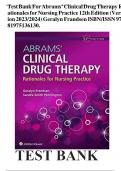
Test Bank For Abrams’ Clinical Drug Therapy R
n1 n1 n1 n1 n1 n1 n1
ationales for Nursing Practice 12th Edition (Vers
n1 n1 n1 n1 n1 n1
ion 2023/2024) Geralyn Frandsen ISBN/ISSN 97
n1 n1 n1 n1 n1
81975136130.
, Chapter 1, The Foundation of Pharmacology: Quality and Safety
n1 n1 n1 n1 n1 n1 n1 n1
1. A woman diagnosed with obsessive–
n1 n1 n1 n1
compulsive disorder has been prescribed oral paroxetine hydrochloride. What is
n1 n1 n1 n1 n1 n1 n1 n1 n1 n1
the expected effect for this prescription?
n1 n1 n1 n1 n1
A. Curative effect on symptoms n1 n1 n1
B. Systemic effect on symptoms n1 n1 n1
C. Local effect on symptoms n1 n1 n1
D. Parenteral effect on symptoms n1 n1 n1
ANS: B n 1
Rationale: Drugs that produce systemic effects are taken into the body, circulated through
n1 n1 n1 n1 n1 n1 n1 n1 n1 n1 n1 n1
the bloodstream to their sites of action in various body tissues, and eventually eliminated
n1 n1 n1 n1 n1 n1 n1 n1 n1 n1 n1 n1 n1 n1
from the body. Curative agents are given to cure a disease process. In this case, paroxeti
n1 n1 n1 n1 n1 n1 n1 n1 n1 n1 n1 n1 n1 n1 n1 n1
ne hydrochloride will control the symptoms but not cure the disorder. Drugs with local eff
n1 n1 n1 n1 n1 n1 n1 n1 n1 n1 n1 n1 n1 n1
ects, such as sunscreen and local anesthetics, act mainly at the site of application. Paroxet
n1 n1 n1 n1 n1 n1 n1 n1 n1 n1 n1 n1 n1 n1
ine hydrochloride is not administered parenterally. Parenteral agents are administered sub
n1 n1 n1 n1 n1 n1 n1 n1 n1 n1
cutaneously, intramuscularly, or intravenously. n1 n1 n1
PTS: 1 REF: p. 3, Introduction OBJ: 1 n1 n1
NAT: Client Needs: Physiological Integrity: Pharmacological and Parenteral Therapi
n 1 n1 n1 n1 n1 n1 n1 n1
GRADESBOOST.COM
es TOP: Chapter: 1: The Foundation of Pharmacology: Quality and Safety
n1
n1 n1 n1 n1 n1 n1 n1 n1 n1
KEY: Integrated Process: Nursing Process
n1
n 1 n1 n1 n1
BLM: Cognitive Level: Understand NOT: Multiple Choice
n1
n 1 n1 n1 n 1 n1
n1
2. A client has been prescribed an antibiotic. This medication is a naturally occurring
n1
n1 n1 n1 n1 n1 n1 n1 n1 n1 n1 n1 n1
substance that has been cheG
mRicA
alDlyEm
SoBdOifOieSd.TWhaOt Mi s another name for this type o
n1
n1
.C n1 n1 n1 n1 n1 n1 n1 n1 n1 n1
f medication?
n1
n1
A. Synthetic drug
n1
n1
n1
B. Semisynthetic drug n1
n1
C. Biotechnology drug n1
n1
D. Prototype drug n1
n1
ANS: B
n1
n 1
Rationale: Semisynthetic drugs (e.g., many antibiotics) are naturally occurring substances
n1
n1 n1 n1 n1 n1 n1 n1 n1 n1 n1
that have been chemically modified. Synthetic drugs are more standardized in their chemic
n1 n1 n1 n1 n1 n1 n1 n1 n1 n1 n1 n1
al characteristics, more consistent in their effects, and less likely to produce allergic react
n1 n1 n1 n1 n1 n1 n1 n1 n1 n1 n1 n1 n1
ions. Biotechnology drugs involve manipulating DNA and RNA and recombining genes i
n1 n1 n1 n1 n1 n1 n1 n1 n1 n1 n1
nto hybrid molecules that can be inserted into living organisms. Prototype drugs are the f
n1 n1 n1 n1 n1 n1 n1 n1 n1 n1 n1 n1 n1 n1
irst drug of a particular group to be developed.
n1 n1 n1 n1 n1 n1 n1 n1
PTS: 1 REF: p. 3, Drug Sources OBJ: 1 n1 n1 n1
NAT: Client Needs: Physiological Integrity: Pharmacological and Parenteral Therapi
n 1 n1 n1 n1 n1 n1 n1 n1
es TOP: n1Chapter: 1: The Foundation of Pharmacology: Quality and Safety n1 n1 n1 n1 n1 n1 n1 n1
KEY: Integrated Process: Nursing Process
n 1 n1 n1 n1
BLM: Cognitive Level: Understand
n 1 NOT: Multiple Choice n1 n1 n 1 n1
3. Which classification applies to morphine?
n1 n1 n1 n1
A. Central nervous system depressant n1 n1 n1
B. Central nervous system stimulant n1 n1 n1
testbankoffer
, C. Anti-inflammatory
D. Antihypertensive
ANS: A n 1
Rationale: Drugs are classified according to their effects on particular body systems, their
n1 n1 n1 n1 n1 n1 n1 n1 n1 n1 n1 n1
therapeutic uses, and their chemical characteristics. Morphine is classified as a central ne
n1 n1 n1 n1 n1 n1 n1 n1 n1 n1 n1 n1 n1
rvous system depressant and will produce this effect in the client. A central nervous syste
n1 n1 n1 n1 n1 n1 n1 n1 n1 n1 n1 n1 n1 n1
m stimulant increases attention and raises mood. An anti-
n1 n1 n1 n1 n1 n1 n1 n1
inflammatory agent decreases inflammation at the site of tissue or joint inflammation. An
n1 n1 n1 n1 n1 n1 n1 n1 n1 n1 n1 n1 n
1antihypertensive agent reduces blood pressure. n1 n1 n1 n1
PTS: 1 REF:
p. 3, Drug Classifications and Prototypes OBJ:
n1 n1 1 n1 n1 n1 n1
NAT: Client Needs: Physiological Integrity: Pharmacological and Parenteral Therapi
n 1 n1 n1 n1 n1 n1 n1 n1
es TOP:
n1 Chapter: 1: The Foundation of Pharmacology: Quality and Safety n1 n1 n1 n1 n1 n1 n1 n1
KEY: Integrated Process: Nursing Process
n 1 n1 n1 n1
BLM: Cognitive Level: Remember
n 1 NOT: Multiple Choice n1 n1 n 1 n1
4. A client is administered amoxicillin. The generic name of this medication belongs to whi
n1 n1 n1 n1 n1 n1 n1 n1 n1 n1 n1 n1 n1
ch drug group?
n1 n1
A. Selective serotonin reuptake inhibitors n1 n1 n1
B. Diuretics
GRADESBOOST.COM
n1
C. Penicillins
n1
D. ACE inhibitors n1
n1
ANS: C
n1
n 1
Rationale: The generic name often indicates the drug group (e.g., drugs with generic nam
GRADESBOOST.COM
n1
n1 n1 n1 n1 n1 n1 n1 n1 n1 n1 n1 n1 n1
es ending in ―cillin‖ are penicillins). Selective serotonin reuptake inhibitors are medicatio
n1
n1 n1 n1 n1 n1 n1 n1 n1 n1 n1 n1
ns that have antidepressant effects; SSRI is a broad classification, not a generic name. Diur
n1
n1 n1 n1 n1 n1 n1 n1 n1 n1 n1 n1 n1 n1 n1
n1
etics are medications that increase urine output; diuretic is a broad classification, not a ge
n1 n1 n1 n1 n1 n1 n1 n1 n1 n1 n1 n1 n1 n1
n1
neric name. ACE inhibitor is the broad classification for the angiotensin receptor blockers,
n1 n1 n1 n1 n1 n1 n1 n1 n1 n1 n1 n1
n1
not the generic name.
n1 n1 n1 n1
n1
n1
PTS: 1 REF: p. 3, Drug Names OBJ: 2 n1 n1 n1
n1
NAT: Client Needs: Physiological Integrity: Pharmacological and Parenteral Therapi
n 1 n1 n1 n1 n1 n1 n1 n1
n1
es TOP:
n1 Chapter: 1: The Foundation of Pharmacology: Quality and Safety n1 n1 n1 n1 n1 n1 n1 n1
KEY: Integrated Process: Nursing Process
n 1 n1 n1 n1
BLM: Cognitive Level: Understand
n 1 NOT: Multiple Choice n1 n1 n 1 n1
5. The administration of diphenhydramine is regulated by which U.S. government agency?
n1 n1 n1 n1 n1 n1 n1 n1 n1 n1
A. Public Health Service n1 n1
B. Federal Trade Commission n1 n1
C. Occupational Safety and Health Administration n1 n1 n1 n1
D. Food and Drug Administration n1 n1 n1
n1 ANS: D n 1
testbankoffer
, GRADESBOOST.COM
Rationale: The Food and Drug Administration approves drugs for over-the-
n1 n1 n1 n1 n1 n1 n1 n1 n1
counter availability, including the transfer of drugs from prescription to OTC status, and
n1 n1 n1 n1 n1 n1 n1 n1 n1 n1 n1 n1 n1
may require clinical trials to determine the safety and effectiveness of OTC use. The Pu
n1 n1 n1 n1 n1 n1 n1 n1 n1 n1 n1 n1 n1 n1
blic Health Service is regulated by the state to maintain the health of individual citizens
n1 n1 n1 n1 n1 n1 n1 n1 n1 n1 n1 n1 n1 n1 n1
of the state. The Federal Trade Commission regulates imports and exports throughout the
n1 n1 n1 n1 n1 n1 n1 n1 n1 n1 n1 n1 n1
nation. The Occupational Safety and Health Administration regulates safety within the wo
n1 n1 n1 n1 n1 n1 n1 n1 n1 n1 n1
rkplace.
PTS: 1 REF:
p. 4, Prescription and Nonprescription Drugs OBJ: 4
n1 n1 n1 n1 n1 n1
NAT: Client Needs: Physiological Integrity: Pharmacological and Parenteral Therapi
n 1 n1 n1 n1 n1 n1 n1 n1
es TOP: n1 Chapter: 1: The Foundation of Pharmacology: Quality and Safety n1 n1 n1 n1 n1 n1 n1 n1
KEY: Integrated Process: Nursing Process
n 1 n1 n1 n1
BLM: Cognitive Level: Understand
n 1 NOT: Multiple Choice n1 n1 n 1 n1
6. In the U.S., the administration of anabolic steroids is regulated by which law?
n1 n1 n1 n1 n1 n1 n1 n1 n1 n1 n1 n1
A. The Food, Drug, and Cosmetic Act of 1938
n1 n1 n1 n1 n1 n1 n1
B. The Comprehensive Drug Abuse Prevention and Control Act
n1 n1 n1 n1 n1 n1 n1
C. The Harrison Narcotic Act n1 n1 n1
D. The Sherley Amendment n1 n1
ANS: B
GRADESBOOST.COM
n 1
n1
Rationale: The Comprehensive Drug Abuse Prevention and Control Act regulates the ma
n1 n1 n1 n1 n1 n1 n1 n1 n1 n1 n1
n1
nufacture and distribution of narcotics, stimulants, depressants, hallucinogens, and anaboli
n1 n1 n1 n1 n1 n1 n1 n1 n1
n1
c steroids. The Food, Drug, and Cosmetic Act of 1938 revised and broadened FDA powe
n1 n1 n1 n1 n1 n1 n1 n1 n1 n1 n1 n1 n1 n1
n1
rs and responsibilities, giving the FDA control over drug safety. The Harrison Narcotic Ac
n1 n1 n1 n1 n1 n1 n1 n1 n1 n1 n1 n1 n1
n1
t restricted the importation, manufacture, sale, and use of opium, cocaine, marijuana, and
n1 n1 n1 n1 n1 n1 n1 n1 n1 n1 n1 n1 n1
n1
other drugs that the act d e f i Gn eRd Aa Ds E
n1 naSrcBoO
n1 tiO
csS
.TTh.eCSOhM
erley Amendment of 1912 prohibited
n1 n1 n1 n1 n1 n1 n1 n1 n1 n
n1
1fraudulent claims of drug effectiveness. n1 n1 n1 n1
n1
n1
PTS: 1 REF:
n1
p. 4, Prescription and Nonprescription Drugs OBJ: 3
n1
n1 n1 n1 n1 n1 n1
NAT: Client Needs: Physiological Integrity: Pharmacological and Parenteral Therapi
n1
n 1 n1 n1 n1 n1 n1 n1 n1
es TOP: Chapter: 1: The Foundation of Pharmacology: Quality and Safety
n1
n1 n1 n1 n1 n1 n1 n1 n1 n1
KEY: Integrated Process: Nursing Process
n1
n 1 n1 n1 n1
BLM: Cognitive Level: Remember
n 1 NOT: Multiple Choice n1 n1 n 1 n1
7. A nurse is responsible for maintaining an accurate count and record of the controlled
n1 n1 n1 n1 n1 n1 n1 n1 n1 n1 n1 n1 n1 n1
substances on the nursing division. This nursing action is regulated by which U.S. law
n1 n1 n1 n1 n1 n1 n1 n1 n1 n1 n1 n1 n1 n1
or agency?n1
A. The Food, Drug, and Cosmetic Act of 1938
n1 n1 n1 n1 n1 n1 n1
B. The Public Health Service n1 n1 n1
C. The Drug Enforcement Administration
n1 n1 n1
D. The Sherley Amendment n1 n1
n1 ANS: C n 1
GRADESBOOST.COM #1 TEST BANKS WEBSITE n1 n1 n1 n1
n1 n1 n1 n1 n1 n1 n1
ationales for Nursing Practice 12th Edition (Vers
n1 n1 n1 n1 n1 n1
ion 2023/2024) Geralyn Frandsen ISBN/ISSN 97
n1 n1 n1 n1 n1
81975136130.
, Chapter 1, The Foundation of Pharmacology: Quality and Safety
n1 n1 n1 n1 n1 n1 n1 n1
1. A woman diagnosed with obsessive–
n1 n1 n1 n1
compulsive disorder has been prescribed oral paroxetine hydrochloride. What is
n1 n1 n1 n1 n1 n1 n1 n1 n1 n1
the expected effect for this prescription?
n1 n1 n1 n1 n1
A. Curative effect on symptoms n1 n1 n1
B. Systemic effect on symptoms n1 n1 n1
C. Local effect on symptoms n1 n1 n1
D. Parenteral effect on symptoms n1 n1 n1
ANS: B n 1
Rationale: Drugs that produce systemic effects are taken into the body, circulated through
n1 n1 n1 n1 n1 n1 n1 n1 n1 n1 n1 n1
the bloodstream to their sites of action in various body tissues, and eventually eliminated
n1 n1 n1 n1 n1 n1 n1 n1 n1 n1 n1 n1 n1 n1
from the body. Curative agents are given to cure a disease process. In this case, paroxeti
n1 n1 n1 n1 n1 n1 n1 n1 n1 n1 n1 n1 n1 n1 n1 n1
ne hydrochloride will control the symptoms but not cure the disorder. Drugs with local eff
n1 n1 n1 n1 n1 n1 n1 n1 n1 n1 n1 n1 n1 n1
ects, such as sunscreen and local anesthetics, act mainly at the site of application. Paroxet
n1 n1 n1 n1 n1 n1 n1 n1 n1 n1 n1 n1 n1 n1
ine hydrochloride is not administered parenterally. Parenteral agents are administered sub
n1 n1 n1 n1 n1 n1 n1 n1 n1 n1
cutaneously, intramuscularly, or intravenously. n1 n1 n1
PTS: 1 REF: p. 3, Introduction OBJ: 1 n1 n1
NAT: Client Needs: Physiological Integrity: Pharmacological and Parenteral Therapi
n 1 n1 n1 n1 n1 n1 n1 n1
GRADESBOOST.COM
es TOP: Chapter: 1: The Foundation of Pharmacology: Quality and Safety
n1
n1 n1 n1 n1 n1 n1 n1 n1 n1
KEY: Integrated Process: Nursing Process
n1
n 1 n1 n1 n1
BLM: Cognitive Level: Understand NOT: Multiple Choice
n1
n 1 n1 n1 n 1 n1
n1
2. A client has been prescribed an antibiotic. This medication is a naturally occurring
n1
n1 n1 n1 n1 n1 n1 n1 n1 n1 n1 n1 n1
substance that has been cheG
mRicA
alDlyEm
SoBdOifOieSd.TWhaOt Mi s another name for this type o
n1
n1
.C n1 n1 n1 n1 n1 n1 n1 n1 n1 n1
f medication?
n1
n1
A. Synthetic drug
n1
n1
n1
B. Semisynthetic drug n1
n1
C. Biotechnology drug n1
n1
D. Prototype drug n1
n1
ANS: B
n1
n 1
Rationale: Semisynthetic drugs (e.g., many antibiotics) are naturally occurring substances
n1
n1 n1 n1 n1 n1 n1 n1 n1 n1 n1
that have been chemically modified. Synthetic drugs are more standardized in their chemic
n1 n1 n1 n1 n1 n1 n1 n1 n1 n1 n1 n1
al characteristics, more consistent in their effects, and less likely to produce allergic react
n1 n1 n1 n1 n1 n1 n1 n1 n1 n1 n1 n1 n1
ions. Biotechnology drugs involve manipulating DNA and RNA and recombining genes i
n1 n1 n1 n1 n1 n1 n1 n1 n1 n1 n1
nto hybrid molecules that can be inserted into living organisms. Prototype drugs are the f
n1 n1 n1 n1 n1 n1 n1 n1 n1 n1 n1 n1 n1 n1
irst drug of a particular group to be developed.
n1 n1 n1 n1 n1 n1 n1 n1
PTS: 1 REF: p. 3, Drug Sources OBJ: 1 n1 n1 n1
NAT: Client Needs: Physiological Integrity: Pharmacological and Parenteral Therapi
n 1 n1 n1 n1 n1 n1 n1 n1
es TOP: n1Chapter: 1: The Foundation of Pharmacology: Quality and Safety n1 n1 n1 n1 n1 n1 n1 n1
KEY: Integrated Process: Nursing Process
n 1 n1 n1 n1
BLM: Cognitive Level: Understand
n 1 NOT: Multiple Choice n1 n1 n 1 n1
3. Which classification applies to morphine?
n1 n1 n1 n1
A. Central nervous system depressant n1 n1 n1
B. Central nervous system stimulant n1 n1 n1
testbankoffer
, C. Anti-inflammatory
D. Antihypertensive
ANS: A n 1
Rationale: Drugs are classified according to their effects on particular body systems, their
n1 n1 n1 n1 n1 n1 n1 n1 n1 n1 n1 n1
therapeutic uses, and their chemical characteristics. Morphine is classified as a central ne
n1 n1 n1 n1 n1 n1 n1 n1 n1 n1 n1 n1 n1
rvous system depressant and will produce this effect in the client. A central nervous syste
n1 n1 n1 n1 n1 n1 n1 n1 n1 n1 n1 n1 n1 n1
m stimulant increases attention and raises mood. An anti-
n1 n1 n1 n1 n1 n1 n1 n1
inflammatory agent decreases inflammation at the site of tissue or joint inflammation. An
n1 n1 n1 n1 n1 n1 n1 n1 n1 n1 n1 n1 n
1antihypertensive agent reduces blood pressure. n1 n1 n1 n1
PTS: 1 REF:
p. 3, Drug Classifications and Prototypes OBJ:
n1 n1 1 n1 n1 n1 n1
NAT: Client Needs: Physiological Integrity: Pharmacological and Parenteral Therapi
n 1 n1 n1 n1 n1 n1 n1 n1
es TOP:
n1 Chapter: 1: The Foundation of Pharmacology: Quality and Safety n1 n1 n1 n1 n1 n1 n1 n1
KEY: Integrated Process: Nursing Process
n 1 n1 n1 n1
BLM: Cognitive Level: Remember
n 1 NOT: Multiple Choice n1 n1 n 1 n1
4. A client is administered amoxicillin. The generic name of this medication belongs to whi
n1 n1 n1 n1 n1 n1 n1 n1 n1 n1 n1 n1 n1
ch drug group?
n1 n1
A. Selective serotonin reuptake inhibitors n1 n1 n1
B. Diuretics
GRADESBOOST.COM
n1
C. Penicillins
n1
D. ACE inhibitors n1
n1
ANS: C
n1
n 1
Rationale: The generic name often indicates the drug group (e.g., drugs with generic nam
GRADESBOOST.COM
n1
n1 n1 n1 n1 n1 n1 n1 n1 n1 n1 n1 n1 n1
es ending in ―cillin‖ are penicillins). Selective serotonin reuptake inhibitors are medicatio
n1
n1 n1 n1 n1 n1 n1 n1 n1 n1 n1 n1
ns that have antidepressant effects; SSRI is a broad classification, not a generic name. Diur
n1
n1 n1 n1 n1 n1 n1 n1 n1 n1 n1 n1 n1 n1 n1
n1
etics are medications that increase urine output; diuretic is a broad classification, not a ge
n1 n1 n1 n1 n1 n1 n1 n1 n1 n1 n1 n1 n1 n1
n1
neric name. ACE inhibitor is the broad classification for the angiotensin receptor blockers,
n1 n1 n1 n1 n1 n1 n1 n1 n1 n1 n1 n1
n1
not the generic name.
n1 n1 n1 n1
n1
n1
PTS: 1 REF: p. 3, Drug Names OBJ: 2 n1 n1 n1
n1
NAT: Client Needs: Physiological Integrity: Pharmacological and Parenteral Therapi
n 1 n1 n1 n1 n1 n1 n1 n1
n1
es TOP:
n1 Chapter: 1: The Foundation of Pharmacology: Quality and Safety n1 n1 n1 n1 n1 n1 n1 n1
KEY: Integrated Process: Nursing Process
n 1 n1 n1 n1
BLM: Cognitive Level: Understand
n 1 NOT: Multiple Choice n1 n1 n 1 n1
5. The administration of diphenhydramine is regulated by which U.S. government agency?
n1 n1 n1 n1 n1 n1 n1 n1 n1 n1
A. Public Health Service n1 n1
B. Federal Trade Commission n1 n1
C. Occupational Safety and Health Administration n1 n1 n1 n1
D. Food and Drug Administration n1 n1 n1
n1 ANS: D n 1
testbankoffer
, GRADESBOOST.COM
Rationale: The Food and Drug Administration approves drugs for over-the-
n1 n1 n1 n1 n1 n1 n1 n1 n1
counter availability, including the transfer of drugs from prescription to OTC status, and
n1 n1 n1 n1 n1 n1 n1 n1 n1 n1 n1 n1 n1
may require clinical trials to determine the safety and effectiveness of OTC use. The Pu
n1 n1 n1 n1 n1 n1 n1 n1 n1 n1 n1 n1 n1 n1
blic Health Service is regulated by the state to maintain the health of individual citizens
n1 n1 n1 n1 n1 n1 n1 n1 n1 n1 n1 n1 n1 n1 n1
of the state. The Federal Trade Commission regulates imports and exports throughout the
n1 n1 n1 n1 n1 n1 n1 n1 n1 n1 n1 n1 n1
nation. The Occupational Safety and Health Administration regulates safety within the wo
n1 n1 n1 n1 n1 n1 n1 n1 n1 n1 n1
rkplace.
PTS: 1 REF:
p. 4, Prescription and Nonprescription Drugs OBJ: 4
n1 n1 n1 n1 n1 n1
NAT: Client Needs: Physiological Integrity: Pharmacological and Parenteral Therapi
n 1 n1 n1 n1 n1 n1 n1 n1
es TOP: n1 Chapter: 1: The Foundation of Pharmacology: Quality and Safety n1 n1 n1 n1 n1 n1 n1 n1
KEY: Integrated Process: Nursing Process
n 1 n1 n1 n1
BLM: Cognitive Level: Understand
n 1 NOT: Multiple Choice n1 n1 n 1 n1
6. In the U.S., the administration of anabolic steroids is regulated by which law?
n1 n1 n1 n1 n1 n1 n1 n1 n1 n1 n1 n1
A. The Food, Drug, and Cosmetic Act of 1938
n1 n1 n1 n1 n1 n1 n1
B. The Comprehensive Drug Abuse Prevention and Control Act
n1 n1 n1 n1 n1 n1 n1
C. The Harrison Narcotic Act n1 n1 n1
D. The Sherley Amendment n1 n1
ANS: B
GRADESBOOST.COM
n 1
n1
Rationale: The Comprehensive Drug Abuse Prevention and Control Act regulates the ma
n1 n1 n1 n1 n1 n1 n1 n1 n1 n1 n1
n1
nufacture and distribution of narcotics, stimulants, depressants, hallucinogens, and anaboli
n1 n1 n1 n1 n1 n1 n1 n1 n1
n1
c steroids. The Food, Drug, and Cosmetic Act of 1938 revised and broadened FDA powe
n1 n1 n1 n1 n1 n1 n1 n1 n1 n1 n1 n1 n1 n1
n1
rs and responsibilities, giving the FDA control over drug safety. The Harrison Narcotic Ac
n1 n1 n1 n1 n1 n1 n1 n1 n1 n1 n1 n1 n1
n1
t restricted the importation, manufacture, sale, and use of opium, cocaine, marijuana, and
n1 n1 n1 n1 n1 n1 n1 n1 n1 n1 n1 n1 n1
n1
other drugs that the act d e f i Gn eRd Aa Ds E
n1 naSrcBoO
n1 tiO
csS
.TTh.eCSOhM
erley Amendment of 1912 prohibited
n1 n1 n1 n1 n1 n1 n1 n1 n1 n
n1
1fraudulent claims of drug effectiveness. n1 n1 n1 n1
n1
n1
PTS: 1 REF:
n1
p. 4, Prescription and Nonprescription Drugs OBJ: 3
n1
n1 n1 n1 n1 n1 n1
NAT: Client Needs: Physiological Integrity: Pharmacological and Parenteral Therapi
n1
n 1 n1 n1 n1 n1 n1 n1 n1
es TOP: Chapter: 1: The Foundation of Pharmacology: Quality and Safety
n1
n1 n1 n1 n1 n1 n1 n1 n1 n1
KEY: Integrated Process: Nursing Process
n1
n 1 n1 n1 n1
BLM: Cognitive Level: Remember
n 1 NOT: Multiple Choice n1 n1 n 1 n1
7. A nurse is responsible for maintaining an accurate count and record of the controlled
n1 n1 n1 n1 n1 n1 n1 n1 n1 n1 n1 n1 n1 n1
substances on the nursing division. This nursing action is regulated by which U.S. law
n1 n1 n1 n1 n1 n1 n1 n1 n1 n1 n1 n1 n1 n1
or agency?n1
A. The Food, Drug, and Cosmetic Act of 1938
n1 n1 n1 n1 n1 n1 n1
B. The Public Health Service n1 n1 n1
C. The Drug Enforcement Administration
n1 n1 n1
D. The Sherley Amendment n1 n1
n1 ANS: C n 1
GRADESBOOST.COM #1 TEST BANKS WEBSITE n1 n1 n1 n1


