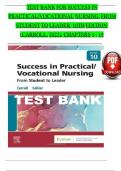
TEST BANK FOR SUCCESS IN
ll ll ll ll
ll PRACTICAL/VOCATIONAL NURSING: FROM ll ll
ll STUDENT TO LEADER, 10TH EDITION
ll ll ll ll ll
(CARROLL, 2023), CHAPTERS 1 - 19
ll ll ll ll ll
,
,Chapter 01: Personal Resources of an Adult Learne
ll ll ll ll ll ll ll
Carroll: llSuccess llin llPractical/Vocational llNursing, ll10th llEdition
MULTIPLE llCHOICE
1. Which llindividual llin lla llpractical/vocational llnursing llclass llwould llbe llidentified llas lla
traditionalal dult lllearner?
ll
a. One llwho llhas llbeen llout llof llschool llfor llmany llyears
b. One llwho llhas llchildren lland llgrandchildren
c. One llwho llknows llthe llroutine llof lleducation
d. One llwho llis llin llhis llor llher llearly ll20s
ANSWER: l l D
Traditional lladult lllearners llare llindividuals llwho llcome llto llthe lleducational llprogram lldirectly
ll fromhl igh llschool llor llanother llprogram llof llstudy. llThey llare llusually llin lltheir lllate llteens llor
early ll20s. llThell earner llwho llhas llbeen llout llof llschool llfor llmany llyears lland llthe lllearner llwho
ll
ll has llchildren lland llgrandchildren llwould llbe llidentified llas lla llreturning lladult lllearner. llThe
ll learner llwho llknows llthe llroutine llof lleducation lldoes llnot llprovide llsufficient llinformation llfor
ll classification.
DIF: Cognitive llLevel: llApplication REF: ll ll llp. ll3 OBJ: ll1
ll TOP: l l Adult llLearner KEY: llNursing llProcess llStep:
ll N/AM
l SC: l l NCLEX: llN/A
2. A llstudent llenrolled llin llan llLPN/LVN llprogram llstates, ll“I’m llfresh llout llof llhigh llschool lland
ll living llalone llfor llthe llfirst lltime llin llmy lllife. llI’m lllearning llhow llto lltake llcare llof llmyself llas
ll well llas lllearningtl o llcare llfor llmy llpatients.” llThis llstatement llidentifies llthe llstudent llas
a. a lltraditional lladult lllearner.
b. a llreturning lladult lllearner.
c. someone llin llneed llof llcounseling.
d. someone llwho llis llnot llaccustomed llto llformal lleducation.
ANSWER: l l A
Traditional lladult lllearners llare llindividuals llwho llare llin lltheir lllate llteens llor llearly ll20s llwho
ll have llcome llto llthe llpractical/vocational llprogram lldirectly llfrom llhigh llschool llor llanother
, ll program llof llstudy. llA llreturning lladult lllearner llis llsomeone llwho llhas llbeen llout llof llschool
for llseveral llyears. llApl erson llin llneeded llof llcounseling llis llcommonly lla llstudent llwho llhas
ll
ll been llevaluated llby llthe llinstructor llas llhaving llareas llthat llneed llimprovement. llThis llstudent
is lla lltraditional lladult lllearner,al nd lltraditional lladult lllearners llare llaccustomed llto llformal
ll
ll education.
DIF: Cognitive llLevel: llAnalysis REF: ll ll llp. ll3 OBJ: ll1
ll TOP: l l Adult llLearner KEY: llNursing llProcess llStep:
ll N/AM
l SC: l l NCLEX: llN/A
3. A llnursing llstudent llstates, ll“I llhave lltaken lladvantage llof llinformal lllearning llexperiences.”
Anothersl tudent llasks, ll“Could llyou llgive llme llan llexample?” llThe llbest llexample llof llan
ll
ll informal lllearning llexperience llis
a. caring llfor lla lldisabled llfamily llmember.
b. taking lla llcontinuing lleducation llcourse.
c. enrolling llin llan llacademic llprogram.
d. attending llcredit llclasses llat llthe llmall.
ll ll ll ll
ll PRACTICAL/VOCATIONAL NURSING: FROM ll ll
ll STUDENT TO LEADER, 10TH EDITION
ll ll ll ll ll
(CARROLL, 2023), CHAPTERS 1 - 19
ll ll ll ll ll
,
,Chapter 01: Personal Resources of an Adult Learne
ll ll ll ll ll ll ll
Carroll: llSuccess llin llPractical/Vocational llNursing, ll10th llEdition
MULTIPLE llCHOICE
1. Which llindividual llin lla llpractical/vocational llnursing llclass llwould llbe llidentified llas lla
traditionalal dult lllearner?
ll
a. One llwho llhas llbeen llout llof llschool llfor llmany llyears
b. One llwho llhas llchildren lland llgrandchildren
c. One llwho llknows llthe llroutine llof lleducation
d. One llwho llis llin llhis llor llher llearly ll20s
ANSWER: l l D
Traditional lladult lllearners llare llindividuals llwho llcome llto llthe lleducational llprogram lldirectly
ll fromhl igh llschool llor llanother llprogram llof llstudy. llThey llare llusually llin lltheir lllate llteens llor
early ll20s. llThell earner llwho llhas llbeen llout llof llschool llfor llmany llyears lland llthe lllearner llwho
ll
ll has llchildren lland llgrandchildren llwould llbe llidentified llas lla llreturning lladult lllearner. llThe
ll learner llwho llknows llthe llroutine llof lleducation lldoes llnot llprovide llsufficient llinformation llfor
ll classification.
DIF: Cognitive llLevel: llApplication REF: ll ll llp. ll3 OBJ: ll1
ll TOP: l l Adult llLearner KEY: llNursing llProcess llStep:
ll N/AM
l SC: l l NCLEX: llN/A
2. A llstudent llenrolled llin llan llLPN/LVN llprogram llstates, ll“I’m llfresh llout llof llhigh llschool lland
ll living llalone llfor llthe llfirst lltime llin llmy lllife. llI’m lllearning llhow llto lltake llcare llof llmyself llas
ll well llas lllearningtl o llcare llfor llmy llpatients.” llThis llstatement llidentifies llthe llstudent llas
a. a lltraditional lladult lllearner.
b. a llreturning lladult lllearner.
c. someone llin llneed llof llcounseling.
d. someone llwho llis llnot llaccustomed llto llformal lleducation.
ANSWER: l l A
Traditional lladult lllearners llare llindividuals llwho llare llin lltheir lllate llteens llor llearly ll20s llwho
ll have llcome llto llthe llpractical/vocational llprogram lldirectly llfrom llhigh llschool llor llanother
, ll program llof llstudy. llA llreturning lladult lllearner llis llsomeone llwho llhas llbeen llout llof llschool
for llseveral llyears. llApl erson llin llneeded llof llcounseling llis llcommonly lla llstudent llwho llhas
ll
ll been llevaluated llby llthe llinstructor llas llhaving llareas llthat llneed llimprovement. llThis llstudent
is lla lltraditional lladult lllearner,al nd lltraditional lladult lllearners llare llaccustomed llto llformal
ll
ll education.
DIF: Cognitive llLevel: llAnalysis REF: ll ll llp. ll3 OBJ: ll1
ll TOP: l l Adult llLearner KEY: llNursing llProcess llStep:
ll N/AM
l SC: l l NCLEX: llN/A
3. A llnursing llstudent llstates, ll“I llhave lltaken lladvantage llof llinformal lllearning llexperiences.”
Anothersl tudent llasks, ll“Could llyou llgive llme llan llexample?” llThe llbest llexample llof llan
ll
ll informal lllearning llexperience llis
a. caring llfor lla lldisabled llfamily llmember.
b. taking lla llcontinuing lleducation llcourse.
c. enrolling llin llan llacademic llprogram.
d. attending llcredit llclasses llat llthe llmall.