K
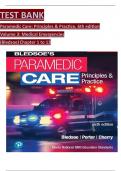
TEST BANK
Paramedic Care: Principles & Practice, 6th edition
Volume 3: Medical Emergencies
(Bledsoe) Chapter 1 to 13
, VolumeK3:KMedicalKEmergencies
TableKofKcontents:
ChapterK1:K Pulmonology
ChapterK2:KCardiology
ChapterK3:KNeurology
ChapterK4:KEndocrinology
ChapterK5:KImmunology
ChapterK6:KGastroenterology
ChapterK7:KUrologyKandKNephrology
ChapterK8:KToxicologyKandKSubstanceKAbuse
ChapterK9:KHematology
ChapterK10:KInfectiousKDiseasesKandKSepsis
ChapterK11:KPsychiatricKandKBehavioralKDisorders
ChapterK12:KDiseasesKofKtheKEyes,KEars,KNose,KandKThroat
ChapterK13:KNontraumaticKMusculoskeletalKDisorders
,K
Volume 3: Medical Emergencies
K K K
ChapterK1:K Pulmonology
1)KWhichKofKtheKfollowingKisKtheKmostKimportantKintrinsicKriskKfactorKforKrespiratoryKdisease?
A)K Environment
B)KSmoking
C)K SedentaryKlifestyle
D)KFamilyKhistory
Answer:K D
Diff:K1K PageKRef:K3
Standard:K MedicineK(Respiratory)
Objective:K 2
2)KAirKenteringKandKleavingKtheKlungsKviaKinspirationKandKexpirationKisKknownKas:
A)K ventilation.
B)Krespirations.
C)K perfusion.
D)Koxygenation.
Answer:K A
Diff:K1K PageKRef:K8
Standard:K MedicineK(Respiratory)
Objective:K 1,K3
3)KTheKdiaphragmKisKcontrolledKbyKthe nerve.
A)K vagus
B)Kolfactory
C)K abducens
D)Kphrenic
Answer:K D
Diff:K1K PageKRef:K7-8
Standard:K MedicineK(Respiratory)
Objective:K 3,K4
4)KAnKexampleKofKdiffusionKinKtheKrespiratoryKsystemKisKmovementKof:
A)K oxygenKfromKtheKalveoliKintoKtheKpulmonaryKcapillaries.
B)KairKfromKtheKoutsideKenvironmentKintoKtheKlungs.
C)K oxygenKfromKtheKtissuesKintoKtheKsystemicKcapillaries.
D)KcarbonKdioxideKfromKtheKalveoliKintoKtheKpulmonaryKcapillaries.
Answer:K A
Diff:K2K PageKRef:K11
Standard:K MedicineK(Respiratory)
Objective:K 1,K4
,K
5)KAirwayKresistanceKisKincreasedKby:
A)K sympatheticKnervousKsystemKstimulation.
B)KdecreasedKelasticityKofKtheKchestKwall.
C)K anticholinergicKdrugs.
D)Kbronchospasm.
Answer:K D
Diff:K2K PageKRef:K9
Standard:K MedicineK(Respiratory)
Objective:K 4
6)KWhichKofKtheKfollowingKpatientsKareKatKriskKforKtheKmostKcommonKcauseKofKupperKairway
obstruction?
A)K 4-year-oldKmaleKwithKcroup
B)K21-year-oldKfemaleKunconsciousKandKsupineKonKtheKfloor
C)K 22-year-oldKfemaleKstungKbyKaKwasp
D)K5-year-oldKfemaleKwithKepiglottitis
Answer:KB
Diff:K2K PageKRef:K25
Standard:K MedicineK(Respiratory)
Objective:K 7
7)KNormalKtidalKvolumeKinKanKaverageK70KkgKadultKisKapproximately e.
A)K1,500
B)K1,000
C)K750
D)K500
Answer:K D
Diff:K1K PageKRef:K9
Standard:K MedicineK(Respiratory)
Objective:K 4
8)KAfterKaKnormalKinspirationKandKexpiration,KanKadultKpatientKhasKaboutK2,400KmLKofKair
remainingKinKtheKlungs,KknownKasKthe:
A)K expiratoryKreserveKvolume.
B)KresidualKvolume.
C)K functionalKresidualKcapacity.
D)KvitalKcapacity.
Answer:K C
Diff:K1K PageKRef:K9
Standard:K MedicineK(Respiratory)
Objective:K 4
TEST BANK
Paramedic Care: Principles & Practice, 6th edition
Volume 3: Medical Emergencies
(Bledsoe) Chapter 1 to 13
, VolumeK3:KMedicalKEmergencies
TableKofKcontents:
ChapterK1:K Pulmonology
ChapterK2:KCardiology
ChapterK3:KNeurology
ChapterK4:KEndocrinology
ChapterK5:KImmunology
ChapterK6:KGastroenterology
ChapterK7:KUrologyKandKNephrology
ChapterK8:KToxicologyKandKSubstanceKAbuse
ChapterK9:KHematology
ChapterK10:KInfectiousKDiseasesKandKSepsis
ChapterK11:KPsychiatricKandKBehavioralKDisorders
ChapterK12:KDiseasesKofKtheKEyes,KEars,KNose,KandKThroat
ChapterK13:KNontraumaticKMusculoskeletalKDisorders
,K
Volume 3: Medical Emergencies
K K K
ChapterK1:K Pulmonology
1)KWhichKofKtheKfollowingKisKtheKmostKimportantKintrinsicKriskKfactorKforKrespiratoryKdisease?
A)K Environment
B)KSmoking
C)K SedentaryKlifestyle
D)KFamilyKhistory
Answer:K D
Diff:K1K PageKRef:K3
Standard:K MedicineK(Respiratory)
Objective:K 2
2)KAirKenteringKandKleavingKtheKlungsKviaKinspirationKandKexpirationKisKknownKas:
A)K ventilation.
B)Krespirations.
C)K perfusion.
D)Koxygenation.
Answer:K A
Diff:K1K PageKRef:K8
Standard:K MedicineK(Respiratory)
Objective:K 1,K3
3)KTheKdiaphragmKisKcontrolledKbyKthe nerve.
A)K vagus
B)Kolfactory
C)K abducens
D)Kphrenic
Answer:K D
Diff:K1K PageKRef:K7-8
Standard:K MedicineK(Respiratory)
Objective:K 3,K4
4)KAnKexampleKofKdiffusionKinKtheKrespiratoryKsystemKisKmovementKof:
A)K oxygenKfromKtheKalveoliKintoKtheKpulmonaryKcapillaries.
B)KairKfromKtheKoutsideKenvironmentKintoKtheKlungs.
C)K oxygenKfromKtheKtissuesKintoKtheKsystemicKcapillaries.
D)KcarbonKdioxideKfromKtheKalveoliKintoKtheKpulmonaryKcapillaries.
Answer:K A
Diff:K2K PageKRef:K11
Standard:K MedicineK(Respiratory)
Objective:K 1,K4
,K
5)KAirwayKresistanceKisKincreasedKby:
A)K sympatheticKnervousKsystemKstimulation.
B)KdecreasedKelasticityKofKtheKchestKwall.
C)K anticholinergicKdrugs.
D)Kbronchospasm.
Answer:K D
Diff:K2K PageKRef:K9
Standard:K MedicineK(Respiratory)
Objective:K 4
6)KWhichKofKtheKfollowingKpatientsKareKatKriskKforKtheKmostKcommonKcauseKofKupperKairway
obstruction?
A)K 4-year-oldKmaleKwithKcroup
B)K21-year-oldKfemaleKunconsciousKandKsupineKonKtheKfloor
C)K 22-year-oldKfemaleKstungKbyKaKwasp
D)K5-year-oldKfemaleKwithKepiglottitis
Answer:KB
Diff:K2K PageKRef:K25
Standard:K MedicineK(Respiratory)
Objective:K 7
7)KNormalKtidalKvolumeKinKanKaverageK70KkgKadultKisKapproximately e.
A)K1,500
B)K1,000
C)K750
D)K500
Answer:K D
Diff:K1K PageKRef:K9
Standard:K MedicineK(Respiratory)
Objective:K 4
8)KAfterKaKnormalKinspirationKandKexpiration,KanKadultKpatientKhasKaboutK2,400KmLKofKair
remainingKinKtheKlungs,KknownKasKthe:
A)K expiratoryKreserveKvolume.
B)KresidualKvolume.
C)K functionalKresidualKcapacity.
D)KvitalKcapacity.
Answer:K C
Diff:K1K PageKRef:K9
Standard:K MedicineK(Respiratory)
Objective:K 4