

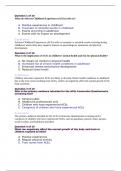
Question 1 of 10
What do Adverse Childhood Experiences (ACEs) refer to?
A. Positive experiences in childhood
B. Traumatic or stressful events in childhood
C. Events occurring in adulthood
D. Events with no impact on development
Explanation
Adverse Childhood Experiences (ACEs) refer to traumatic or stressful events occurring during
childhood, which often have negative impacts on psychological, emotional, and physical
development.
Question 2 of 10
What is the implication of ACEs on children's mental health and risk for physical health?
A. No impact on mental or physical health
B. Increased risk of chronic health conditions in adulthood
C. Enhanced mental and physical development
D. Reduced stress levels
Explanation
Children who later experience ACEs are likely to develop chronic health conditions in adulthood
due to the toxic stress resulting from ACEs, which can negatively affect the normal growth of the
body and brain.
Question 3 of 10
Who is the primary audience intended for the ACEs Connection Questionnaire
screening tool?
A. General public
B. Healthcare professionals only
C. Children who have experienced ACEs
D. Caregivers of children who have experienced ACEs
Explanation
The primary audience intended for the ACEs Connection Questionnaire screening tool is
caregivers of children who have experienced ACEs, such as guardians, parents, foster parents,
social workers, and healthcare providers.
Question 4 of 10
What can negatively affect the normal growth of the body and brain in
children exposed to ACEs?
A. Positive experiences
B. Regular physical activity
E. Toxic stress from ACEs
What do Adverse Childhood Experiences (ACEs) refer to?
A. Positive experiences in childhood
B. Traumatic or stressful events in childhood
C. Events occurring in adulthood
D. Events with no impact on development
Explanation
Adverse Childhood Experiences (ACEs) refer to traumatic or stressful events occurring during
childhood, which often have negative impacts on psychological, emotional, and physical
development.
Question 2 of 10
What is the implication of ACEs on children's mental health and risk for physical health?
A. No impact on mental or physical health
B. Increased risk of chronic health conditions in adulthood
C. Enhanced mental and physical development
D. Reduced stress levels
Explanation
Children who later experience ACEs are likely to develop chronic health conditions in adulthood
due to the toxic stress resulting from ACEs, which can negatively affect the normal growth of the
body and brain.
Question 3 of 10
Who is the primary audience intended for the ACEs Connection Questionnaire
screening tool?
A. General public
B. Healthcare professionals only
C. Children who have experienced ACEs
D. Caregivers of children who have experienced ACEs
Explanation
The primary audience intended for the ACEs Connection Questionnaire screening tool is
caregivers of children who have experienced ACEs, such as guardians, parents, foster parents,
social workers, and healthcare providers.
Question 4 of 10
What can negatively affect the normal growth of the body and brain in
children exposed to ACEs?
A. Positive experiences
B. Regular physical activity
E. Toxic stress from ACEs


