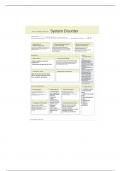
ACTIVE LEARNING TEMPLATE: System Disorder
STUDENT NAME _____________________________________
44,
Anticipating Provider Prescriptions for a Child Who Has Major Burns
DISORDER/DISEASE PROCESS __________________________________________________________ REVIEW MODULE CHAPTER ___________ 75
Alterations in Pathophysiology Related Health Promotion and
Health (Diagnosis) to Client Problem Disease Prevention
Burns over the over the bodies tissue, including internal Burns are wounds caused by an - Provide adequate supervision
organs as well. greatly can effect organs from inhalation
of smoke, even tissue damage will cause serious Energy transfer from a heat source to - Establish a safe play area
imbalances in the body the body, heating the tissue enough to - Keep hot liquids, electrical cords, and
cause damage. dangling objects out of reach
ASSESSMENT SAFETY
CONSIDERATIONS
Risk Factors Expected Findings "I & O"
- Type of burning agent (dry heat, moist heat, chemical, electrical, 1. Equipment: hard
- Abuse, neglect, or lack of ionizing radiation) - Duration of contact - Area of body in which the plastic urometer on an
burn occured - Younger children have deeper injuries due to thinner
supervision skin. Children < 2 y.o. have a higher mortality due to decreased indwelling catheter
protein stores and immature renal and immune functioning drainage bag, graduated
- Developmental growth of child - Extent, depth, and severity of injury
cylinders, urinal, or toilet
receptacle
2. Procedure nursing
actions
- Measure output from a
Laboratory Tests Diagnostic Procedures bedpan, commode, or
collection bag into a
CBC, blood electrolytes, BUN, graduated container
- Use a receptacle to
ABGs, random glucose levels, measure urine clients
liver enzymes, urinalysis void into the toilet
- Use markings on the
side of the urinal to
measure urine
- *Less than 30 mL/hr for
2+hr is a concern
PATIENT-CENTERED CARE Complications
Nursing Care Medications Client Education 1. Inhalation injury
- The child should continue to perform range-of-motion exercises and to work - Direct thermal
- Remove clothing or jewerly that might conduct heat
1. Topical agents: with a physical therapist to prevent contractures
injury
- Apply cool water soaks or run cool water over injury; do not use ice
- Flush chemical burns w/ a large volume of water - Assess the wound for infection and perform wound care
- Cover the burn with a clean cloth to prevent contamination and hypothermia
silver sulfadiazine, - Perform age-appropriate safety measures for the home
- carbon monoxide
- Provide warmth - Avoid sun exposure between 10AM to 2PM, wear protective clothing, and
apply sunscreen to prevent sunburn.
mafenide acetate,
- Perform an ABCDE primary survey and provide treatment
- Monitor I&O, Weigh clients each day at the same time, after voiding, and - Expect delays in growth and weight for up to 3 years post burn injury
- Increased risk of bone remodeling
injury
while wearing the same type of clothes
bacitracin
2. Morphine 2. Shock/systemic
sulfate sepsis
3. Midazolam,
fentanyl, propofol, 3. Pulmonary
and nitrous oxide problems
Therapeutic Procedures Interprofessional Care
(sedation and 4. Wound
- Major burns: provide humidified 100%
supplemental oxygen as prescribed analgesia) Refer to services (nutrition, infections
- Maintain urine output of 0.5 to 1 mL/kg/hr if the 4. nitrous child life, social support,
child weighs less than 30 kg (66 lb)
- Maintain urine output of 30 mL/hr if the child oxide/oxygen respiratory therapy,
weighs more than 30 kg (66 lb)
- Be prepared to administer blood products as
mixture (short term occupational/physical therapy,
prescribed analgesic gas. individual and family
50%) counseling) as prescribed.
ACTIVE LEARNING TEMPLATES
STUDENT NAME _____________________________________
44,
Anticipating Provider Prescriptions for a Child Who Has Major Burns
DISORDER/DISEASE PROCESS __________________________________________________________ REVIEW MODULE CHAPTER ___________ 75
Alterations in Pathophysiology Related Health Promotion and
Health (Diagnosis) to Client Problem Disease Prevention
Burns over the over the bodies tissue, including internal Burns are wounds caused by an - Provide adequate supervision
organs as well. greatly can effect organs from inhalation
of smoke, even tissue damage will cause serious Energy transfer from a heat source to - Establish a safe play area
imbalances in the body the body, heating the tissue enough to - Keep hot liquids, electrical cords, and
cause damage. dangling objects out of reach
ASSESSMENT SAFETY
CONSIDERATIONS
Risk Factors Expected Findings "I & O"
- Type of burning agent (dry heat, moist heat, chemical, electrical, 1. Equipment: hard
- Abuse, neglect, or lack of ionizing radiation) - Duration of contact - Area of body in which the plastic urometer on an
burn occured - Younger children have deeper injuries due to thinner
supervision skin. Children < 2 y.o. have a higher mortality due to decreased indwelling catheter
protein stores and immature renal and immune functioning drainage bag, graduated
- Developmental growth of child - Extent, depth, and severity of injury
cylinders, urinal, or toilet
receptacle
2. Procedure nursing
actions
- Measure output from a
Laboratory Tests Diagnostic Procedures bedpan, commode, or
collection bag into a
CBC, blood electrolytes, BUN, graduated container
- Use a receptacle to
ABGs, random glucose levels, measure urine clients
liver enzymes, urinalysis void into the toilet
- Use markings on the
side of the urinal to
measure urine
- *Less than 30 mL/hr for
2+hr is a concern
PATIENT-CENTERED CARE Complications
Nursing Care Medications Client Education 1. Inhalation injury
- The child should continue to perform range-of-motion exercises and to work - Direct thermal
- Remove clothing or jewerly that might conduct heat
1. Topical agents: with a physical therapist to prevent contractures
injury
- Apply cool water soaks or run cool water over injury; do not use ice
- Flush chemical burns w/ a large volume of water - Assess the wound for infection and perform wound care
- Cover the burn with a clean cloth to prevent contamination and hypothermia
silver sulfadiazine, - Perform age-appropriate safety measures for the home
- carbon monoxide
- Provide warmth - Avoid sun exposure between 10AM to 2PM, wear protective clothing, and
apply sunscreen to prevent sunburn.
mafenide acetate,
- Perform an ABCDE primary survey and provide treatment
- Monitor I&O, Weigh clients each day at the same time, after voiding, and - Expect delays in growth and weight for up to 3 years post burn injury
- Increased risk of bone remodeling
injury
while wearing the same type of clothes
bacitracin
2. Morphine 2. Shock/systemic
sulfate sepsis
3. Midazolam,
fentanyl, propofol, 3. Pulmonary
and nitrous oxide problems
Therapeutic Procedures Interprofessional Care
(sedation and 4. Wound
- Major burns: provide humidified 100%
supplemental oxygen as prescribed analgesia) Refer to services (nutrition, infections
- Maintain urine output of 0.5 to 1 mL/kg/hr if the 4. nitrous child life, social support,
child weighs less than 30 kg (66 lb)
- Maintain urine output of 30 mL/hr if the child oxide/oxygen respiratory therapy,
weighs more than 30 kg (66 lb)
- Be prepared to administer blood products as
mixture (short term occupational/physical therapy,
prescribed analgesic gas. individual and family
50%) counseling) as prescribed.
ACTIVE LEARNING TEMPLATES