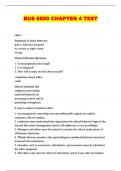
BUS 6600 CHAPTER 4 TEST
ethics
Standards of moral behavior;
that is, behavior accepted
by society as right versus
wrong.
Ethical Dilemma Questions
1. Is my proposed action legal?
2. Is it balanced?
3. How will it make me feel about myself?
compliance-based ethics
codes
Ethical standards that
emphasize preventing
unlawful behavior by
increasing control and by
penalizing wrongdoers.
6 steps to improve business ethics
1. top management must adopt and unconditionally support an explicit
corporate code of conduct.
2. employers must understand that expectations for ethical behavior begin at the
top and that senior management expects all employees to act accordingly.
3. Managers and others must be trained to consider the ethical implications of
all business decisions.
4. Whistle blowers (insiders who report illegal or unethical behavior) must feel
protected from retaliation.
5. Outsiders such as contractors, distributors, and customers must be told about
the ethics programs.
6. The ethics code must be enforced with timely action if any rules are broken.
, integrity-based ethics
codes
Ethical standards that
define the organization's
guiding values, create an
environment that supports
ethically sound behavior, and
stress a shared accountability
among employees.
whistleblowers
Insiders who report illegal or
unethical behavior.
Sarbanes-Oxley Act
protects whistleblowers
by requiring all public corporations to allow employee concerns about
accounting
and auditing to be submitted confidentially and anonymously.
ethics officer
set a positive tone, communicate effectively, and relate well
to employees at every level.
corporate social
responsibility (CSR)
A business's concern for the
welfare of society.
Even Adam
Smith,
the father of capitalism, believed that self-interested pursuit of profit was wrong
and
that benevolence was the highest virtue
Social performance dimensions
ethics
Standards of moral behavior;
that is, behavior accepted
by society as right versus
wrong.
Ethical Dilemma Questions
1. Is my proposed action legal?
2. Is it balanced?
3. How will it make me feel about myself?
compliance-based ethics
codes
Ethical standards that
emphasize preventing
unlawful behavior by
increasing control and by
penalizing wrongdoers.
6 steps to improve business ethics
1. top management must adopt and unconditionally support an explicit
corporate code of conduct.
2. employers must understand that expectations for ethical behavior begin at the
top and that senior management expects all employees to act accordingly.
3. Managers and others must be trained to consider the ethical implications of
all business decisions.
4. Whistle blowers (insiders who report illegal or unethical behavior) must feel
protected from retaliation.
5. Outsiders such as contractors, distributors, and customers must be told about
the ethics programs.
6. The ethics code must be enforced with timely action if any rules are broken.
, integrity-based ethics
codes
Ethical standards that
define the organization's
guiding values, create an
environment that supports
ethically sound behavior, and
stress a shared accountability
among employees.
whistleblowers
Insiders who report illegal or
unethical behavior.
Sarbanes-Oxley Act
protects whistleblowers
by requiring all public corporations to allow employee concerns about
accounting
and auditing to be submitted confidentially and anonymously.
ethics officer
set a positive tone, communicate effectively, and relate well
to employees at every level.
corporate social
responsibility (CSR)
A business's concern for the
welfare of society.
Even Adam
Smith,
the father of capitalism, believed that self-interested pursuit of profit was wrong
and
that benevolence was the highest virtue
Social performance dimensions