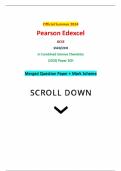
2024_OCR: A Level Classical Greek H444/04 Verse Literature (Merged Question Paper & Marking Scheme)
Key Areas to Revise:
1. Overview of Verse Literature
Key Authors: Homer, Hesiod, Sophocles, Euripides, Pindar.
Genres: Epic, lyric, tragedy, and didactic poetry.
2. Key Texts
Homer: Iliad & Odyssey - Heroism, fate, divine influence.
Hesiod: Theogony & Works and Days - Creation, morality.
Sophocles: Oedipus Rex & Antigone - Fate vs. free will.
3. Key Themes
Heroism: Bravery and glory in Homer.
Fate vs. Free Will: In Homer and tragedies.
Divine Influence: Gods’ impact in human affairs.
Justice & Morality: Lessons in Hesiod and tragedy.
4. Language & Style
Meter: Dactylic hexameter (epics), iambic trimeter (tragedy).
Devices: Epithets, similes, irony, and dramatic tension.
5. Literary Techniques
Imagery & Irony: Key in Homer and tragedies.
Chorus: Commentary and reflecting community values.
6. Interpretation
Context: Historical and social background.
Analysis: Themes, language, and literary devices.
7. Exam Technique
Translation & Analysis: Practice translating and analyzing.
Essay Writing: Structure with clear arguments and evidence.
,GCE
Classical Greek
H444/04: Verse literature
A Level
Mark Scheme for June 2024
Oxford Cambridge and RSA Examinations
,OCR (Oxford Cambridge and RSA) is a leading UK awarding body, providing a wide range of
qualifications to meet the needs of candidates of all ages and abilities. OCR qualifications
include AS/A Levels, Diplomas, GCSEs, Cambridge Nationals, Cambridge Technicals,
Functional Skills, Key Skills, Entry Level qualifications, NVQs and vocational qualifications in
areas such as IT, business, languages, teaching/training, administration and secretarial skills.
It is also responsible for developing new specifications to meet national requirements and the
needs of students and teachers. OCR is a not-for-profit organisation; any surplus made is
invested back into the establishment to help towards the development of qualifications and
support, which keep pace with the changing needs of today’s society.
This mark scheme is published as an aid to teachers and students, to indicate the requirements
of the examination. It shows the basis on which marks were awarded by examiners. It does not
indicate the details of the discussions which took place at an examiners’ meeting before marking
commenced.
All examiners are instructed that alternative correct answers and unexpected approaches in
candidates’ scripts must be given marks that fairly reflect the relevant knowledge and skills
demonstrated.
Mark schemes should be read in conjunction with the published question papers and the report
on the examination.
© OCR 2024
Oxford Cambridge and RSA Examinations
, H444/04 Mark Scheme June 2024
MARKING INSTRUCTIONS
PREPARATION FOR MARKING
RM ASSESSOR
1. Make sure that you have accessed and completed the relevant training packages for on-screen marking: RM Assessor Online Training; OCR
Essential Guide to Marking.
2. Make sure that you have read and understood the mark scheme and the question paper for this unit. These are posted on the RM Cambridge
Assessment Support Portal http://www.rm.com/support/ca
3. Log-in to RM Assessor and mark the required number of practice responses (“scripts”) and the number of required standardisation responses.
YOU MUST MARK 10 PRACTICE AND 10 STANDARDISATION RESPONSES BEFORE YOU CAN BE APPROVED TO MARK LIVE SCRIPTS.
MARKING
1. Mark strictly to the mark scheme.
2. Marks awarded must relate directly to the marking criteria.
3. The schedule of dates is very important. It is essential that you meet the RM Assessor 50% and 100% (traditional 40% Batch 1 and 100% Batch 2)
deadlines. If you experience problems, you must contact your Team Leader (Supervisor) without delay.
4. If you are in any doubt about applying the mark scheme, consult your Team Leader by telephone or the RM Assessor messaging sy stem, or by email.
5. Crossed Out Responses
Where a candidate has crossed out a response and provided a clear alternative then the crossed out response is not marked. Where no alternative
response has been provided, examiners may give candidates the benefit of the doubt and mark the crossed out response whe re legible.
2
Key Areas to Revise:
1. Overview of Verse Literature
Key Authors: Homer, Hesiod, Sophocles, Euripides, Pindar.
Genres: Epic, lyric, tragedy, and didactic poetry.
2. Key Texts
Homer: Iliad & Odyssey - Heroism, fate, divine influence.
Hesiod: Theogony & Works and Days - Creation, morality.
Sophocles: Oedipus Rex & Antigone - Fate vs. free will.
3. Key Themes
Heroism: Bravery and glory in Homer.
Fate vs. Free Will: In Homer and tragedies.
Divine Influence: Gods’ impact in human affairs.
Justice & Morality: Lessons in Hesiod and tragedy.
4. Language & Style
Meter: Dactylic hexameter (epics), iambic trimeter (tragedy).
Devices: Epithets, similes, irony, and dramatic tension.
5. Literary Techniques
Imagery & Irony: Key in Homer and tragedies.
Chorus: Commentary and reflecting community values.
6. Interpretation
Context: Historical and social background.
Analysis: Themes, language, and literary devices.
7. Exam Technique
Translation & Analysis: Practice translating and analyzing.
Essay Writing: Structure with clear arguments and evidence.
,GCE
Classical Greek
H444/04: Verse literature
A Level
Mark Scheme for June 2024
Oxford Cambridge and RSA Examinations
,OCR (Oxford Cambridge and RSA) is a leading UK awarding body, providing a wide range of
qualifications to meet the needs of candidates of all ages and abilities. OCR qualifications
include AS/A Levels, Diplomas, GCSEs, Cambridge Nationals, Cambridge Technicals,
Functional Skills, Key Skills, Entry Level qualifications, NVQs and vocational qualifications in
areas such as IT, business, languages, teaching/training, administration and secretarial skills.
It is also responsible for developing new specifications to meet national requirements and the
needs of students and teachers. OCR is a not-for-profit organisation; any surplus made is
invested back into the establishment to help towards the development of qualifications and
support, which keep pace with the changing needs of today’s society.
This mark scheme is published as an aid to teachers and students, to indicate the requirements
of the examination. It shows the basis on which marks were awarded by examiners. It does not
indicate the details of the discussions which took place at an examiners’ meeting before marking
commenced.
All examiners are instructed that alternative correct answers and unexpected approaches in
candidates’ scripts must be given marks that fairly reflect the relevant knowledge and skills
demonstrated.
Mark schemes should be read in conjunction with the published question papers and the report
on the examination.
© OCR 2024
Oxford Cambridge and RSA Examinations
, H444/04 Mark Scheme June 2024
MARKING INSTRUCTIONS
PREPARATION FOR MARKING
RM ASSESSOR
1. Make sure that you have accessed and completed the relevant training packages for on-screen marking: RM Assessor Online Training; OCR
Essential Guide to Marking.
2. Make sure that you have read and understood the mark scheme and the question paper for this unit. These are posted on the RM Cambridge
Assessment Support Portal http://www.rm.com/support/ca
3. Log-in to RM Assessor and mark the required number of practice responses (“scripts”) and the number of required standardisation responses.
YOU MUST MARK 10 PRACTICE AND 10 STANDARDISATION RESPONSES BEFORE YOU CAN BE APPROVED TO MARK LIVE SCRIPTS.
MARKING
1. Mark strictly to the mark scheme.
2. Marks awarded must relate directly to the marking criteria.
3. The schedule of dates is very important. It is essential that you meet the RM Assessor 50% and 100% (traditional 40% Batch 1 and 100% Batch 2)
deadlines. If you experience problems, you must contact your Team Leader (Supervisor) without delay.
4. If you are in any doubt about applying the mark scheme, consult your Team Leader by telephone or the RM Assessor messaging sy stem, or by email.
5. Crossed Out Responses
Where a candidate has crossed out a response and provided a clear alternative then the crossed out response is not marked. Where no alternative
response has been provided, examiners may give candidates the benefit of the doubt and mark the crossed out response whe re legible.
2