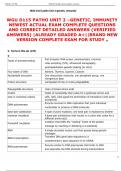
3/16/25, 7:27 PM WGU D115 patho Unit 2-genetic, immunity
WGU D115 patho Unit 2-genetic, immunity
WGU D115 PATHO UNIT 2 –GENETIC, IMMUNITY
NEWEST ACTUAL EXAM COMPLETE QUESTIONS
AND CORRECT DETAILED ANSWERS (VERIFIED
ANSWERS) |ALREADY GRADED A+||BRAND NEW
VERSION COMPLETE EXAM FOR STUDY
Terms in this set (178)
first trimester DNA screen, amniocentesis, chorionic
Types of prenatal testing
villus sampling (CVS), ultrasound sonography,
preimplantation genetic testing (in vitro)
Four bases of DNA Adenine, Thymine, Guanine, Cytosine
Nucleotide structure One deoxynlose molecule, one phosphate group, one
nitrogenous base
Protein structure composed of one or more polypeptide
Polypeptide structure chain of linked amino acids
Codon triplet of nucleotides that codes for a particular amino acid
stop or nonsense codons UAA, UAG, UGA signal the termination of translation (with some
exceptions)
Enzyme involved in DNA replication that joins individual
DNA polymerase
nucleotides to produce a DNA molecule
base-pair substitution A type of point mutation; one base pair is replaced by another
missense mutation A base-pair substitution that results in a codon that codes for a
different amino acid.
mutation that shifts the "reading" frame of the genetic
frameshift mutation
message by inserting or deleting a nucleotide
RNA A single-stranded nucleic acid that passes along genetic
messages
Transfers DNA gene base sequence to a
RNA transcription
complementary base sequence of an mRNA
Enzyme similar to DNA polymerase that binds to DNA
RNA polymerase
and separates the DNA strands during transcription
1/1
2
, 3/16/25, 7:27 PM WGU D115 patho Unit 2-genetic, immunity
- messenger RNA (mRNA) produced in transcription
RNA translation
is decoded to produce a specific amino acid chain, or
polypeptide, that will later fold into an active protein
Ribosomes protein synthesis, aided in translation of mRNA and RNA
a threadlike structure of nucleic acids and protein found
Chromosomes
in the nucleus of most living cells, carrying genetic
information in the form of genes.
somatic cells Any cells in the body other than reproductive cells
process in which the number of chromosomes per cell is
Meiosis
cut in half through the separation of homologous
chromosomes in a diploid cell
homologous chromosomes Chromosomes that have the same sequence of genes and the
same structure
Autosomes Chromosomes that are not directly involved in determining the
sex of an individual.
One of the 23 pairs of chromosomes in the human,
sex chromosomes
contains genes that will determine the sex of the
individual. X and Y
Karyotype A display of the chromosome pairs of a cell arranged by size and
shape.
Euploid cells cells with a multiple of the normal number of chromosomes
Polyploid condition in which an organism has extra sets of chromosomes
Triploidy when an organism has three copies of every chromsome instead
of two
Tetraploidy 92 chromosomes, 4 copies of each
Aneuploid cells Do not contain multiple of 23
Monosomy Only one copy of chromosome, lethal amoung autosomes
Trisomy 3 copies of one chromosome
Partial trisomy only a portion of a chromosome is duplicated in each cell
Chromosome Mosaicism Body has two or more different cell lines, each of which has a
different karyotype
Trisomy X Syndrome Most common, usually maternal, sx. Worse with each X
A missing X chromosome in females can cause
Turner Syndrome (XO)
intellectual disability and sexual underdevelopment.
Short stature, webbed neck, wide nipples. Usually
paternal.
Extra X chromosome, May have multiple X's.
Klinefelter Syndrome (XXY)
underdeveloped sex organs, breast development,
large hands, and long arms and legs
2/1
2
WGU D115 patho Unit 2-genetic, immunity
WGU D115 PATHO UNIT 2 –GENETIC, IMMUNITY
NEWEST ACTUAL EXAM COMPLETE QUESTIONS
AND CORRECT DETAILED ANSWERS (VERIFIED
ANSWERS) |ALREADY GRADED A+||BRAND NEW
VERSION COMPLETE EXAM FOR STUDY
Terms in this set (178)
first trimester DNA screen, amniocentesis, chorionic
Types of prenatal testing
villus sampling (CVS), ultrasound sonography,
preimplantation genetic testing (in vitro)
Four bases of DNA Adenine, Thymine, Guanine, Cytosine
Nucleotide structure One deoxynlose molecule, one phosphate group, one
nitrogenous base
Protein structure composed of one or more polypeptide
Polypeptide structure chain of linked amino acids
Codon triplet of nucleotides that codes for a particular amino acid
stop or nonsense codons UAA, UAG, UGA signal the termination of translation (with some
exceptions)
Enzyme involved in DNA replication that joins individual
DNA polymerase
nucleotides to produce a DNA molecule
base-pair substitution A type of point mutation; one base pair is replaced by another
missense mutation A base-pair substitution that results in a codon that codes for a
different amino acid.
mutation that shifts the "reading" frame of the genetic
frameshift mutation
message by inserting or deleting a nucleotide
RNA A single-stranded nucleic acid that passes along genetic
messages
Transfers DNA gene base sequence to a
RNA transcription
complementary base sequence of an mRNA
Enzyme similar to DNA polymerase that binds to DNA
RNA polymerase
and separates the DNA strands during transcription
1/1
2
, 3/16/25, 7:27 PM WGU D115 patho Unit 2-genetic, immunity
- messenger RNA (mRNA) produced in transcription
RNA translation
is decoded to produce a specific amino acid chain, or
polypeptide, that will later fold into an active protein
Ribosomes protein synthesis, aided in translation of mRNA and RNA
a threadlike structure of nucleic acids and protein found
Chromosomes
in the nucleus of most living cells, carrying genetic
information in the form of genes.
somatic cells Any cells in the body other than reproductive cells
process in which the number of chromosomes per cell is
Meiosis
cut in half through the separation of homologous
chromosomes in a diploid cell
homologous chromosomes Chromosomes that have the same sequence of genes and the
same structure
Autosomes Chromosomes that are not directly involved in determining the
sex of an individual.
One of the 23 pairs of chromosomes in the human,
sex chromosomes
contains genes that will determine the sex of the
individual. X and Y
Karyotype A display of the chromosome pairs of a cell arranged by size and
shape.
Euploid cells cells with a multiple of the normal number of chromosomes
Polyploid condition in which an organism has extra sets of chromosomes
Triploidy when an organism has three copies of every chromsome instead
of two
Tetraploidy 92 chromosomes, 4 copies of each
Aneuploid cells Do not contain multiple of 23
Monosomy Only one copy of chromosome, lethal amoung autosomes
Trisomy 3 copies of one chromosome
Partial trisomy only a portion of a chromosome is duplicated in each cell
Chromosome Mosaicism Body has two or more different cell lines, each of which has a
different karyotype
Trisomy X Syndrome Most common, usually maternal, sx. Worse with each X
A missing X chromosome in females can cause
Turner Syndrome (XO)
intellectual disability and sexual underdevelopment.
Short stature, webbed neck, wide nipples. Usually
paternal.
Extra X chromosome, May have multiple X's.
Klinefelter Syndrome (XXY)
underdeveloped sex organs, breast development,
large hands, and long arms and legs
2/1
2