

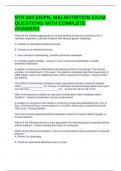
NTR 604 EN/PN, MALNUTRITION EXAM
QUESTIONS WITH COMPLETE
ANSWERS
Which of the following approaches to enteral feeding would you recommend for a
ventilator dependent, critically ill patient with delayed gastric emptying?
A. Change to intermittent feeding schedule
B. Change to an elemental formula
C. Use continuous tubefeeding, consider prokinetic medication
D. Consider gastric feeding - Answer-C. Use continuous tubefeeding, consider
prokinetic medication
A patient is receiving an intermittent tube feeding of 300 cc formula qid. The formula
provides 1.5 kcal/ml and is 79% water. The patient's estimated daily fluid requirement is
1800 ml/day. How much additional water will be required per feeding? - Answer-215ml
per feeding
The ASPEN Critical Illness Guideline states that enteral nutrition should be initiated
within ________________ hrs of injury or admission and the feedings advanced to goal
over the next _____________________ hrs. - Answer-24-48 hrs; 48-72 hrs
Why is hemodynamic stability an important consideration before initiating enteral
nutrition? - Answer-GI perfusion may be compromised
A resident of a long-term care facility is receiving a nocturnal tubefeeding from 7pm to
9am. The formula has a concentration of 1.5 kcal/ml. What rate is required to provide
1650 kcal? - Answer-80ml/hr
The most common gastrointestinal complication related to enteral nutrition support is: -
Answer-diarrhea
Which of the following actions is most appropriate for improving gastric emptying during
enteral feeding? - Answer-change from bolus to continuous
Which of the following techniques is NOT recommended to reduce aspiration in tube fed
patients?
A. Monitor for dysphagia.
B. Check for abdominal distention every 4 hours.
, C. Administer a hypertonic formula.
D. Elevate HOB (head of bed) to 30-45 degrees. - Answer-C. Administer a hypertonic
formula.
Enteral nutrition by tube is not indicated in:
A. Pneumonia
B. Cardiac cachexia
C. Small bowel obstruction
D. Anorexia nervosa - Answer-C. Small bowel obstruction
A continuous drip tubefeeding of a 1.2 kcal/ml formula is being infused at 90 ml/hr for 24
hours per day. The formula is 53% kcal from carbohydrate, 18% protein and 29% fat.
How many calories and grams of protein are delivered in a 24 hour period? - Answer-
2592kcal and 116g protein
Indications for EN: (4) - Answer-inadequate oral intake
oral route unavailable but functioning GI
severe wasting or depressed growth
impaired digestion, absorption, metabolism
Contraindications for EN: (14) - Answer-oral intake 75% of needs
peritonitis
intestinal obstruction
intractable diarrhea, N/V
GI ischemia or severe GI bleed
Fistula
severe pancreatitis
severe malabsorption
early SBS
acute enteritis
paralytic ileus
septic shock
poor prognosis
against wishes
Why is EN contraindicated in septic shock? - Answer-improper blood flow to stomach
Complications of EN: (4) - Answer-residuals
diarrhea
aspiration pneumonia
dehydration
QUESTIONS WITH COMPLETE
ANSWERS
Which of the following approaches to enteral feeding would you recommend for a
ventilator dependent, critically ill patient with delayed gastric emptying?
A. Change to intermittent feeding schedule
B. Change to an elemental formula
C. Use continuous tubefeeding, consider prokinetic medication
D. Consider gastric feeding - Answer-C. Use continuous tubefeeding, consider
prokinetic medication
A patient is receiving an intermittent tube feeding of 300 cc formula qid. The formula
provides 1.5 kcal/ml and is 79% water. The patient's estimated daily fluid requirement is
1800 ml/day. How much additional water will be required per feeding? - Answer-215ml
per feeding
The ASPEN Critical Illness Guideline states that enteral nutrition should be initiated
within ________________ hrs of injury or admission and the feedings advanced to goal
over the next _____________________ hrs. - Answer-24-48 hrs; 48-72 hrs
Why is hemodynamic stability an important consideration before initiating enteral
nutrition? - Answer-GI perfusion may be compromised
A resident of a long-term care facility is receiving a nocturnal tubefeeding from 7pm to
9am. The formula has a concentration of 1.5 kcal/ml. What rate is required to provide
1650 kcal? - Answer-80ml/hr
The most common gastrointestinal complication related to enteral nutrition support is: -
Answer-diarrhea
Which of the following actions is most appropriate for improving gastric emptying during
enteral feeding? - Answer-change from bolus to continuous
Which of the following techniques is NOT recommended to reduce aspiration in tube fed
patients?
A. Monitor for dysphagia.
B. Check for abdominal distention every 4 hours.
, C. Administer a hypertonic formula.
D. Elevate HOB (head of bed) to 30-45 degrees. - Answer-C. Administer a hypertonic
formula.
Enteral nutrition by tube is not indicated in:
A. Pneumonia
B. Cardiac cachexia
C. Small bowel obstruction
D. Anorexia nervosa - Answer-C. Small bowel obstruction
A continuous drip tubefeeding of a 1.2 kcal/ml formula is being infused at 90 ml/hr for 24
hours per day. The formula is 53% kcal from carbohydrate, 18% protein and 29% fat.
How many calories and grams of protein are delivered in a 24 hour period? - Answer-
2592kcal and 116g protein
Indications for EN: (4) - Answer-inadequate oral intake
oral route unavailable but functioning GI
severe wasting or depressed growth
impaired digestion, absorption, metabolism
Contraindications for EN: (14) - Answer-oral intake 75% of needs
peritonitis
intestinal obstruction
intractable diarrhea, N/V
GI ischemia or severe GI bleed
Fistula
severe pancreatitis
severe malabsorption
early SBS
acute enteritis
paralytic ileus
septic shock
poor prognosis
against wishes
Why is EN contraindicated in septic shock? - Answer-improper blood flow to stomach
Complications of EN: (4) - Answer-residuals
diarrhea
aspiration pneumonia
dehydration


