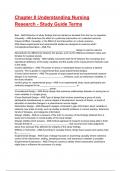
Chapter 8 Understanding Nursing
Research - Study Guide Terms
Bias - ANS-Distortion of study findings that are slanted or deviated from the true or expected.
\Causality - ANS-Examines the effect of a particular intervention on a selected outcome.
\Cause & Effect, Causality, or the Effect of and Intervention on a study outcome -
ANS-Quasi-experimental and experimental studies are designed to examine what?
\Comparative Descriptive - ANS-The
_________________________________________________ design is used to examine
descriptively the differences between two groups, such as the difference between males and
females for surgical anxiety.
\Construct Design Validity - ANS-Validity concerned with the fit between the conceptual and
operational definitions of the study variables and the quality of the measurement methods used
in the study.
\Control (definition) - ANS-The power to direct or manipulate factors to achieve a desired
outcome. This is greater in experimental than quasi-experimental designs.
\Control (short-answer) - ANS-The purpose of quasi-experimental and experimental research
designs is to maximize _____________________of factors, such as extraneous variables, in
the study situation.
\control group vs. experimental group - ANS-In an experimental study, study participants are
randomly assigned to the _____________________________ or
____________________________ group.
\Correlational Design - ANS-Study design that examines relationships between or among two or
more variables in a single group.
\Cross-Sectional Design - ANS-Type of design that involves examining a group of study
participants simultaneously in various stages of development, severity of illness, or levels of
education to describe changes in a phenomenon across stages.
\Descriptive Design - ANS-Research designs conducted to gain information about variables in
relatively new areas of study, such as studies to identify problems in current practice, determine
trends of illnesses, and categorize information.
\Design Validity - ANS-Is a measure of the truth or accuracy of the findings obtained from a
study and is focused on overall quality of the study design.
\Design Validity (short answer) - ANS-Critical appraisal of research involves being able to think
through threats to _____________________________ that occurred and make judgments
about how seriously they affected the integrity of the study findings.
\Effects or Outcomes - ANS-According to causality theory, things have causes and causes lead
to __________.
\Experimental Design - ANS-Type of design focused on examining causality where extensive
control of the intervention, setting, sampling process, and extraneous variables is possible.
\Experimenter Expectancy - ANS-Threat to construct validity where researchers' predictions
might bias or influence the outcomes of a study.
Research - Study Guide Terms
Bias - ANS-Distortion of study findings that are slanted or deviated from the true or expected.
\Causality - ANS-Examines the effect of a particular intervention on a selected outcome.
\Cause & Effect, Causality, or the Effect of and Intervention on a study outcome -
ANS-Quasi-experimental and experimental studies are designed to examine what?
\Comparative Descriptive - ANS-The
_________________________________________________ design is used to examine
descriptively the differences between two groups, such as the difference between males and
females for surgical anxiety.
\Construct Design Validity - ANS-Validity concerned with the fit between the conceptual and
operational definitions of the study variables and the quality of the measurement methods used
in the study.
\Control (definition) - ANS-The power to direct or manipulate factors to achieve a desired
outcome. This is greater in experimental than quasi-experimental designs.
\Control (short-answer) - ANS-The purpose of quasi-experimental and experimental research
designs is to maximize _____________________of factors, such as extraneous variables, in
the study situation.
\control group vs. experimental group - ANS-In an experimental study, study participants are
randomly assigned to the _____________________________ or
____________________________ group.
\Correlational Design - ANS-Study design that examines relationships between or among two or
more variables in a single group.
\Cross-Sectional Design - ANS-Type of design that involves examining a group of study
participants simultaneously in various stages of development, severity of illness, or levels of
education to describe changes in a phenomenon across stages.
\Descriptive Design - ANS-Research designs conducted to gain information about variables in
relatively new areas of study, such as studies to identify problems in current practice, determine
trends of illnesses, and categorize information.
\Design Validity - ANS-Is a measure of the truth or accuracy of the findings obtained from a
study and is focused on overall quality of the study design.
\Design Validity (short answer) - ANS-Critical appraisal of research involves being able to think
through threats to _____________________________ that occurred and make judgments
about how seriously they affected the integrity of the study findings.
\Effects or Outcomes - ANS-According to causality theory, things have causes and causes lead
to __________.
\Experimental Design - ANS-Type of design focused on examining causality where extensive
control of the intervention, setting, sampling process, and extraneous variables is possible.
\Experimenter Expectancy - ANS-Threat to construct validity where researchers' predictions
might bias or influence the outcomes of a study.