

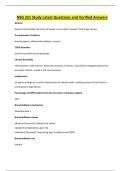
NSG 251 Study Latest Questions and Verified Answers
Asthma
Recurrent/reversible shortness of breath- occurs when airways of the lungs narrow
3 components of asthma
bronchospasm, inflammation/edema, mucous
COPD disorders
chronic bronchitis and emphysema
Chronic bronchitis
inflammation of the bronchi- excessive secretion of mucous. Caused by prolonged exposure to
bronchial irritants- smoke is the most common
emphysema
air spaces enlarge as a result of destruction of alveolar walls- smoking causes this but there is
some genetic dependency
Percentage of COPD patients that do not stick to treatment regime
50%
Bronchodilators mechanism
Stimulate beta 2
Bronchodilators names
albuterol (Proventil)- inhaled, first choice
epinephrine (Adrenalin)- given SQ
salmeterol (Serevent)- long acting beta 2 (asthma and COPD)
Bronchodilators use
asthma
,Bronchodilators adverse
Tachycardia and increased force of contraction
Bronchodilators contraindications
cardiac tachyarrhythmias, severe CAD, HTN, DM
Bronchodilators nursing implications
-Teach prevention of asthma attacks (triggers)
-Wait 3-5 mins between puffs
-Rinse mouth
-May use spacer
-Bronchodilator first then other inhaler
-Mark rescue inhaler for easy ID
Anticholinergics mechanism
block action of acetylcholine in the bronchial smooth muscle; prevent bronchoconstriction
Anticholinergics names
ipratropium (Atrovent)- not for rescue
tiotropium (Spiriva)- not for rescue
Anticholinergic use
Maintenance therapy for bronchitis/emphysema
Anticholinergic adverse
nervousness, HA, hypotension, GI distress
Xanthines mechanism/use
cause bronchodilation (asthma, chronic bronchitis, emphysema); not a first line agent- potential
for drug interactions
, Xanthine name
theophylline (Theo-dur, Aminophylline)
Xanthine adverse
CNS stimulation, increases CO, restlessness, convulsions, tachycardia, toxicity (seizures,
arrhythmias)
Xanthine therapeutic level
5-15 mcg/ml
Leukotriene modifers mechanism
leukotrienes cause bronchoconstriction and inflammation- modify these
Leukotriene modifers names
zafirlukast (Accolate)
montelukast (Singulair)
Leukotriene modifers uses
For asthma, used along with bronchodilators and steroids; used for prevention only
Leukotriene modifers adverse
N/V, HA, infection
Leukotriene modifers contraindication
Liver disease
Leukotriene modifers nursing implications
Monitor liver enzymes; 1 hr before or 2 hrs after meals for best absorption
Corticosteroids mechanism
suppress inflammation, decrease mucous production, decrease edema
Asthma
Recurrent/reversible shortness of breath- occurs when airways of the lungs narrow
3 components of asthma
bronchospasm, inflammation/edema, mucous
COPD disorders
chronic bronchitis and emphysema
Chronic bronchitis
inflammation of the bronchi- excessive secretion of mucous. Caused by prolonged exposure to
bronchial irritants- smoke is the most common
emphysema
air spaces enlarge as a result of destruction of alveolar walls- smoking causes this but there is
some genetic dependency
Percentage of COPD patients that do not stick to treatment regime
50%
Bronchodilators mechanism
Stimulate beta 2
Bronchodilators names
albuterol (Proventil)- inhaled, first choice
epinephrine (Adrenalin)- given SQ
salmeterol (Serevent)- long acting beta 2 (asthma and COPD)
Bronchodilators use
asthma
,Bronchodilators adverse
Tachycardia and increased force of contraction
Bronchodilators contraindications
cardiac tachyarrhythmias, severe CAD, HTN, DM
Bronchodilators nursing implications
-Teach prevention of asthma attacks (triggers)
-Wait 3-5 mins between puffs
-Rinse mouth
-May use spacer
-Bronchodilator first then other inhaler
-Mark rescue inhaler for easy ID
Anticholinergics mechanism
block action of acetylcholine in the bronchial smooth muscle; prevent bronchoconstriction
Anticholinergics names
ipratropium (Atrovent)- not for rescue
tiotropium (Spiriva)- not for rescue
Anticholinergic use
Maintenance therapy for bronchitis/emphysema
Anticholinergic adverse
nervousness, HA, hypotension, GI distress
Xanthines mechanism/use
cause bronchodilation (asthma, chronic bronchitis, emphysema); not a first line agent- potential
for drug interactions
, Xanthine name
theophylline (Theo-dur, Aminophylline)
Xanthine adverse
CNS stimulation, increases CO, restlessness, convulsions, tachycardia, toxicity (seizures,
arrhythmias)
Xanthine therapeutic level
5-15 mcg/ml
Leukotriene modifers mechanism
leukotrienes cause bronchoconstriction and inflammation- modify these
Leukotriene modifers names
zafirlukast (Accolate)
montelukast (Singulair)
Leukotriene modifers uses
For asthma, used along with bronchodilators and steroids; used for prevention only
Leukotriene modifers adverse
N/V, HA, infection
Leukotriene modifers contraindication
Liver disease
Leukotriene modifers nursing implications
Monitor liver enzymes; 1 hr before or 2 hrs after meals for best absorption
Corticosteroids mechanism
suppress inflammation, decrease mucous production, decrease edema


