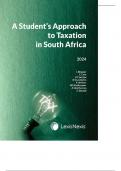
,Graded Questions
on
Auditing
2022
,
,Graded Questions
on Auditing
2022
G Richard
C Roets
A Adams
,Members of the LexisNexis Group worldwide
South Africa LexisNexis (Pty) Ltd
www.lexisnexis.co.za
JOHANNESBURG Building 8, Country Club Estate Office Park, 21 Woodlands Drive,
Woodmead, 2191
CAPE TOWN First Floor, Great Westerford, 240 Main Road, Rondebosch, 7700
DURBAN 215 Peter Mokaba Road (North Ridge Road), Morningside,
Durban, 4001
Australia LexisNexis, CHATSWOOD, New South Wales
Austria LexisNexis Verlag ARD Orac, VIENNA
Benelux LexisNexis Benelux, AMSTERDAM
Canada LexisNexis Canada, MARKHAM, Ontario
China LexisNexis, BEIJING
France LexisNexis, PARIS
Germany LexisNexis Germany, MÜNSTER
Hong Kong LexisNexis, HONG KONG
India LexisNexis, NEW DELHI
Italy Giuffrè Editore, MILAN
Japan LexisNexis, TOKYO
Korea LexisNexis, SEOUL
Malaysia LexisNexis, KUALA LUMPUR
New Zealand LexisNexis, WELLINGTON
Poland LexisNexis Poland, WARSAW
Singapore LexisNexis, SINGAPORE
United Kingdom LexisNexis, LONDON
United States LexisNexis, DAYTON, Ohio
© 2021
ISBN 978-0-6390-1415-9 (softback)
978-0-6390-1416-6 (e-book)
Copyright subsists in this work. No part of this work may be reproduced in any form or by any
means without the publisher’s written permission. Any unauthorised reproduction of this work
will constitute a copyright infringement and render the doer liable under both civil and criminal
law.
Whilst every effort has been made to ensure that the information published in this work is
accurate, the editors, authors, writers, contributors, publishers and printers take no responsibil-
ity for any loss or damage suffered by any person as a result of the reliance upon the information
contained therein.
Editor: Mandy Jonck
Typesetters: Maggie Talanda
,Contents
Page
Chapter 1 An introduction to auditing and sundry auditing topics .............. 1
The purpose and nature of auditing; Terminology; Postulates;
Responsibilities of auditors; Qualities and qualifications;
Public interest scores
Chapter 2 Corporate governance, internal auditing
and audit committees ........................................................................ 15
Chapter 3 Professional conduct and ethical considerations ........................ 43
Code of Professional Conduct (ET); Auditors' liability
Chapter 4 Basics: Evidence, assertions, internal control – general
computerised environments: Introduction, general controls ............. 65
Evidence; Assertions; Internal control – general
computerised environments; Introduction; General controls
Chapter 5 Preliminary engagement activities and planning ......................... 99
Preliminary engagement activities; Engagement letters;
Audit strategy and audit plan
Chapter 6 Materiality, risk and fraud .......................................................... 117
Materiality; Financial statement assertions; Risk evaluation; Fraud
Chapter 7 Audit sampling ........................................................................... 149
Chapter 8 The revenue and receipts cycle: Sales, debtors, cash
and cash at bank ............................................................................... 165
System design/analysis, manual and computerised;
Audit procedures, manual and computerised
Chapter 9 Payroll and personnel cycle......................................................... 197
System design/analysis, manual and computerised;
Audit procedures, manual and computerised
Chapter 10 The acquisition and payments cycle: Purchases,
creditors and accruals ....................................................................... 213
System design/analysis, manual and computerised;
Audit procedures, manual and computerised
v
,vi Graded Questions on Auditing
Page
Chapter 11 Inventory and production cycle ................................................. 241
System design/analysis, manual and computerised;
Audit procedures, manual and computerised
Chapter 12 Finance and investment cycle.................................................... 261
System design/analysis, manual and computerised;
Audit procedures, manual and computerised
Chapter 13 Statutory ................................................................................... 289
Auditing Profession Act 2005; The Companies Act 2008;
The Close Corporations Act 1984
Chapter 14 Completing the audit ................................................................ 317
Subsequent events; Evaluating and concluding;
Audit differences; Assessment of going concern ability;
Trading when liabilities exceed assets
Chapter 15 Reports ..................................................................................... 341
Standard and modified audit reports; Standard and modified
review reports; Related services: Compilation and factual findings;
Accounting officer reports
, CHAPTER
1
An introduction to auditing
and sundry auditing topics
1.1 (20 marks 24 minutes)
Listed below are terms that you will come across in your auditing studies and in the
practice of auditing:
1. Audit opinion
2. Audit independence
3. Professional scepticism
4. Risk assessment procedures
5. Assertions
6. The IRBA
7. Engagement letter
8. Auditing Profession Act
9. Pervasive
10. Audit evidence
YOU ARE REQUIRED TO:
Briefly explain each of the above terms.
1.2 (22 marks 26 minutes)
The Companies Act 2008 and its accompanying Regulations 2011 require that every
company and close corporation calculate what is termed its “public interest score”.
YOU ARE REQUIRED TO:
(a) Explain the term public interest score and how it is calculated. (8)
(b) All public and state-owned companies must calculate their public interest score
to determine whether they must have their annual financial statements audited.
True or false? Justify. (1,5)
1
,2 Graded Questions on Auditing
(c) Explain fully, the link between the public interest score of a private company
and the type of assurance engagement (if any) to which the company must
subject its annual financial statements. (8)
(d) All companies that hold assets in a fiduciary capacity must have their annual
financial statements audited, regardless of their public interest score. True or
false? Justify. (1,5)
(e) Briefly explain how a company that is not required to have its annual financial
statements audited in terms of the Companies Act or its public interest score,
may voluntarily elect an audit. (3)
1.3 (12 marks 14 minutes)
YOU ARE REQUIRED TO:
Indicate whether each of the following statements is true or false. Where you have
selected false, provide a brief explanation.
1. The primary objective of the external audit of a company is to ensure that the
company had complied with all the laws and regulations with which it must
comply.
2. One of the duties of an auditor is to head the audit committee of an audit client.
3. If an auditor is independent, it is irrelevant whether others perceive him as not
being independent.
4. With an unmodified audit opinion, the auditor certifies that the client's finan-
cial statements are free from any misstatements.
5. Shareholders and other users can assume that the amounts reflected in a com-
pany's financial statements are 100% correct only if they have been properly
audited.
6. Independence is the characteristic common to all types of auditors, for example
external auditors, government auditors, etc.
7. To be able to express an opinion, the auditor must gather sufficient appropriate
evidence on which to base his/her opinion.
8. To ensure that the audit is carried out to an acceptable standard, the auditor
must comply with the International Financial Reporting Standards require-
ments.
9. The directors of a private company with a public interest score of 175 may
overrule a requirement in the company’s Memorandum of Incorporation that
requires that the company be externally audited annually.
10. As an audit procedure, inquiry consists of seeking relevant information from
the management of the entity.
, Chapter 1: An introduction to auditing and sundry auditing topics 3
1.4 (12 marks 15 minutes)
Mr Toni is the managing director of a newly incorporated company, Tiger Ltd. The
company trades in a very competitive environment. Mr Toni’s son is a registered
auditor. Mr Toni directed the following questions to you:
• Firstly, Tiger Ltd trades in such a competitive environment, how can I be sure that the
auditors would keep our customer and supplier information confidential? I surely do not
want any competitors to steal business form Tiger Ltd!
• Secondly, I do not understand why my son cannot be appointed as Tiger Ltd’s auditor. He
is a man of high integrity and even though we are related, he will most definitely ensure
that he is independent in performing his tasks as auditor.
• I also know that my son will have Tiger Ltd’s best interest at heart, and I cannot say the
same of an unfamiliar auditor.
YOU ARE REQUIRED TO:
(a) Respond to Mr Toni’s concern regarding the auditor’s keeping information
confidential (first bullet point). (2)
(b) Explain the term “independent” in relation to members of the auditing pro-
fession. (3)
(c) Respond to Mr Toni’s remarks regarding appointing his son as auditor of Tiger
Ltd (second bullet point). (5)
(d) Respond to Mr Toni’s remarks regarding the auditor having an audit client’s
“best interest at heart”. (2)
1.5 (20 marks 24 minutes)
Part A (10 marks 12 minutes)
Josephine Sithole and her sister, Annah Sithole, have both recently qualified as
CA(SA)s. Josephine wishes to start her own auditing firm one day. As such, she is
aware that she will have to register with the IRBA in future. Annah, on the other
hand, has taken up employment in the finance department of her local municipality.
Annah’s role does not require registration with the IRBA.
YOU ARE REQUIRED TO:
(a) Briefly explain the difference between a chartered accountant in public practice
and a chartered accountant in business. (4)
(b) Why does Josephine need to register with the IRBA while Annah does not? (1)
(c) What requirements must one satisfy to become a member of the IRBA? (3)
(d) If Annah later decides to leave her job at the municipality and instead focus on
presenting auditing lectures to audit trainees, will she still be allowed to be a
member of SAICA and use the designation CA(SA)? (2)
on
Auditing
2022
,
,Graded Questions
on Auditing
2022
G Richard
C Roets
A Adams
,Members of the LexisNexis Group worldwide
South Africa LexisNexis (Pty) Ltd
www.lexisnexis.co.za
JOHANNESBURG Building 8, Country Club Estate Office Park, 21 Woodlands Drive,
Woodmead, 2191
CAPE TOWN First Floor, Great Westerford, 240 Main Road, Rondebosch, 7700
DURBAN 215 Peter Mokaba Road (North Ridge Road), Morningside,
Durban, 4001
Australia LexisNexis, CHATSWOOD, New South Wales
Austria LexisNexis Verlag ARD Orac, VIENNA
Benelux LexisNexis Benelux, AMSTERDAM
Canada LexisNexis Canada, MARKHAM, Ontario
China LexisNexis, BEIJING
France LexisNexis, PARIS
Germany LexisNexis Germany, MÜNSTER
Hong Kong LexisNexis, HONG KONG
India LexisNexis, NEW DELHI
Italy Giuffrè Editore, MILAN
Japan LexisNexis, TOKYO
Korea LexisNexis, SEOUL
Malaysia LexisNexis, KUALA LUMPUR
New Zealand LexisNexis, WELLINGTON
Poland LexisNexis Poland, WARSAW
Singapore LexisNexis, SINGAPORE
United Kingdom LexisNexis, LONDON
United States LexisNexis, DAYTON, Ohio
© 2021
ISBN 978-0-6390-1415-9 (softback)
978-0-6390-1416-6 (e-book)
Copyright subsists in this work. No part of this work may be reproduced in any form or by any
means without the publisher’s written permission. Any unauthorised reproduction of this work
will constitute a copyright infringement and render the doer liable under both civil and criminal
law.
Whilst every effort has been made to ensure that the information published in this work is
accurate, the editors, authors, writers, contributors, publishers and printers take no responsibil-
ity for any loss or damage suffered by any person as a result of the reliance upon the information
contained therein.
Editor: Mandy Jonck
Typesetters: Maggie Talanda
,Contents
Page
Chapter 1 An introduction to auditing and sundry auditing topics .............. 1
The purpose and nature of auditing; Terminology; Postulates;
Responsibilities of auditors; Qualities and qualifications;
Public interest scores
Chapter 2 Corporate governance, internal auditing
and audit committees ........................................................................ 15
Chapter 3 Professional conduct and ethical considerations ........................ 43
Code of Professional Conduct (ET); Auditors' liability
Chapter 4 Basics: Evidence, assertions, internal control – general
computerised environments: Introduction, general controls ............. 65
Evidence; Assertions; Internal control – general
computerised environments; Introduction; General controls
Chapter 5 Preliminary engagement activities and planning ......................... 99
Preliminary engagement activities; Engagement letters;
Audit strategy and audit plan
Chapter 6 Materiality, risk and fraud .......................................................... 117
Materiality; Financial statement assertions; Risk evaluation; Fraud
Chapter 7 Audit sampling ........................................................................... 149
Chapter 8 The revenue and receipts cycle: Sales, debtors, cash
and cash at bank ............................................................................... 165
System design/analysis, manual and computerised;
Audit procedures, manual and computerised
Chapter 9 Payroll and personnel cycle......................................................... 197
System design/analysis, manual and computerised;
Audit procedures, manual and computerised
Chapter 10 The acquisition and payments cycle: Purchases,
creditors and accruals ....................................................................... 213
System design/analysis, manual and computerised;
Audit procedures, manual and computerised
v
,vi Graded Questions on Auditing
Page
Chapter 11 Inventory and production cycle ................................................. 241
System design/analysis, manual and computerised;
Audit procedures, manual and computerised
Chapter 12 Finance and investment cycle.................................................... 261
System design/analysis, manual and computerised;
Audit procedures, manual and computerised
Chapter 13 Statutory ................................................................................... 289
Auditing Profession Act 2005; The Companies Act 2008;
The Close Corporations Act 1984
Chapter 14 Completing the audit ................................................................ 317
Subsequent events; Evaluating and concluding;
Audit differences; Assessment of going concern ability;
Trading when liabilities exceed assets
Chapter 15 Reports ..................................................................................... 341
Standard and modified audit reports; Standard and modified
review reports; Related services: Compilation and factual findings;
Accounting officer reports
, CHAPTER
1
An introduction to auditing
and sundry auditing topics
1.1 (20 marks 24 minutes)
Listed below are terms that you will come across in your auditing studies and in the
practice of auditing:
1. Audit opinion
2. Audit independence
3. Professional scepticism
4. Risk assessment procedures
5. Assertions
6. The IRBA
7. Engagement letter
8. Auditing Profession Act
9. Pervasive
10. Audit evidence
YOU ARE REQUIRED TO:
Briefly explain each of the above terms.
1.2 (22 marks 26 minutes)
The Companies Act 2008 and its accompanying Regulations 2011 require that every
company and close corporation calculate what is termed its “public interest score”.
YOU ARE REQUIRED TO:
(a) Explain the term public interest score and how it is calculated. (8)
(b) All public and state-owned companies must calculate their public interest score
to determine whether they must have their annual financial statements audited.
True or false? Justify. (1,5)
1
,2 Graded Questions on Auditing
(c) Explain fully, the link between the public interest score of a private company
and the type of assurance engagement (if any) to which the company must
subject its annual financial statements. (8)
(d) All companies that hold assets in a fiduciary capacity must have their annual
financial statements audited, regardless of their public interest score. True or
false? Justify. (1,5)
(e) Briefly explain how a company that is not required to have its annual financial
statements audited in terms of the Companies Act or its public interest score,
may voluntarily elect an audit. (3)
1.3 (12 marks 14 minutes)
YOU ARE REQUIRED TO:
Indicate whether each of the following statements is true or false. Where you have
selected false, provide a brief explanation.
1. The primary objective of the external audit of a company is to ensure that the
company had complied with all the laws and regulations with which it must
comply.
2. One of the duties of an auditor is to head the audit committee of an audit client.
3. If an auditor is independent, it is irrelevant whether others perceive him as not
being independent.
4. With an unmodified audit opinion, the auditor certifies that the client's finan-
cial statements are free from any misstatements.
5. Shareholders and other users can assume that the amounts reflected in a com-
pany's financial statements are 100% correct only if they have been properly
audited.
6. Independence is the characteristic common to all types of auditors, for example
external auditors, government auditors, etc.
7. To be able to express an opinion, the auditor must gather sufficient appropriate
evidence on which to base his/her opinion.
8. To ensure that the audit is carried out to an acceptable standard, the auditor
must comply with the International Financial Reporting Standards require-
ments.
9. The directors of a private company with a public interest score of 175 may
overrule a requirement in the company’s Memorandum of Incorporation that
requires that the company be externally audited annually.
10. As an audit procedure, inquiry consists of seeking relevant information from
the management of the entity.
, Chapter 1: An introduction to auditing and sundry auditing topics 3
1.4 (12 marks 15 minutes)
Mr Toni is the managing director of a newly incorporated company, Tiger Ltd. The
company trades in a very competitive environment. Mr Toni’s son is a registered
auditor. Mr Toni directed the following questions to you:
• Firstly, Tiger Ltd trades in such a competitive environment, how can I be sure that the
auditors would keep our customer and supplier information confidential? I surely do not
want any competitors to steal business form Tiger Ltd!
• Secondly, I do not understand why my son cannot be appointed as Tiger Ltd’s auditor. He
is a man of high integrity and even though we are related, he will most definitely ensure
that he is independent in performing his tasks as auditor.
• I also know that my son will have Tiger Ltd’s best interest at heart, and I cannot say the
same of an unfamiliar auditor.
YOU ARE REQUIRED TO:
(a) Respond to Mr Toni’s concern regarding the auditor’s keeping information
confidential (first bullet point). (2)
(b) Explain the term “independent” in relation to members of the auditing pro-
fession. (3)
(c) Respond to Mr Toni’s remarks regarding appointing his son as auditor of Tiger
Ltd (second bullet point). (5)
(d) Respond to Mr Toni’s remarks regarding the auditor having an audit client’s
“best interest at heart”. (2)
1.5 (20 marks 24 minutes)
Part A (10 marks 12 minutes)
Josephine Sithole and her sister, Annah Sithole, have both recently qualified as
CA(SA)s. Josephine wishes to start her own auditing firm one day. As such, she is
aware that she will have to register with the IRBA in future. Annah, on the other
hand, has taken up employment in the finance department of her local municipality.
Annah’s role does not require registration with the IRBA.
YOU ARE REQUIRED TO:
(a) Briefly explain the difference between a chartered accountant in public practice
and a chartered accountant in business. (4)
(b) Why does Josephine need to register with the IRBA while Annah does not? (1)
(c) What requirements must one satisfy to become a member of the IRBA? (3)
(d) If Annah later decides to leave her job at the municipality and instead focus on
presenting auditing lectures to audit trainees, will she still be allowed to be a
member of SAICA and use the designation CA(SA)? (2)