Marriage and Family Counseling Final
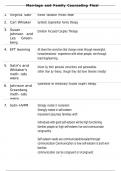
1. Virginia Satir Human Validation Process Model
2. Carl Whiaker Symbolic Experiential Family therapy
3. Susan Emotion Focused Couples Therapy
Johnson and
Les Green-
berg
4. EFT learning All share the conviction that change comes through meaningful,
human/emotional experience with other people, not through
teaching/learning.
5. Satir's and driven by their personal convictions and personalities
Whitaker's
rather than by theory, though they did have theories (mostly)
meth- ods
were
systematize an emotionally focused couple's therapy.
6. Johnson and
Greenberg
meth- ods
were
7. Satir--HVPM Strongly rooted in humanism
Strongly rooted in self-esteem
movement assumes families with
individuals with good self-esteem will be high functioning
families people w/ high self-esteem live and communicate
congruently
Self esteem needs are communicated/revealed through
communication Communication is how self-esteem is built w/in
families
communication can be congruent or incongruent.
1/
23
, Marriage and Family Counseling Final
8. HVPM blamer-need is to feel important. Gained by littling
pos-
tures/role others placater-need is accepted. Feel
s
marginalized
2/
23
, Marriage and Family Counseling Final
super-reasonable/computer-need is to feel in control. Appearing super
rational irrelevant-feel disregarded or ignored
9. HVPM Roles therapist supports and encourages (cheerleads) for family as they
and experience
Interventions chaos of reorganization.
therapist communicates congruently (aka "levels")
therapist creates/contributes to a safe, encouraging, accepting
atmosphere.
10. HVPM success that family moves toward congruence and individuals experience
improvement in self-esteem.
11. Whitaker-SEFT People will symbolically interact with one another
using symbols helps them stay safe.
Whitaker would introduce new, troubling symbols.
12. Whittaker- to provoke them toward experience
Seft Roles if they become disorganized, they will have to reorganize--toward
and maturity would often use a co-therapist (like an anchor)
intervention self-disclosure/identification
s no specific techniques
anything "alive"
13. EFCT Based on attachment theory
assumes a couples/families problems are rooted in attachment problems:
that is diflculty feeling secure.
attachment needs communicated through emotional expression (or
over-regula- tion)
leads couples through 9 steps of recognizing and expressing
emotions with an end toward more secure attachment with
3/
23
1. Virginia Satir Human Validation Process Model
2. Carl Whiaker Symbolic Experiential Family therapy
3. Susan Emotion Focused Couples Therapy
Johnson and
Les Green-
berg
4. EFT learning All share the conviction that change comes through meaningful,
human/emotional experience with other people, not through
teaching/learning.
5. Satir's and driven by their personal convictions and personalities
Whitaker's
rather than by theory, though they did have theories (mostly)
meth- ods
were
systematize an emotionally focused couple's therapy.
6. Johnson and
Greenberg
meth- ods
were
7. Satir--HVPM Strongly rooted in humanism
Strongly rooted in self-esteem
movement assumes families with
individuals with good self-esteem will be high functioning
families people w/ high self-esteem live and communicate
congruently
Self esteem needs are communicated/revealed through
communication Communication is how self-esteem is built w/in
families
communication can be congruent or incongruent.
1/
23
, Marriage and Family Counseling Final
8. HVPM blamer-need is to feel important. Gained by littling
pos-
tures/role others placater-need is accepted. Feel
s
marginalized
2/
23
, Marriage and Family Counseling Final
super-reasonable/computer-need is to feel in control. Appearing super
rational irrelevant-feel disregarded or ignored
9. HVPM Roles therapist supports and encourages (cheerleads) for family as they
and experience
Interventions chaos of reorganization.
therapist communicates congruently (aka "levels")
therapist creates/contributes to a safe, encouraging, accepting
atmosphere.
10. HVPM success that family moves toward congruence and individuals experience
improvement in self-esteem.
11. Whitaker-SEFT People will symbolically interact with one another
using symbols helps them stay safe.
Whitaker would introduce new, troubling symbols.
12. Whittaker- to provoke them toward experience
Seft Roles if they become disorganized, they will have to reorganize--toward
and maturity would often use a co-therapist (like an anchor)
intervention self-disclosure/identification
s no specific techniques
anything "alive"
13. EFCT Based on attachment theory
assumes a couples/families problems are rooted in attachment problems:
that is diflculty feeling secure.
attachment needs communicated through emotional expression (or
over-regula- tion)
leads couples through 9 steps of recognizing and expressing
emotions with an end toward more secure attachment with
3/
23