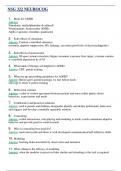
NSG 322 NEUROCOG
1. Meds for ADHD
Answer:
Stimulants: methylphenidate & adderall
Nonstimulant: Atomoxetine (SNRI)
Alpha 2 agonists: clonidine, guanfacine
2. Side effects of stimulants
Answer: Caution: controlled substance
insomnia, appetite suppression, HA, lethargy, can stunt growth (bc of decreasedappetite)
3. Side effects of atomoxetine
Answer: GI upset, urinary retention, fatigue, insomnia, cancause liver injury, extreme caution
w comorbid depression bc of SI
4. What kinds of therapy are helpful for ADHD
Answer: CBT, parent training
5. What are age prescribing guidelines for ADHD?
Answer: Before age 6, parent trainingis 1st line before meds
after age 6, meds w parent training
6. Behavioral contract
Answer: verbal or written agreement between patient and nurse rother parties about
behaviors, expectations and needs
7. Collaborative and proactive solutions
Answer: used w parents and children- designedto identify and define problematic behaviors
and triggers and develop a mutually agreeable solution
8. Counseling
Answer: verbal interactions, role-playing and modeling to teach, coach ormaintain adaptive
behavior and provide positive reinforcement
9. Who is counseling best used for?
Answer: motivated youth and those w well-developed communication/self-reflective skills
10. Modeling
Answer: learning behaviors/skills by observation and imitation
11. What enhances the efficacy of modeling
Answer: when the modeler is perceived tobe similar and attending to the task is required
, 12. Role-playing
Answer: counseling technique in which the nurse, patient or group of youngsters acts out a
specified script or role to understand the role, learn new skills,etc.
13. What is planned ignoring
Answer: when behaviors are determined by staf to be attention seeking and not dangerous,
they may be ignored
14. Use of signals/gestures
Answer: using some kind of signal to remind the child to useself-control. May be combined w
behavioral contract and reward system
15. Physical distance and touch control
Answer: move closer to a child for a calmingeffect, or putting an arm around the child
16. What is redirection?
Answer: used after undesirable or inappropriate behavior to engage/re-engage an individual in
an appropriate activity
17. Additional affection
Answer: giving a child planned emotional support for a specificproblem or engaging in an
enjoyable activity
18. Use of humor
Answer: use well-timed appropriate kidding about some external nonpersonal event as a
diversion to help the child save face and relieve feelings of guilt/fear
19. Clarification as intervention
Answer: breaking down a problem situation that a childexperiences- help child understand
motivation, roles, etc.
20. Restructuring
Answer: changing an acitivty in a way that will decrease stimulation orfrustration
21. What are risk factors for a neurodevelopmental disorder?
Answer: genetic, neurobiological, temperament, resilience, ACEs, NEGLECT (#1)
22. What is temperament?
Answer: overall mood, attitude and behavior that a child habitually uses to cope w the
demands and expectations of the environment
23. What is resilience?
Answer: the capacity to recover quickly from difficulties
24. What is the most prevalent form of child abuse?
1. Meds for ADHD
Answer:
Stimulants: methylphenidate & adderall
Nonstimulant: Atomoxetine (SNRI)
Alpha 2 agonists: clonidine, guanfacine
2. Side effects of stimulants
Answer: Caution: controlled substance
insomnia, appetite suppression, HA, lethargy, can stunt growth (bc of decreasedappetite)
3. Side effects of atomoxetine
Answer: GI upset, urinary retention, fatigue, insomnia, cancause liver injury, extreme caution
w comorbid depression bc of SI
4. What kinds of therapy are helpful for ADHD
Answer: CBT, parent training
5. What are age prescribing guidelines for ADHD?
Answer: Before age 6, parent trainingis 1st line before meds
after age 6, meds w parent training
6. Behavioral contract
Answer: verbal or written agreement between patient and nurse rother parties about
behaviors, expectations and needs
7. Collaborative and proactive solutions
Answer: used w parents and children- designedto identify and define problematic behaviors
and triggers and develop a mutually agreeable solution
8. Counseling
Answer: verbal interactions, role-playing and modeling to teach, coach ormaintain adaptive
behavior and provide positive reinforcement
9. Who is counseling best used for?
Answer: motivated youth and those w well-developed communication/self-reflective skills
10. Modeling
Answer: learning behaviors/skills by observation and imitation
11. What enhances the efficacy of modeling
Answer: when the modeler is perceived tobe similar and attending to the task is required
, 12. Role-playing
Answer: counseling technique in which the nurse, patient or group of youngsters acts out a
specified script or role to understand the role, learn new skills,etc.
13. What is planned ignoring
Answer: when behaviors are determined by staf to be attention seeking and not dangerous,
they may be ignored
14. Use of signals/gestures
Answer: using some kind of signal to remind the child to useself-control. May be combined w
behavioral contract and reward system
15. Physical distance and touch control
Answer: move closer to a child for a calmingeffect, or putting an arm around the child
16. What is redirection?
Answer: used after undesirable or inappropriate behavior to engage/re-engage an individual in
an appropriate activity
17. Additional affection
Answer: giving a child planned emotional support for a specificproblem or engaging in an
enjoyable activity
18. Use of humor
Answer: use well-timed appropriate kidding about some external nonpersonal event as a
diversion to help the child save face and relieve feelings of guilt/fear
19. Clarification as intervention
Answer: breaking down a problem situation that a childexperiences- help child understand
motivation, roles, etc.
20. Restructuring
Answer: changing an acitivty in a way that will decrease stimulation orfrustration
21. What are risk factors for a neurodevelopmental disorder?
Answer: genetic, neurobiological, temperament, resilience, ACEs, NEGLECT (#1)
22. What is temperament?
Answer: overall mood, attitude and behavior that a child habitually uses to cope w the
demands and expectations of the environment
23. What is resilience?
Answer: the capacity to recover quickly from difficulties
24. What is the most prevalent form of child abuse?