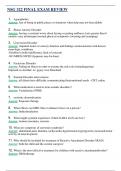
NSG 322 FINAL EXAM REVIEW
1. Agoraphobia
Answer: fear of being in public places or situations when help may not beavailable
2. Illness Anxiety Disorder
Answer: having a constant worry about having or getting anillness; lasts greater than 6
months; may misinterpret normal physical symptoms (sweating and cramping)
3. Conversion Disorder
Answer: impaired motor or sensory function and findings areinconsistent with known
neurologic conditions
-Exhibits la belle indifference (lack of concern)
-NO MEDS GIVEN (hypnosis may be done)
4. Facticious Disorder
Answer: Faking an illness in order to assume the sick role (notmalingering)
Imposed on Another: ex: gypsy rose blanchard
5. Somatic Disorder interventions
Answer: all clients have difficulty communicating theiremotional needs - CBT, mileu
6. What medication is used to treat somatic disorders?
Answer: Venlafaxine (SNRI)
7. systemic desensitization
Answer: Exposure therapy
8. What effects can MSG (flavor enhancer) have on a person?
Answer: Induceheadaches
9. What might a patient experience if their GABA levels are low?
Answer: tremors,insomnia, seizures
10. What are symptoms of serotonin syndrome?
Answer: abdominal pain, diarrhea, tachycardia, hypertension, hyperpyrexia, increased motor
activity, & muscle spasms
11. Who should be included for treatment of Reactive Attachment Disorder?(RAD)
Answer: both the child and the current caregiver
12. What is the most effective treatment for children with reactive attachmentdisorder?
Answer: Bibliotherapy
, 13. What SSRIs are used to treat PTSD?
Answer: sertraline & paroxetine
14. Difference between depolarization disorder and derealization disorder?
Answer: -Patient's reality remains intact in derealization disorder
15. Fugue
Answer: patient flees from their normal life to another location and starts a newlife
16. What is the main symptom in a child with depression?
Answer: irritability
17. SAD PERSONAS scale
Answer:
SexAge
Depression/Hopelessness
Previous
Attempts
Excessive alcohol use
Rational thinking loss
Seperated/divorced/widowed
Organized serious attemoy
No social support
Availability of client's plan
Stated future intent
18. How should you monitor and document a patient's behavior with depression?
Answer: Stay arms-length away and document q 15 min
19. Mood-congruent delusion
Answer: Delusional thoughts that interfere with nutritionalstatus
-Consult with dietician
20. What medications are used to treat hypertensive crisis?
Answer: IV phentolamine,PO Chlorprimazine, SL Miredipine
21. What is the onset of SSRIs?
Answer: 1-2 weeks; remind patient that the medication takes some time to begin working,
assess suicidal risk, assure medication regimenis followed
22. What is important to remember about fluoxetine?
Answer: Have the patient wait 5weeks between taking this medication and MAOI (Adverse
effects may occur)
1. Agoraphobia
Answer: fear of being in public places or situations when help may not beavailable
2. Illness Anxiety Disorder
Answer: having a constant worry about having or getting anillness; lasts greater than 6
months; may misinterpret normal physical symptoms (sweating and cramping)
3. Conversion Disorder
Answer: impaired motor or sensory function and findings areinconsistent with known
neurologic conditions
-Exhibits la belle indifference (lack of concern)
-NO MEDS GIVEN (hypnosis may be done)
4. Facticious Disorder
Answer: Faking an illness in order to assume the sick role (notmalingering)
Imposed on Another: ex: gypsy rose blanchard
5. Somatic Disorder interventions
Answer: all clients have difficulty communicating theiremotional needs - CBT, mileu
6. What medication is used to treat somatic disorders?
Answer: Venlafaxine (SNRI)
7. systemic desensitization
Answer: Exposure therapy
8. What effects can MSG (flavor enhancer) have on a person?
Answer: Induceheadaches
9. What might a patient experience if their GABA levels are low?
Answer: tremors,insomnia, seizures
10. What are symptoms of serotonin syndrome?
Answer: abdominal pain, diarrhea, tachycardia, hypertension, hyperpyrexia, increased motor
activity, & muscle spasms
11. Who should be included for treatment of Reactive Attachment Disorder?(RAD)
Answer: both the child and the current caregiver
12. What is the most effective treatment for children with reactive attachmentdisorder?
Answer: Bibliotherapy
, 13. What SSRIs are used to treat PTSD?
Answer: sertraline & paroxetine
14. Difference between depolarization disorder and derealization disorder?
Answer: -Patient's reality remains intact in derealization disorder
15. Fugue
Answer: patient flees from their normal life to another location and starts a newlife
16. What is the main symptom in a child with depression?
Answer: irritability
17. SAD PERSONAS scale
Answer:
SexAge
Depression/Hopelessness
Previous
Attempts
Excessive alcohol use
Rational thinking loss
Seperated/divorced/widowed
Organized serious attemoy
No social support
Availability of client's plan
Stated future intent
18. How should you monitor and document a patient's behavior with depression?
Answer: Stay arms-length away and document q 15 min
19. Mood-congruent delusion
Answer: Delusional thoughts that interfere with nutritionalstatus
-Consult with dietician
20. What medications are used to treat hypertensive crisis?
Answer: IV phentolamine,PO Chlorprimazine, SL Miredipine
21. What is the onset of SSRIs?
Answer: 1-2 weeks; remind patient that the medication takes some time to begin working,
assess suicidal risk, assure medication regimenis followed
22. What is important to remember about fluoxetine?
Answer: Have the patient wait 5weeks between taking this medication and MAOI (Adverse
effects may occur)