

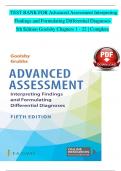
V TEST BANK FOR Advanced Assessment Interpreting
Findings and Formulating Differential Diagnoses
5th Edition Goolsby Chapters 1 - 22 | Complete
, TABLE OF CONTENTS
V V
ChapterV1.VAssessmentVandVClinicalVDecisionVMaking:VAnVOverview
ChapterV2.VGenomicVAssessment:VInterpretingVFindingsVandVFormulatingVDifferentialVDiagnoses
ChapterV3.VSkin
ChapterV4.VHead,VFace,VandVNeck
ChapterV5.VTheVEye
ChapterV6.VEar,VNose,VMouth,VandVThroat
ChapterV7.VCardiacVandVPeripheralVVascularVSystems
ChapterV8.VRespiratoryVSystem
ChapterV9.VBreasts
ChapterV10.VAbdomen
ChapterV11.VGenitourinaryVSystem
ChapterV12.VMaleVReproductiveVSystem
ChapterV13.VFemaleVReproductiveVSystem
ChapterV14.VMusculoskeletalVSystem
ChapterV15.VNeurologicalVSystem
ChapterV16.VNonspecificVComplaints
ChapterV17.VPsychiatricVMentalVHealth
ChapterV18.VPediatricVPatients
ChapterV19.VPregnantVPatients
ChapterV20.VAssessmentVofVtheVTransgenderVorVGenderVDiverseVAdult
ChapterV21.VOlderVPatients
ChapterV22.VPersonsVWithVDisabilities
, Chapter 1. Assessment and Clinical Decision Making: An Overview
V V V V V V V V
MultipleV Choice
IdentifyVtheVchoiceVthatVbestVcompletesVtheVstatementVorVanswersVtheVquestion.
V 1. WhichVtypeVofVclinicalVdecision-makingVisVmostVreliable?
A. Intuitive
B. Analytical
C. Experiential
D. Augenblick
V 2. WhichVofVtheVfollowingVisVfalse?VToVobtainVadequateVhistory,Vhealth-careVprovidersVmustVbe:
A. MethodicalVandVsystematic
B. AttentiveVtoVtheVpatient’sVverbalVandVnonverbalVlangu
age
C. AbleVtoVaccuratelyVinterpretVtheVpatient’sVresponses
D. AdeptVatVreadingVintoVtheVpatient’sVstatements
V 3. EssentialVpartsVofVaVhealthVhistoryVincludeVallVofVtheVfollowingVexcept:
A. ChiefVcomplaint
B. HistoryVofVtheVpresentVillness
C. CurrentVvitalVsigns
D. AllVofVtheVaboveVareVessentialVhistoryVcompone
nts
V 4. WhichVofVtheVfollowingVisVfalse?VWhileVperformingVtheVphysicalVexamination,VtheVexaminerVmustVbeVableVto:
A. DifferentiateVbetweenVnormalVandVabnormalVfindings
B. RecallVknowledgeVofVaVrangeVofVconditionsVandVtheirVassociatedVsignsVandVsymp
toms
C. RecognizeVhowVcertainVconditionsVaffectVtheVresponseVtoVotherVconditions
D. ForeseeVunpredictableVfindings
V 5. TheVfollowingVisVtheVleastVreliableVsourceVofVinformationVforVdiagnosticVstatistics:
A. Evidence-basedVinvestigations
B. PrimaryVreportsVofVresearch
C. EstimationVbasedVonVaVprovider’sVexperien
ce
, D. PublishedVmeta-analyses
V 6. TheVfollowingVcanVbeVusedVtoVassistVinVsoundVclinicalVdecision-making:
A. AlgorithmVpublishedVinVaVpeer-
reviewedVjournalVarticle
B. ClinicalVpracticeVguidelines
C. Evidence-basedVresearch
D. AllVofVtheVabove
V 7. IfVaVdiagnosticVstudyVhasVhighVsensitivity,V thisVindicatesVa:
A. HighVpercentageVofVpersonsVwithVtheVgivenVconditionVwillVhaveVanVabnormalV
result
B. LowVpercentageVofVpersonsVwithVtheVgivenVconditionVwillVhaveVanVabnormalVr
esult
C. LowVlikelihoodVofVnormalVresultVinVpersonsVwithoutVaVgivenVcondition
D. NoneVofVtheVabove
V 8. IfVaVdiagnosticVstudyVhasVhighVspecificity,V thisVindicatesVa:
A. LowVpercentageVofVhealthyVindividualsVwillVshowVaVnormalVresult
B. HighVpercentageVofVhealthyVindividualsVwillVshowVaVnormalVresult
C. HighVpercentageVofVindividualsVwithVaVdisorderVwillVshowVaVnormalVres
ult
D. LowVpercentageVofVindividualsVwithVaVdisorderVwillVshowVanVabnormalV
result
V 9. AVlikelihoodVratioVaboveV1VindicatesVthatVaVdiagnosticVtestVshowingVa:
A. PositiveVresultVisVstronglyVassociatedVwithVtheVdisease
B. NegativeVresultVisVstronglyVassociatedVwithVabsenceVofVtheVdis
ease
C. PositiveVresultVisVweaklyVassociatedVwithVtheVdisease
D. NegativeVresultVisVweaklyVassociatedVwithVabsenceVofVtheVdise
ase
Findings and Formulating Differential Diagnoses
5th Edition Goolsby Chapters 1 - 22 | Complete
, TABLE OF CONTENTS
V V
ChapterV1.VAssessmentVandVClinicalVDecisionVMaking:VAnVOverview
ChapterV2.VGenomicVAssessment:VInterpretingVFindingsVandVFormulatingVDifferentialVDiagnoses
ChapterV3.VSkin
ChapterV4.VHead,VFace,VandVNeck
ChapterV5.VTheVEye
ChapterV6.VEar,VNose,VMouth,VandVThroat
ChapterV7.VCardiacVandVPeripheralVVascularVSystems
ChapterV8.VRespiratoryVSystem
ChapterV9.VBreasts
ChapterV10.VAbdomen
ChapterV11.VGenitourinaryVSystem
ChapterV12.VMaleVReproductiveVSystem
ChapterV13.VFemaleVReproductiveVSystem
ChapterV14.VMusculoskeletalVSystem
ChapterV15.VNeurologicalVSystem
ChapterV16.VNonspecificVComplaints
ChapterV17.VPsychiatricVMentalVHealth
ChapterV18.VPediatricVPatients
ChapterV19.VPregnantVPatients
ChapterV20.VAssessmentVofVtheVTransgenderVorVGenderVDiverseVAdult
ChapterV21.VOlderVPatients
ChapterV22.VPersonsVWithVDisabilities
, Chapter 1. Assessment and Clinical Decision Making: An Overview
V V V V V V V V
MultipleV Choice
IdentifyVtheVchoiceVthatVbestVcompletesVtheVstatementVorVanswersVtheVquestion.
V 1. WhichVtypeVofVclinicalVdecision-makingVisVmostVreliable?
A. Intuitive
B. Analytical
C. Experiential
D. Augenblick
V 2. WhichVofVtheVfollowingVisVfalse?VToVobtainVadequateVhistory,Vhealth-careVprovidersVmustVbe:
A. MethodicalVandVsystematic
B. AttentiveVtoVtheVpatient’sVverbalVandVnonverbalVlangu
age
C. AbleVtoVaccuratelyVinterpretVtheVpatient’sVresponses
D. AdeptVatVreadingVintoVtheVpatient’sVstatements
V 3. EssentialVpartsVofVaVhealthVhistoryVincludeVallVofVtheVfollowingVexcept:
A. ChiefVcomplaint
B. HistoryVofVtheVpresentVillness
C. CurrentVvitalVsigns
D. AllVofVtheVaboveVareVessentialVhistoryVcompone
nts
V 4. WhichVofVtheVfollowingVisVfalse?VWhileVperformingVtheVphysicalVexamination,VtheVexaminerVmustVbeVableVto:
A. DifferentiateVbetweenVnormalVandVabnormalVfindings
B. RecallVknowledgeVofVaVrangeVofVconditionsVandVtheirVassociatedVsignsVandVsymp
toms
C. RecognizeVhowVcertainVconditionsVaffectVtheVresponseVtoVotherVconditions
D. ForeseeVunpredictableVfindings
V 5. TheVfollowingVisVtheVleastVreliableVsourceVofVinformationVforVdiagnosticVstatistics:
A. Evidence-basedVinvestigations
B. PrimaryVreportsVofVresearch
C. EstimationVbasedVonVaVprovider’sVexperien
ce
, D. PublishedVmeta-analyses
V 6. TheVfollowingVcanVbeVusedVtoVassistVinVsoundVclinicalVdecision-making:
A. AlgorithmVpublishedVinVaVpeer-
reviewedVjournalVarticle
B. ClinicalVpracticeVguidelines
C. Evidence-basedVresearch
D. AllVofVtheVabove
V 7. IfVaVdiagnosticVstudyVhasVhighVsensitivity,V thisVindicatesVa:
A. HighVpercentageVofVpersonsVwithVtheVgivenVconditionVwillVhaveVanVabnormalV
result
B. LowVpercentageVofVpersonsVwithVtheVgivenVconditionVwillVhaveVanVabnormalVr
esult
C. LowVlikelihoodVofVnormalVresultVinVpersonsVwithoutVaVgivenVcondition
D. NoneVofVtheVabove
V 8. IfVaVdiagnosticVstudyVhasVhighVspecificity,V thisVindicatesVa:
A. LowVpercentageVofVhealthyVindividualsVwillVshowVaVnormalVresult
B. HighVpercentageVofVhealthyVindividualsVwillVshowVaVnormalVresult
C. HighVpercentageVofVindividualsVwithVaVdisorderVwillVshowVaVnormalVres
ult
D. LowVpercentageVofVindividualsVwithVaVdisorderVwillVshowVanVabnormalV
result
V 9. AVlikelihoodVratioVaboveV1VindicatesVthatVaVdiagnosticVtestVshowingVa:
A. PositiveVresultVisVstronglyVassociatedVwithVtheVdisease
B. NegativeVresultVisVstronglyVassociatedVwithVabsenceVofVtheVdis
ease
C. PositiveVresultVisVweaklyVassociatedVwithVtheVdisease
D. NegativeVresultVisVweaklyVassociatedVwithVabsenceVofVtheVdise
ase



