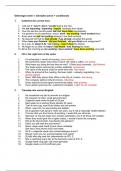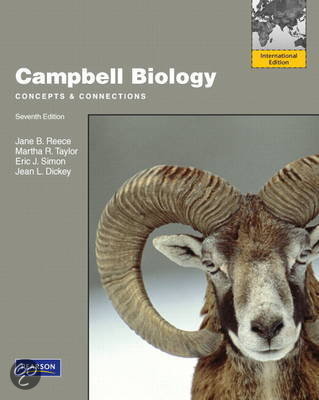
Test Bank Campbell Biology All Chapters
V V V V V
Contents
Chapter 1 V Introduction: Themes in the Study of Life V V V V V V 1
Chapter 2 V The Chemical Context of Life
V V V V 17
Chapter 3 V Water and the Fitness of the Environment
V V V V V V 41
Chapter 4 V Carbon and the Molecular Diversity of Life
V V V V V V 61
Chapter 5 V The Structure and Function of Large Biological Molecules
V V V V V V V 82
Chapter 6 V A Tour of the Cell
V V V V 110
Chapter 7 V Membrane Structure and Function V V V 129
Chapter 8 V An Introduction to Metabolism
V V V 150
Chapter 9 V Cellular Respiration: Harvesting Chemical Energy
V V V V 172
Chapter 10V Photosynthesis 200
Chapter 11V Cell Communication
V 220
Chapter 12V The Cell Cycle
V V 236
Chapter 13V Meiosis and Sexual Life Cycles
V V V V 257
Chapter 14V Mendel and the Gene Idea
V V V V 277
Chapter 15V The Chromosomal Basis of Inheritance
V V V V 301
Chapter 16V The Molecular Basis of Inheritance
V V V V 321
Chapter 17V From Gene to Protein
V V V 340
Chapter 18V Regulation of Gene Expression V V V 364
Chapter 19V Viruses 389
Chapter 20V Biotechnology 400
Chapter 21V Genomes and Their Evolution V V V 420
Chapter 22V Descent with Modification: A Darwinian View of Life
V V V V V V V 430
Chapter 23V The Evolution of Populations
V V V 447
Chapter 24V The Origin of Species
V V V 472
Chapter 25V The History of Life on Earth
V V V V V 491
Chapter 26V Phylogeny and the Tree of Life V V V V V 519
Chapter 27V Bacteria and Archaea V V 546
Chapter 28V Protists 571
Chapter 29V Plant Diversity I: How Plants Colonized Land
V V V V V V 595
Chapter 30V Plant Diversity II: The Evolution of Seed Plants
V V V V V V V 615
Chapter 31V Fungi 642
,Chapter 32
V An Introduction to Animal Diversity
V V V V 665
Chapter 33
V Invertebrates 689
Chapter 34
V Vertebrates 717
Chapter 35
V Plant Structure, Growth, and Development
V V V V 744
Chapter 36
V Resource Acquisition and Transport in Vascular Plants
V V V V V V 764
Chapter 37
V Soil and Plant Nutrition
V V V 784
Chapter 38
V Angiosperm Reproduction and Biotechnology
V V V 805
Chapter 39
V Plant Responses to Internal and External Signals
V V V V V V 825
Chapter 40
V Basic Principles of Animal Form and Function
V V V V V V 851
Chapter 41
V Animal Nutrition
V 869
Chapter 42
V Circulation and Gas Exchange V V V 886
Chapter 43
V The Immune System
V V 905
Chapter 44
V Osmoregulation and Excretion V V
Chapter 45
V Hormones and the Endocrine System
V V V V 939
Chapter 46
V Animal Reproduction
V 956
Chapter 47
V Animal Development
V 976
Chapter 48
V Neurons, Synapses, and Signaling
V V V 993
Chapter 49
V Nervous Systems V 1007
Chapter 50
V Sensory and Motor Mechanisms
V V V 1019
Chapter 51
V Animal BehaviorV 1035
Chapter 52
V An Introduction to Ecology and the Biosphere
V V V V V V 1054
Chapter 53
V Population Ecology V 1074
Chapter 54
V Community Ecology V 1102
Chapter 55
V Ecosystems 1121
Chapter 56
V Conservation Biology and Restoration Ecology
V V V V 1144
,Chapter 1 V Introduction: Themes in the Study of Life V V V V V V
The introduction to the study of biology in Chapter 1 highlights seven book -wide themes,
V V V V V V V V V V V V V V
Vwith special emphasis on the core theme of evolution. How scientists use inductive
V V V V V V V V V V V V
V reasoning to draw general conclusions and deductive reasoning to test hypotheses is
V V V V V V V V V V V
V emphasized. Questions in this chapter are designed to help assess a student’s
V V V V V V V V V V V
V understanding of the content of V V V V
Chapter 1 based on the three key concepts.
V V V V V V V
Multiple-Choice Questions V
1) Which of the following properties or processes do we associate with living things?
V V V V V V V V V V V V
A) evolutionary adaptations V
B) energy processing V
C) responding to the environment V V V
D) growth and reproduction V V
E) all of the above V V V
Answer: E V V
Topic: Overview V
Skill: Knowledge/Application
V
2) Which of the following is not a theme that unifies biology?
V V V V V V V V V V
A) interaction with the environment V V V
B) emergent properties V
C) evolution
D) reductionism
E) structure and function Answer: V V V
D
Topic: Concept 1.1 V V
Skill: Knowledge/Application
V
3) Which of the following sequences represents the hierarchy of biological organization from
V V V V V V V V V V V
the least to the most complex level?
V V V V V V V
A) organelle, tissue, biosphere, ecosystem, population, organism V V V V V
B) cell, community, population, organ system, molecule, organelle
V V V V V V
C) organism, community, biosphere, molecule, tissue, organ V V V V V
D) ecosystem, cell, population, tissue, organism, organ system V V V V V V
E) molecule, cell, organ system, population, ecosystem, biosphere V V V V V V
Answer: E
V V
Topic: Concept 1.1 V V
Skill: Knowledge/Application
V
4) A localized group of organisms that belong to the same species is called a
V V V V V V V V V V V V V
A) biosystem.
B) community.
C) population.
D) ecosystem.
E) family. Answer: C V V
Topic: Concept 1.1 V V
Skill: Knowledge/Application
V
1
, 5) Which of the following is a false statement regarding DNA?
V V V V V V V V V
A) Each chromosome has one very long DNA molecule with hundreds of
V V V V V V V V V V
thousands of genes.
V V V
B) Every cell is enclosed by a membrane.
V V V V V V
C) Every cell uses DNA as its genetic information.
V V V V V V V
D) All forms of life are composed of cells that have a membrane-enclosed nucleus.
V V V V V V V V V V V V
E) DNA is the unit of inheritance that is transmitted from parent to offspring.
V V V V V V V V V V V V
Answer: D V V
Topic: Concept 1.1
V V
Skill: Knowledge/Application
V
6) In terms of the hierarchical organization of life, a bacterium is at the
V V V V V V V V V V V V level
V of organization, whereas a human is at the
V level of organization.
V V V V V V V V
A) single-celled organism; multicellular organism V V V
B) single organelle; organism V V
C) organelle; organ system V V
D) single tissue; multicellular organism
V V V
E) tissue;
Vorganism
VAnswer:
A
Topic: Concept 1.1
V V
Skill: Knowledge/Application
V
7) Which of these is a correct representation of the hierarchy of biological
V V V V V V V V V V V
Vorganization from least to most complex? V V V V V
A) organelle of a stomach cell, digestive system, large intestine, small intestine,
V V V V V V V V V V
intestinal tissue, organism
V V V
B) organelle of an intestinal cell, digestive system, small intestine, large
V V V V V V V V V
intestine, intestinal tissue, organism
V V V V
C) molecule, intestinal cell organelle, intestinal cell, intestinal tissue, digestive
V V V V V V V V
system, organism
V V
D) molecule, small intestine, large intestine, intestinal tissue, digestive system, organism
V V V V V V V V V
E) molecule, digestive system, digestive cell organelle, small intestine,
V V V V V V V
large intestine, intestinal cell, organism
V V V V V
Answer: C V V
Topic: Concept 1.1
V V
Skill: Knowledge/Application
V
8) Organisms interact with their environments, exchanging matter and energy. For
V V V V V V V V V
Vexample, plant chloroplasts convert the energy of sunlight into
V V V V V V V V
A) the energy of motion.
V V V
B) carbon dioxide and water. V V V
C) the potential energy of chemical bonds.
V V V V V
D) oxygen.
E) kinetic
energy.
Answer: C V V
Topic: Concept 1.1
V V
Skill: Knowledge/Application
V
9) The main source of energy for producers in an ecosystem is
V V V V V V V V V V
A) light energy. V
B) kinetic energy. V
C) thermal energy. V
D) chemical energy. V
1
V V V V V
Contents
Chapter 1 V Introduction: Themes in the Study of Life V V V V V V 1
Chapter 2 V The Chemical Context of Life
V V V V 17
Chapter 3 V Water and the Fitness of the Environment
V V V V V V 41
Chapter 4 V Carbon and the Molecular Diversity of Life
V V V V V V 61
Chapter 5 V The Structure and Function of Large Biological Molecules
V V V V V V V 82
Chapter 6 V A Tour of the Cell
V V V V 110
Chapter 7 V Membrane Structure and Function V V V 129
Chapter 8 V An Introduction to Metabolism
V V V 150
Chapter 9 V Cellular Respiration: Harvesting Chemical Energy
V V V V 172
Chapter 10V Photosynthesis 200
Chapter 11V Cell Communication
V 220
Chapter 12V The Cell Cycle
V V 236
Chapter 13V Meiosis and Sexual Life Cycles
V V V V 257
Chapter 14V Mendel and the Gene Idea
V V V V 277
Chapter 15V The Chromosomal Basis of Inheritance
V V V V 301
Chapter 16V The Molecular Basis of Inheritance
V V V V 321
Chapter 17V From Gene to Protein
V V V 340
Chapter 18V Regulation of Gene Expression V V V 364
Chapter 19V Viruses 389
Chapter 20V Biotechnology 400
Chapter 21V Genomes and Their Evolution V V V 420
Chapter 22V Descent with Modification: A Darwinian View of Life
V V V V V V V 430
Chapter 23V The Evolution of Populations
V V V 447
Chapter 24V The Origin of Species
V V V 472
Chapter 25V The History of Life on Earth
V V V V V 491
Chapter 26V Phylogeny and the Tree of Life V V V V V 519
Chapter 27V Bacteria and Archaea V V 546
Chapter 28V Protists 571
Chapter 29V Plant Diversity I: How Plants Colonized Land
V V V V V V 595
Chapter 30V Plant Diversity II: The Evolution of Seed Plants
V V V V V V V 615
Chapter 31V Fungi 642
,Chapter 32
V An Introduction to Animal Diversity
V V V V 665
Chapter 33
V Invertebrates 689
Chapter 34
V Vertebrates 717
Chapter 35
V Plant Structure, Growth, and Development
V V V V 744
Chapter 36
V Resource Acquisition and Transport in Vascular Plants
V V V V V V 764
Chapter 37
V Soil and Plant Nutrition
V V V 784
Chapter 38
V Angiosperm Reproduction and Biotechnology
V V V 805
Chapter 39
V Plant Responses to Internal and External Signals
V V V V V V 825
Chapter 40
V Basic Principles of Animal Form and Function
V V V V V V 851
Chapter 41
V Animal Nutrition
V 869
Chapter 42
V Circulation and Gas Exchange V V V 886
Chapter 43
V The Immune System
V V 905
Chapter 44
V Osmoregulation and Excretion V V
Chapter 45
V Hormones and the Endocrine System
V V V V 939
Chapter 46
V Animal Reproduction
V 956
Chapter 47
V Animal Development
V 976
Chapter 48
V Neurons, Synapses, and Signaling
V V V 993
Chapter 49
V Nervous Systems V 1007
Chapter 50
V Sensory and Motor Mechanisms
V V V 1019
Chapter 51
V Animal BehaviorV 1035
Chapter 52
V An Introduction to Ecology and the Biosphere
V V V V V V 1054
Chapter 53
V Population Ecology V 1074
Chapter 54
V Community Ecology V 1102
Chapter 55
V Ecosystems 1121
Chapter 56
V Conservation Biology and Restoration Ecology
V V V V 1144
,Chapter 1 V Introduction: Themes in the Study of Life V V V V V V
The introduction to the study of biology in Chapter 1 highlights seven book -wide themes,
V V V V V V V V V V V V V V
Vwith special emphasis on the core theme of evolution. How scientists use inductive
V V V V V V V V V V V V
V reasoning to draw general conclusions and deductive reasoning to test hypotheses is
V V V V V V V V V V V
V emphasized. Questions in this chapter are designed to help assess a student’s
V V V V V V V V V V V
V understanding of the content of V V V V
Chapter 1 based on the three key concepts.
V V V V V V V
Multiple-Choice Questions V
1) Which of the following properties or processes do we associate with living things?
V V V V V V V V V V V V
A) evolutionary adaptations V
B) energy processing V
C) responding to the environment V V V
D) growth and reproduction V V
E) all of the above V V V
Answer: E V V
Topic: Overview V
Skill: Knowledge/Application
V
2) Which of the following is not a theme that unifies biology?
V V V V V V V V V V
A) interaction with the environment V V V
B) emergent properties V
C) evolution
D) reductionism
E) structure and function Answer: V V V
D
Topic: Concept 1.1 V V
Skill: Knowledge/Application
V
3) Which of the following sequences represents the hierarchy of biological organization from
V V V V V V V V V V V
the least to the most complex level?
V V V V V V V
A) organelle, tissue, biosphere, ecosystem, population, organism V V V V V
B) cell, community, population, organ system, molecule, organelle
V V V V V V
C) organism, community, biosphere, molecule, tissue, organ V V V V V
D) ecosystem, cell, population, tissue, organism, organ system V V V V V V
E) molecule, cell, organ system, population, ecosystem, biosphere V V V V V V
Answer: E
V V
Topic: Concept 1.1 V V
Skill: Knowledge/Application
V
4) A localized group of organisms that belong to the same species is called a
V V V V V V V V V V V V V
A) biosystem.
B) community.
C) population.
D) ecosystem.
E) family. Answer: C V V
Topic: Concept 1.1 V V
Skill: Knowledge/Application
V
1
, 5) Which of the following is a false statement regarding DNA?
V V V V V V V V V
A) Each chromosome has one very long DNA molecule with hundreds of
V V V V V V V V V V
thousands of genes.
V V V
B) Every cell is enclosed by a membrane.
V V V V V V
C) Every cell uses DNA as its genetic information.
V V V V V V V
D) All forms of life are composed of cells that have a membrane-enclosed nucleus.
V V V V V V V V V V V V
E) DNA is the unit of inheritance that is transmitted from parent to offspring.
V V V V V V V V V V V V
Answer: D V V
Topic: Concept 1.1
V V
Skill: Knowledge/Application
V
6) In terms of the hierarchical organization of life, a bacterium is at the
V V V V V V V V V V V V level
V of organization, whereas a human is at the
V level of organization.
V V V V V V V V
A) single-celled organism; multicellular organism V V V
B) single organelle; organism V V
C) organelle; organ system V V
D) single tissue; multicellular organism
V V V
E) tissue;
Vorganism
VAnswer:
A
Topic: Concept 1.1
V V
Skill: Knowledge/Application
V
7) Which of these is a correct representation of the hierarchy of biological
V V V V V V V V V V V
Vorganization from least to most complex? V V V V V
A) organelle of a stomach cell, digestive system, large intestine, small intestine,
V V V V V V V V V V
intestinal tissue, organism
V V V
B) organelle of an intestinal cell, digestive system, small intestine, large
V V V V V V V V V
intestine, intestinal tissue, organism
V V V V
C) molecule, intestinal cell organelle, intestinal cell, intestinal tissue, digestive
V V V V V V V V
system, organism
V V
D) molecule, small intestine, large intestine, intestinal tissue, digestive system, organism
V V V V V V V V V
E) molecule, digestive system, digestive cell organelle, small intestine,
V V V V V V V
large intestine, intestinal cell, organism
V V V V V
Answer: C V V
Topic: Concept 1.1
V V
Skill: Knowledge/Application
V
8) Organisms interact with their environments, exchanging matter and energy. For
V V V V V V V V V
Vexample, plant chloroplasts convert the energy of sunlight into
V V V V V V V V
A) the energy of motion.
V V V
B) carbon dioxide and water. V V V
C) the potential energy of chemical bonds.
V V V V V
D) oxygen.
E) kinetic
energy.
Answer: C V V
Topic: Concept 1.1
V V
Skill: Knowledge/Application
V
9) The main source of energy for producers in an ecosystem is
V V V V V V V V V V
A) light energy. V
B) kinetic energy. V
C) thermal energy. V
D) chemical energy. V
1