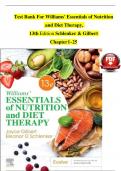
Test Bank For Williams' Essentials of Nutrition
and Diet Therapy,
13th Edition Schlenker & Gilbert
Chapter 1 - 25
. . .
,TABLE OFCONTENT . .
PART 1: INTRODUCTION TO HUMAN NUTRITION
. . . . .
1. Nutrition and Health . .
2. Digestion, Absorption, and Metabolism
. . .
3. Carbohydrates
4. Lipids
5. Proteins
6. Vitamins
7. Minerals and Water . .
8. EnergyBalance .
PART 2: COMMUNITY NUTRITION AND THE LIFE CYCLE
. . . . . . .
9. FoodSelection and Food Safety
. . . .
10. CommunityNutrition: Promoting HealthyEating. . . .
11. Nutrition DuringPregnancyand Lactation
. . . .
12. Nutrition forNormal Growth and Development
. . . . .
13. NutritionforAdults: Early, Middle, and Later Years
. . . . . . .
,14. NutritionandPhysical Fitness . . .
15. The Complexityof Obesity: Beyond EnergyBalance
. . . . . .
PART 3: INTRODUCTION TO CLINICAL NUTRITION
. . . . .
16. Nutrition Assessment and Nutrition Therapyin Patient Care
. . . . . . .
17. MetabolicStress .
18. Drug-Nutrient Interactions .
19. Nutrition Support: Enteral and Parenteral Nutrition
. . . . .
20. GastrointestinalDiseases .
21. Diseases of the Heart, Blood Vessels, and Lungs
. . . . . . .
22. Diabetes Mellitus .
23. RenalDisease .
24. Acquired ImmunodeficiencySyndrome(AIDS)
. . .
25. Cancer
, Chapter01:Nutrition andHealth
. . . .
Schlenker & Gilbert: Williams’Essentials of Nutrition and Diet Therapy, 13th Edition
. . . . . . . . . . .
MULTIPLE CHOICE .
1. The major focus of nutritional recommendations in this centuryhas shifted to:
. . . . . . . . . . .
a. prevention and control of chronic diseases. . . . . .
b. improved sanitation and public health. . . . .
c. prevention and control of infectious diseases. . . . . .
d. development ofhealthful foodsusing foodtechnology. . . . . . .
ANSWER: A DIF: Easy . REF: p. 2 . .
MSC: Type of Question: Knowledge
. . . .
2. A physical science that contributes to understandinghow nutrition relates to health and well- being
. . . . . . . . . . . . . .
is:
.
a. anatomy.
b. biochemistry.
c. physics.
d. pharmacology.
ANSWER: B DIF: Easy . REF: p. 6 . .
MSC: Type of Question: Knowledge
. . . .
3. Thebodyofscientific knowledge related to nutritional requirements ofhuman growth,
. . . . . . . . . . .
maintenance, activity, and reproduction is known as:
. . . . . . .
a.physiology.
b.nutrition science. .
c.biochemistry.
d.dietetics.
ANSWER: B DIF: Easy . REF: p. 7 . .
MSC: Type of Question: Knowledge
. . . .
4. Theprofessional primarilyresponsible for application ofnutrition science in clinical practice
. . . . . . . . . . .
.settings is the: . .
a. nurse.
b. physician.
c. publichealth nutritionist. . .
d. registereddietitian. .
ANSWER: D DIF: Easy . REF: p. 7 . .
MSC: Type of Question: Knowledge
. . . .
5. The primaryresponsibility for nutrition care of people in the communitybelongs to the:
. . . . . . . . . . . . .
a. communityphysician. .
b. publichealth nurse. . .
c. publichealth nutritionist. . .
d. registereddietitian. .
ANSWER: . C DIF: Easy REF: p. 7 . .
and Diet Therapy,
13th Edition Schlenker & Gilbert
Chapter 1 - 25
. . .
,TABLE OFCONTENT . .
PART 1: INTRODUCTION TO HUMAN NUTRITION
. . . . .
1. Nutrition and Health . .
2. Digestion, Absorption, and Metabolism
. . .
3. Carbohydrates
4. Lipids
5. Proteins
6. Vitamins
7. Minerals and Water . .
8. EnergyBalance .
PART 2: COMMUNITY NUTRITION AND THE LIFE CYCLE
. . . . . . .
9. FoodSelection and Food Safety
. . . .
10. CommunityNutrition: Promoting HealthyEating. . . .
11. Nutrition DuringPregnancyand Lactation
. . . .
12. Nutrition forNormal Growth and Development
. . . . .
13. NutritionforAdults: Early, Middle, and Later Years
. . . . . . .
,14. NutritionandPhysical Fitness . . .
15. The Complexityof Obesity: Beyond EnergyBalance
. . . . . .
PART 3: INTRODUCTION TO CLINICAL NUTRITION
. . . . .
16. Nutrition Assessment and Nutrition Therapyin Patient Care
. . . . . . .
17. MetabolicStress .
18. Drug-Nutrient Interactions .
19. Nutrition Support: Enteral and Parenteral Nutrition
. . . . .
20. GastrointestinalDiseases .
21. Diseases of the Heart, Blood Vessels, and Lungs
. . . . . . .
22. Diabetes Mellitus .
23. RenalDisease .
24. Acquired ImmunodeficiencySyndrome(AIDS)
. . .
25. Cancer
, Chapter01:Nutrition andHealth
. . . .
Schlenker & Gilbert: Williams’Essentials of Nutrition and Diet Therapy, 13th Edition
. . . . . . . . . . .
MULTIPLE CHOICE .
1. The major focus of nutritional recommendations in this centuryhas shifted to:
. . . . . . . . . . .
a. prevention and control of chronic diseases. . . . . .
b. improved sanitation and public health. . . . .
c. prevention and control of infectious diseases. . . . . .
d. development ofhealthful foodsusing foodtechnology. . . . . . .
ANSWER: A DIF: Easy . REF: p. 2 . .
MSC: Type of Question: Knowledge
. . . .
2. A physical science that contributes to understandinghow nutrition relates to health and well- being
. . . . . . . . . . . . . .
is:
.
a. anatomy.
b. biochemistry.
c. physics.
d. pharmacology.
ANSWER: B DIF: Easy . REF: p. 6 . .
MSC: Type of Question: Knowledge
. . . .
3. Thebodyofscientific knowledge related to nutritional requirements ofhuman growth,
. . . . . . . . . . .
maintenance, activity, and reproduction is known as:
. . . . . . .
a.physiology.
b.nutrition science. .
c.biochemistry.
d.dietetics.
ANSWER: B DIF: Easy . REF: p. 7 . .
MSC: Type of Question: Knowledge
. . . .
4. Theprofessional primarilyresponsible for application ofnutrition science in clinical practice
. . . . . . . . . . .
.settings is the: . .
a. nurse.
b. physician.
c. publichealth nutritionist. . .
d. registereddietitian. .
ANSWER: D DIF: Easy . REF: p. 7 . .
MSC: Type of Question: Knowledge
. . . .
5. The primaryresponsibility for nutrition care of people in the communitybelongs to the:
. . . . . . . . . . . . .
a. communityphysician. .
b. publichealth nurse. . .
c. publichealth nutritionist. . .
d. registereddietitian. .
ANSWER: . C DIF: Easy REF: p. 7 . .