EMERGENCY CARDIAC CARE ACTUAL EXAM 2025 |135 QUESTIONS
WITH VERIFIED CORRECT RATIONALES
1. Ischemia is indicated by what on an EKG?
T wave inversion
ST segment
elevation ST
segment depression
Abnormal Q wave
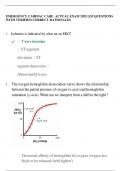
2. The oxygen-hemoglobin dissociation curve shows the relationship
between the partial pressure of oxygen (x-axis) and hemoglobin
saturation (y-axis). What can we interpret from a shift to the right?
Decreased affinity of hemoglobin for oxygen (oxygen less
likely to be released; held 'tighter')
,Affinity of hemoglobin for oxygen is unchanged
Decreased affinity of hemoglobin for oxygen (oxygen
more readily released)
Increased affinity of hemoglobin for oxygen (oxygen less
likely to be released; held 'tighter')
,3. An shift to the left in the oxygen-hemoglobin disassociation curve
would be associated with which of the following?
Hyperventilation
Hypoventilation
Decreased pH
Fever
4. Explain the significance of the J point in the context of cardiac
monitoring. It indicates the onset of ventricular depolarization.
It helps to identify the transition between ventricular
depolarization and repolarization.
It marks the end of the cardiac cycle.
It is used to measure the heart's electrical activity.
5. Explain why the technique of sealing the mask while depressing the
bag is considered the preferred method for BVM ventilation.
It allows for better oxygenation by ensuring a tight seal and
consistent pressure.
It minimizes the need for additional personnel during
ventilation. It reduces the risk of airway obstruction during
the procedure.
, It is the only method approved by emergency care guidelines.
6. A pt arrives in the hospital with a possible stroke. Which of the
following questions is the most important initial question?
do you have a power of
attorney? do you have any
allergies?
what is the time of symptom onset?
Have you ever had these symptoms before?
WITH VERIFIED CORRECT RATIONALES
1. Ischemia is indicated by what on an EKG?
T wave inversion
ST segment
elevation ST
segment depression
Abnormal Q wave
2. The oxygen-hemoglobin dissociation curve shows the relationship
between the partial pressure of oxygen (x-axis) and hemoglobin
saturation (y-axis). What can we interpret from a shift to the right?
Decreased affinity of hemoglobin for oxygen (oxygen less
likely to be released; held 'tighter')
,Affinity of hemoglobin for oxygen is unchanged
Decreased affinity of hemoglobin for oxygen (oxygen
more readily released)
Increased affinity of hemoglobin for oxygen (oxygen less
likely to be released; held 'tighter')
,3. An shift to the left in the oxygen-hemoglobin disassociation curve
would be associated with which of the following?
Hyperventilation
Hypoventilation
Decreased pH
Fever
4. Explain the significance of the J point in the context of cardiac
monitoring. It indicates the onset of ventricular depolarization.
It helps to identify the transition between ventricular
depolarization and repolarization.
It marks the end of the cardiac cycle.
It is used to measure the heart's electrical activity.
5. Explain why the technique of sealing the mask while depressing the
bag is considered the preferred method for BVM ventilation.
It allows for better oxygenation by ensuring a tight seal and
consistent pressure.
It minimizes the need for additional personnel during
ventilation. It reduces the risk of airway obstruction during
the procedure.
, It is the only method approved by emergency care guidelines.
6. A pt arrives in the hospital with a possible stroke. Which of the
following questions is the most important initial question?
do you have a power of
attorney? do you have any
allergies?
what is the time of symptom onset?
Have you ever had these symptoms before?