

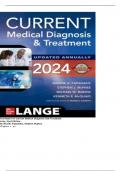
Test Bank For Current Medical Diagnosis And Treatment
2024, 63rd Edition
By Maxine Papadakis, Stephen Mcphee
Chapters 1 - 42
, Chapter 1. Disease Preventiong& Health Promotion
ti ti ti ti ti
1. Which ofthe followingbehaviors indicates the highest potential forspreadingginfections amon g
ti ti ti ti ti ti ti ti ti ti ti ti ti
ti clients? The nurse:
ti ti
1) disinfects dirtyhands withgantibacterial soap. ti ti ti ti
2) allows alcohol-based rubgtodryfor 10 seconds. ti ti ti ti ti ti
3) washeshands onlyafter leavingeachroom. ti ti ti ti ti ti
4) uses cold water for medical asepsis. ti ti ti ti ti
2. What is the most frequent cause of the spread of infection among institutionalized
ti ti ti ti ti ti ti ti ti ti ti ti ti
patients?
ti
1) Airbornemicrobesfromotherpatients ti ti ti ti
2) Contact with contaminated equipment ti ti ti
3) Hands ofhealthcare workers ti ti ti
4) Exposuregfrom familymembers ti ti
3.Whichofthefollowingnursingactivitiesisofhighestgpriorityformaintainingmedicala
ti ti ti ti ti ti ti ti ti ti ti ti ti
ti sepsis?
1) Washinghands ti
2) Donninggloves ti
3) Applyinggsterile drapes ti
4) Wearingagown ti ti
4.Apatientinfectedwithavirusbutwhodoesnothaveanyoutwardsignofthediseasegisc
ti ti ti ti ti ti ti ti ti ti ti ti ti ti ti ti ti ti
ti onsidered a: ti
1) pathogen.
2) fomite.
3) vector.
4) carrier.
5.Apatientisadmittedtotheghospitalwithtuberculosis.Whichprecautionsmustthenursei
ti ti ti ti ti ti ti ti ti ti ti ti ti ti
ti nstitute when caring for this patient?
ti ti ti ti ti
1) Droplet transmission ti
2) Airborne transmission ti
3) Direct contact ti
4) Indirect contact ti
, 6. A patient becomes infected with oral candidiasis (thrush) while receiving intravenous
ti ti ti ti ti ti ti ti ti ti ti
antibiotics to treat a systemic infection. Which typegof infection has the patient developed?
ti ti ti ti ti ti ti ti ti ti ti ti ti
1) Endogenous nosocomial ti
2) Exogenous nosocomial ti
3) Latent
4) Primary
7.Thenurseassistsasurgeonwithcentralvenouscatheterinsertion.Whichactionis
ti ti ti ti ti ti ti ti ti ti ti ti
ti necessary to help maintain sterile technique? ti ti ti ti ti
1) Closinggthepatients door to limit room traffic whilegpreparing the sterile field ti ti ti ti ti ti ti ti ti ti
2) Usingclean procedure gloves to handle sterile equipment ti ti ti ti ti ti ti
3) Placingthegnonsterile syringes containinggflush solution on the sterile field ti ti ti ti ti ti ti ti
4) Remaining6 inches awayfromthesterile field duringtheprocedure ti ti ti ti ti ti ti ti ti ti
8.A patientgadmitted to the hospital withgpneumonia has been receiving antibiotics for 2 day
ti ti ti ti ti ti ti ti ti ti ti ti
s.Hisconditionhas stabilized,and histemperaturehas returned tonormal.Whichstageofinfec tion is
ti ti ti ti ti ti ti ti ti ti ti ti ti ti ti ti ti
the patient most likely experiencing?
ti ti ti ti ti
1) Incubation
2) Prodromal
3) Decline
4) Convalescence
5) 8.
9.Apatientdevelopslocalizedheatanderythemaoveranareaonthelowerleg. These f
ti ti ti ti ti ti ti ti ti ti ti ti ti ti ti ti
ti indings are indicative of which secondary defense against infection?
ti ti ti ti ti ti ti ti
1) Phagocytosis
2) Complement cascade ti
3) Inflammation
4) Immunity
10.Thepatientsuddenlydevelopshives,shortnessofbreath,andwheezingafterreceivinga n
ti ti ti ti ti ti ti ti ti ti ti ti ti ti
ti antibiotic. Which antibody is primarily responsible for this patients response?
ti ti ti ti ti ti ti ti ti
1) IgA
2) IgE
3) IgG
4) IgM
11.Whattypeofimmunityisprovidedbyintravenous(IV)administrationofi
ti ti ti ti ti ti ti ti ti ti ti ti
ti mmunoglobulin G? ti
1) Cell-mediated
2) Passive
, 3) Humoral
4) Active
2024, 63rd Edition
By Maxine Papadakis, Stephen Mcphee
Chapters 1 - 42
, Chapter 1. Disease Preventiong& Health Promotion
ti ti ti ti ti
1. Which ofthe followingbehaviors indicates the highest potential forspreadingginfections amon g
ti ti ti ti ti ti ti ti ti ti ti ti ti
ti clients? The nurse:
ti ti
1) disinfects dirtyhands withgantibacterial soap. ti ti ti ti
2) allows alcohol-based rubgtodryfor 10 seconds. ti ti ti ti ti ti
3) washeshands onlyafter leavingeachroom. ti ti ti ti ti ti
4) uses cold water for medical asepsis. ti ti ti ti ti
2. What is the most frequent cause of the spread of infection among institutionalized
ti ti ti ti ti ti ti ti ti ti ti ti ti
patients?
ti
1) Airbornemicrobesfromotherpatients ti ti ti ti
2) Contact with contaminated equipment ti ti ti
3) Hands ofhealthcare workers ti ti ti
4) Exposuregfrom familymembers ti ti
3.Whichofthefollowingnursingactivitiesisofhighestgpriorityformaintainingmedicala
ti ti ti ti ti ti ti ti ti ti ti ti ti
ti sepsis?
1) Washinghands ti
2) Donninggloves ti
3) Applyinggsterile drapes ti
4) Wearingagown ti ti
4.Apatientinfectedwithavirusbutwhodoesnothaveanyoutwardsignofthediseasegisc
ti ti ti ti ti ti ti ti ti ti ti ti ti ti ti ti ti ti
ti onsidered a: ti
1) pathogen.
2) fomite.
3) vector.
4) carrier.
5.Apatientisadmittedtotheghospitalwithtuberculosis.Whichprecautionsmustthenursei
ti ti ti ti ti ti ti ti ti ti ti ti ti ti
ti nstitute when caring for this patient?
ti ti ti ti ti
1) Droplet transmission ti
2) Airborne transmission ti
3) Direct contact ti
4) Indirect contact ti
, 6. A patient becomes infected with oral candidiasis (thrush) while receiving intravenous
ti ti ti ti ti ti ti ti ti ti ti
antibiotics to treat a systemic infection. Which typegof infection has the patient developed?
ti ti ti ti ti ti ti ti ti ti ti ti ti
1) Endogenous nosocomial ti
2) Exogenous nosocomial ti
3) Latent
4) Primary
7.Thenurseassistsasurgeonwithcentralvenouscatheterinsertion.Whichactionis
ti ti ti ti ti ti ti ti ti ti ti ti
ti necessary to help maintain sterile technique? ti ti ti ti ti
1) Closinggthepatients door to limit room traffic whilegpreparing the sterile field ti ti ti ti ti ti ti ti ti ti
2) Usingclean procedure gloves to handle sterile equipment ti ti ti ti ti ti ti
3) Placingthegnonsterile syringes containinggflush solution on the sterile field ti ti ti ti ti ti ti ti
4) Remaining6 inches awayfromthesterile field duringtheprocedure ti ti ti ti ti ti ti ti ti ti
8.A patientgadmitted to the hospital withgpneumonia has been receiving antibiotics for 2 day
ti ti ti ti ti ti ti ti ti ti ti ti
s.Hisconditionhas stabilized,and histemperaturehas returned tonormal.Whichstageofinfec tion is
ti ti ti ti ti ti ti ti ti ti ti ti ti ti ti ti ti
the patient most likely experiencing?
ti ti ti ti ti
1) Incubation
2) Prodromal
3) Decline
4) Convalescence
5) 8.
9.Apatientdevelopslocalizedheatanderythemaoveranareaonthelowerleg. These f
ti ti ti ti ti ti ti ti ti ti ti ti ti ti ti ti
ti indings are indicative of which secondary defense against infection?
ti ti ti ti ti ti ti ti
1) Phagocytosis
2) Complement cascade ti
3) Inflammation
4) Immunity
10.Thepatientsuddenlydevelopshives,shortnessofbreath,andwheezingafterreceivinga n
ti ti ti ti ti ti ti ti ti ti ti ti ti ti
ti antibiotic. Which antibody is primarily responsible for this patients response?
ti ti ti ti ti ti ti ti ti
1) IgA
2) IgE
3) IgG
4) IgM
11.Whattypeofimmunityisprovidedbyintravenous(IV)administrationofi
ti ti ti ti ti ti ti ti ti ti ti ti
ti mmunoglobulin G? ti
1) Cell-mediated
2) Passive
, 3) Humoral
4) Active


