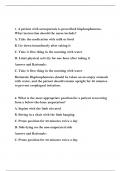
1. A patient with osteoporosis is prescribed bisphosphonates.
What instruction should the nurse include?
A. Take the medication with milk or food
B. Lie down immediately after taking it
C. Take it first thing in the morning with water
D. Limit physical activity for one hour after taking it
Answer and Rationale:
C. Take it first thing in the morning with water
Rationale: Bisphosphonates should be taken on an empty stomach
with water, and the patient should remain upright for 30 minutes
to prevent esophageal irritation.
2. What is the most appropriate position for a patient recovering
from a below-the-knee amputation?
A. Supine with the limb elevated
B. Sitting in a chair with the limb hanging
C. Prone position for 30 minutes twice a day
D. Side-lying on the non-amputated side
Answer and Rationale:
C. Prone position for 30 minutes twice a day
,Rationale: Prone positioning prevents hip flexion contractures, a
common complication in lower limb amputations.
3. What is the priority action for a patient with osteomyelitis and
a fever of 102°F (38.9°C)?
A. Administer prescribed antibiotics
B. Apply a cool compress to the forehead
C. Perform wound care
D. Encourage fluid intake
Answer and Rationale:
A. Administer prescribed antibiotics
Rationale: Osteomyelitis is a bone infection, and antibiotics are
critical for treating the underlying cause and preventing sepsis.
4. Which complication should the nurse prioritize monitoring in a
post-op patient with a total knee arthroplasty?
A. Pulmonary embolism
B. Hemorrhage
C. Pressure ulcer development
D. Joint stiffness
Answer and Rationale:
A. Pulmonary embolism
, Rationale: Immobility post-surgery increases the risk of deep vein
thrombosis (DVT) and pulmonary embolism, which are life-
threatening complications.
5. What is the primary focus of nursing care for a patient with
osteogenesis imperfecta?
A. Preventing fractures
B. Managing joint stiffness
C. Improving bone density
D. Enhancing mobility
Answer and Rationale:
A. Preventing fractures
Rationale: Osteogenesis imperfecta causes brittle bones, making
fracture prevention critical in managing this condition.
6. What is a common complication of long-term use of NSAIDs in
orthopedic conditions?
A. Kidney stones
B. Peptic ulcers
C. Liver failure
D. Hypokalemia
Answer and Rationale:
B. Peptic ulcers
What instruction should the nurse include?
A. Take the medication with milk or food
B. Lie down immediately after taking it
C. Take it first thing in the morning with water
D. Limit physical activity for one hour after taking it
Answer and Rationale:
C. Take it first thing in the morning with water
Rationale: Bisphosphonates should be taken on an empty stomach
with water, and the patient should remain upright for 30 minutes
to prevent esophageal irritation.
2. What is the most appropriate position for a patient recovering
from a below-the-knee amputation?
A. Supine with the limb elevated
B. Sitting in a chair with the limb hanging
C. Prone position for 30 minutes twice a day
D. Side-lying on the non-amputated side
Answer and Rationale:
C. Prone position for 30 minutes twice a day
,Rationale: Prone positioning prevents hip flexion contractures, a
common complication in lower limb amputations.
3. What is the priority action for a patient with osteomyelitis and
a fever of 102°F (38.9°C)?
A. Administer prescribed antibiotics
B. Apply a cool compress to the forehead
C. Perform wound care
D. Encourage fluid intake
Answer and Rationale:
A. Administer prescribed antibiotics
Rationale: Osteomyelitis is a bone infection, and antibiotics are
critical for treating the underlying cause and preventing sepsis.
4. Which complication should the nurse prioritize monitoring in a
post-op patient with a total knee arthroplasty?
A. Pulmonary embolism
B. Hemorrhage
C. Pressure ulcer development
D. Joint stiffness
Answer and Rationale:
A. Pulmonary embolism
, Rationale: Immobility post-surgery increases the risk of deep vein
thrombosis (DVT) and pulmonary embolism, which are life-
threatening complications.
5. What is the primary focus of nursing care for a patient with
osteogenesis imperfecta?
A. Preventing fractures
B. Managing joint stiffness
C. Improving bone density
D. Enhancing mobility
Answer and Rationale:
A. Preventing fractures
Rationale: Osteogenesis imperfecta causes brittle bones, making
fracture prevention critical in managing this condition.
6. What is a common complication of long-term use of NSAIDs in
orthopedic conditions?
A. Kidney stones
B. Peptic ulcers
C. Liver failure
D. Hypokalemia
Answer and Rationale:
B. Peptic ulcers