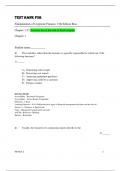
TestBankForProfessionalNursingConceptsChallenges
8th Edition By Beth Black 9780323431125 Chapter 1-16
ll
Complete Guide
, TestBankfor Professional Nursing Concepts & Challenges, 8th Edition, Beth Black
po po po po po po po po po
ProfessionalNursing:Concepts&Challenges,8thEditionTestBank l
Chapter 1.Nursing in Today’s Evolving Health Care Environment MULTIPLE
ll ll ll ll ll ll ll
CHOICE
1. Whichofthe following could eventually change the historical status ofnursing as a
po po po po po po po po po po
female- dominated profession?
po po po
a. Moremen graduating from baccalaureate and higher degree programs
po po po po po po po
b. The proportion of men in nursing beginning to increase
po po po po po po po po
c. Moremale graduates of basic nursing programs entering the workplace
po po po po po po po po
d. Salarycompensation increasing to attract more men po po po po po
RESPONSE:: C po
Feedback
A Moremengraduating frombaccalaureate and higher degreeprograms isnot po po po po po
the best answer because associate degree programs produce the most
po po po po po po po po po po
new graduates.
po po
B Thepercentage of men in nursing has increased 50% since 2000.
po po po po po po po po po
C The more menwho enter theworkplace as nurses, the less nursing will beseen as
po po po po po po po po po po po po
a female-dominated profession.
po po po
D Salaryrates do not appear to relate to the recruitment of men into nursing.
po po po po po po po po po po po po
DIF: Cognitive Level: Comprehension REFERENCE:: MCS: 2
po po po po po po
2. Theracialand ethnic compositionofthe nursing profession will change to
po po po po po po po
po moreaccurately reflect the population as a whole when
po po po po po po po
a. theincreased numbersofracialandethnic minoritiesenrolled
po po
ineducational programs graduate and begin to practice.
po po po po po po po
b. thenumber ofAsians or Native Hawaiian-Pacific Islanders begins to increase.
po po po po po po po po po
c. thepercentage of African-Americanand Hispanic nurses decreases
po po po po po
morethanthe percentage of white nurses.
po po po po po
, TestBankfor Professional Nursing Concepts & Challenges, 8th Edition, Beth Black
po po po po po po po po po
d. the nonwhite portion ofthe general population decreases.
po po po po po po
RESPONSE:: A po
Feedback
A Alargerpercentage ofminoritiesareenrolled innursingeducationalprograms po po
than previously.
po po
B Asiansand Native Hawaiian-Pacific Islandersare overrepresented innursing
po po po po po
compared to their percentage of the general population.
po po po po po po po po
C Not only would the percentage of African-American and Hispanic nurses
po po po po po po po po po
need to increase, the percentage of white nurses would have to decrease in
po po po po po po po po po po po po po
order to
po more accurately reflect the population as a whole.
po p o po po po po po po po
D Thenonwhite portion ofthe generalpopulation is not likelyto decrease.
po po po po po po po
DIF: Cognitive Level: Comprehension REFERENCE:: MCS: 3
po po po po po po
3. Whichofthe following is a correct statement about the registered nurse (RN) population?
po po po po po po po po po po po
a. Theracial/ethnic composition ofRNs closelyresembles that ofthe po po po po po
general population.
po po
b. Thenumber of men entering nursing has decreased steadilyover the last decade.
po po po po po po po po po po
c. Therate of aging of RNs has slowed for the first time in the past 30 years.
po po po po po po po po po po po po po p o po
d. The majorityofemployed RNs working full time must work a second position.
po po po po po po p o po po po
RESPONSE:: C po
Feedback
A Theracial/ethnic composition ofRNs is increasing, but doesnot approximatepo po po po po po po
their percentage of the overall population.
po po po po po po
B The number of men entering nursing is increasing.
po po po po po po po
C The average age ofRNs in both 2004 and 2008 was 46. This is a result
po po po po po po po po po po po po po po
ofthe numbers of RNs under 30 in the workforce.
po po po po po po po po po
D Accordingto 2008 data, only12% ofnursesworking fulltime po po po po po
hold second positions.
po po po
, TestBankfor Professional Nursing Concepts & Challenges, 8th Edition, Beth Black
po po po po po po po po po
DIF: Cognitive Level: Knowledge REFERENCE:: MCS: 3
po po po po po po
4. Whichofthe following best describes trends in nursing education?
po po po po po po po
a. Numbersof RNs with bachelors and higher degrees are increasing.
po po po po po po po po
b. Numbers of RNs with associate degrees are decreasing.
po po po po po po po
c. Foreign-bornnursespracticing inthe United Statesareseen as po po po po
less knowledgeable because of their lesser educational
po po po po po po po
preparation.
po
d. Numbers of RNs with diploma educations are increasing.
po po po po po po po
RESPONSE:: A po
Feedback
A Slightlyover 50% of RNseventuallyobtaintheir bachelors ofscience in
po po po po po po
nursing (BSN) or a higher nursing degree.
po po po po po po po
B The majorityofnurses in this countryget their initial nursing education in
po po po po po po po po po
associate degree in nursing (ADN) programs.
po po po po po po
C Foreign-bornnursespracticing inthe United States maybeviewed as po po po po po
less knowledgeable by their peers because of language and
po po po po po po po po po
cultural differences.
po po
D The numbers ofdiploma-educated nurses are declining.
po po po po po
DIF: Cognitive Level: Knowledge REFERENCE:: MCS: 4
po po po po po po
5. Despite the varietyofwork settings available to the RN, data from 2008 indicate that
po po po po po po po po po po po po
the primary work site for RNs is
po po po po po po po
a. ambulatorycare settings. po
b. communityhealth settings. po
c. long-termcare facilities. po
d. acute care hospitals.
po po
RESPONSE:: D po
Feedback
8th Edition By Beth Black 9780323431125 Chapter 1-16
ll
Complete Guide
, TestBankfor Professional Nursing Concepts & Challenges, 8th Edition, Beth Black
po po po po po po po po po
ProfessionalNursing:Concepts&Challenges,8thEditionTestBank l
Chapter 1.Nursing in Today’s Evolving Health Care Environment MULTIPLE
ll ll ll ll ll ll ll
CHOICE
1. Whichofthe following could eventually change the historical status ofnursing as a
po po po po po po po po po po
female- dominated profession?
po po po
a. Moremen graduating from baccalaureate and higher degree programs
po po po po po po po
b. The proportion of men in nursing beginning to increase
po po po po po po po po
c. Moremale graduates of basic nursing programs entering the workplace
po po po po po po po po
d. Salarycompensation increasing to attract more men po po po po po
RESPONSE:: C po
Feedback
A Moremengraduating frombaccalaureate and higher degreeprograms isnot po po po po po
the best answer because associate degree programs produce the most
po po po po po po po po po po
new graduates.
po po
B Thepercentage of men in nursing has increased 50% since 2000.
po po po po po po po po po
C The more menwho enter theworkplace as nurses, the less nursing will beseen as
po po po po po po po po po po po po
a female-dominated profession.
po po po
D Salaryrates do not appear to relate to the recruitment of men into nursing.
po po po po po po po po po po po po
DIF: Cognitive Level: Comprehension REFERENCE:: MCS: 2
po po po po po po
2. Theracialand ethnic compositionofthe nursing profession will change to
po po po po po po po
po moreaccurately reflect the population as a whole when
po po po po po po po
a. theincreased numbersofracialandethnic minoritiesenrolled
po po
ineducational programs graduate and begin to practice.
po po po po po po po
b. thenumber ofAsians or Native Hawaiian-Pacific Islanders begins to increase.
po po po po po po po po po
c. thepercentage of African-Americanand Hispanic nurses decreases
po po po po po
morethanthe percentage of white nurses.
po po po po po
, TestBankfor Professional Nursing Concepts & Challenges, 8th Edition, Beth Black
po po po po po po po po po
d. the nonwhite portion ofthe general population decreases.
po po po po po po
RESPONSE:: A po
Feedback
A Alargerpercentage ofminoritiesareenrolled innursingeducationalprograms po po
than previously.
po po
B Asiansand Native Hawaiian-Pacific Islandersare overrepresented innursing
po po po po po
compared to their percentage of the general population.
po po po po po po po po
C Not only would the percentage of African-American and Hispanic nurses
po po po po po po po po po
need to increase, the percentage of white nurses would have to decrease in
po po po po po po po po po po po po po
order to
po more accurately reflect the population as a whole.
po p o po po po po po po po
D Thenonwhite portion ofthe generalpopulation is not likelyto decrease.
po po po po po po po
DIF: Cognitive Level: Comprehension REFERENCE:: MCS: 3
po po po po po po
3. Whichofthe following is a correct statement about the registered nurse (RN) population?
po po po po po po po po po po po
a. Theracial/ethnic composition ofRNs closelyresembles that ofthe po po po po po
general population.
po po
b. Thenumber of men entering nursing has decreased steadilyover the last decade.
po po po po po po po po po po
c. Therate of aging of RNs has slowed for the first time in the past 30 years.
po po po po po po po po po po po po po p o po
d. The majorityofemployed RNs working full time must work a second position.
po po po po po po p o po po po
RESPONSE:: C po
Feedback
A Theracial/ethnic composition ofRNs is increasing, but doesnot approximatepo po po po po po po
their percentage of the overall population.
po po po po po po
B The number of men entering nursing is increasing.
po po po po po po po
C The average age ofRNs in both 2004 and 2008 was 46. This is a result
po po po po po po po po po po po po po po
ofthe numbers of RNs under 30 in the workforce.
po po po po po po po po po
D Accordingto 2008 data, only12% ofnursesworking fulltime po po po po po
hold second positions.
po po po
, TestBankfor Professional Nursing Concepts & Challenges, 8th Edition, Beth Black
po po po po po po po po po
DIF: Cognitive Level: Knowledge REFERENCE:: MCS: 3
po po po po po po
4. Whichofthe following best describes trends in nursing education?
po po po po po po po
a. Numbersof RNs with bachelors and higher degrees are increasing.
po po po po po po po po
b. Numbers of RNs with associate degrees are decreasing.
po po po po po po po
c. Foreign-bornnursespracticing inthe United Statesareseen as po po po po
less knowledgeable because of their lesser educational
po po po po po po po
preparation.
po
d. Numbers of RNs with diploma educations are increasing.
po po po po po po po
RESPONSE:: A po
Feedback
A Slightlyover 50% of RNseventuallyobtaintheir bachelors ofscience in
po po po po po po
nursing (BSN) or a higher nursing degree.
po po po po po po po
B The majorityofnurses in this countryget their initial nursing education in
po po po po po po po po po
associate degree in nursing (ADN) programs.
po po po po po po
C Foreign-bornnursespracticing inthe United States maybeviewed as po po po po po
less knowledgeable by their peers because of language and
po po po po po po po po po
cultural differences.
po po
D The numbers ofdiploma-educated nurses are declining.
po po po po po
DIF: Cognitive Level: Knowledge REFERENCE:: MCS: 4
po po po po po po
5. Despite the varietyofwork settings available to the RN, data from 2008 indicate that
po po po po po po po po po po po po
the primary work site for RNs is
po po po po po po po
a. ambulatorycare settings. po
b. communityhealth settings. po
c. long-termcare facilities. po
d. acute care hospitals.
po po
RESPONSE:: D po
Feedback