Mental health saunders 8th ed
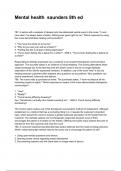
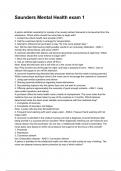
787. A patron with a analysis of despair who has attempted suicide says to the nurse, "I must
have died. I've always been a failure. Nothing ever goes right for me." Which response by using
the nurse demonstrates healing communication?
1. "You have the whole lot to live for."
2. "Why do you see your self as a failure?"
3. "Feeling like this is all part of being depressed."
4. "You've been feeling like a failure for a while?" - ANS-4. "You've been feeling like a failure for
a while?"
Responding to feelings expressed via a customer is an powerful therapeutic communication
approach. The accurate option is an instance of using restating. The closing alternatives block
verbal exchange due to the fact they limit the client's revel in and do no longer facilitate
exploration of the client's expressed emotions. In addition, use of the word "why" is not any
healing because customers often interpret why questions as accusations. Why questions can
motive resentment, insecurity and distrust.
788. The nurse visits a purchaser at home. The purchaser states, "I have not slept at all the
remaining couple of nights." Which response by means of the nurse demonstrates therapeutic
communique?
1. "I see"
2. "Really?"
3. "You're having difficulty drowsing?"
four. "Sometimes I actually have hassle snoozing too." - ANS-3. You're having difficulty
slumbering?
The correct option makes use of the therapeutic conversation method of restatement. Although
restatement is a method that has a prompting thing to it, it repeats the customer's important
topic, which assists the nurse to acquire a greater particular perception of the hassle from the
customer. The ultimate options are not therapeutic responses because none of them
encourages the patron to increase on the hassle. Offering non-public enjoy actions the point of
interest far from the customer and onto the nurse
789. A consumer experiencing disturbed idea tactics believes that his meals is being poisoned.
Which verbal exchange method need to the nurse use to encourage the patron to eat?
1. Using open-ended questions and silence.
2. Sharing private choice regarding meals alternatives
3. Documenting reasons why the client does no longer want to devour
, four. Offering opinions about the necessity of adequate nutrition - ANS-1. Using open-ended
questions and silence
Open-ended questions and silence are strategies used to inspire clients to speak about their
problems. Sharing personal meals options is not a purchaser-targeted intervention. The
remaining alternatives aren't beneficial to the purchaser because they do no longer inspire the
purchaser to explicit feelings. The nurse must not offer reviews and should inspire the purchaser
to identify the reasons for the behavior.
791. A patron diagnosed with terminal cancer says to the nurse, "I'm going to die, and I desire
my own family could stop hoping for a cure! I get so angry while they create on like this. After
all, I'm the one who is loss of life." Which response by the nurse is healing?
1. Have you shared your emotions together with your family?
2. I think we have to communicate extra approximately your anger with your circle of relatives.
3. You're feeling irritated that your family maintains to pray with a purpose to be cured?
Four. You are possibly very depressed, that's understandable with this type of diagnosis. -
ANS-three. You're feeling irritated that your own family keeps to pray so as to be cured?
Restating is a therapeutic communication approach in which the nurse repeats what the patron
says to expose information and to check what changed into said. Although it's far appropriate for
the nurse to try and verify the purchaser's potential to speak about feelings brazenly with circle
of relatives members, it does no longer help the consumer speak the emotions causing the
anger. The nurse's direct try and assume the patron to speak extra about the anger is
premature. The nurse would in no way make a judgment concerning the purpose for the
consumer's feeling; this is non-healing within the one-to-one courting.
795. When a patron is admitted to an inpatient mental fitness unit with the prognosis of anorexia
nervosa, a cognitive behavioral approach is used as part of the treatment plan. The nurse plans
care based on which motive of this method?
1. Providing a supportive environment
2. Examining intro psychic conflicts and past problems
3. Emphasizing social interplay with clients who withdraw
four. Helping the client to examine dysfunctional thoughts and ideals - ANS-4. Helping the
customer to examine dysfunctional mind and beliefs
CBT is used to help the client pick out and observe dysfunctional mind and to perceive and
study values and ideals that maintain those thoughts. The remaining alternatives, at the same
time as healing in certain conditions, aren't the focus of CBT.
797. The nurse employed in a intellectual health medical institution is greeted by means of a
neighbor in a neighborhood grocery store. The neighbor says to the nurse, "How is Carol doing?
She is my fine friend and is seen at your health center every week." Which is the most
appropriate nursing reaction?
1. I can not discuss any client situation with you.
787. A patron with a analysis of despair who has attempted suicide says to the nurse, "I must
have died. I've always been a failure. Nothing ever goes right for me." Which response by using
the nurse demonstrates healing communication?
1. "You have the whole lot to live for."
2. "Why do you see your self as a failure?"
3. "Feeling like this is all part of being depressed."
4. "You've been feeling like a failure for a while?" - ANS-4. "You've been feeling like a failure for
a while?"
Responding to feelings expressed via a customer is an powerful therapeutic communication
approach. The accurate option is an instance of using restating. The closing alternatives block
verbal exchange due to the fact they limit the client's revel in and do no longer facilitate
exploration of the client's expressed emotions. In addition, use of the word "why" is not any
healing because customers often interpret why questions as accusations. Why questions can
motive resentment, insecurity and distrust.
788. The nurse visits a purchaser at home. The purchaser states, "I have not slept at all the
remaining couple of nights." Which response by means of the nurse demonstrates therapeutic
communique?
1. "I see"
2. "Really?"
3. "You're having difficulty drowsing?"
four. "Sometimes I actually have hassle snoozing too." - ANS-3. You're having difficulty
slumbering?
The correct option makes use of the therapeutic conversation method of restatement. Although
restatement is a method that has a prompting thing to it, it repeats the customer's important
topic, which assists the nurse to acquire a greater particular perception of the hassle from the
customer. The ultimate options are not therapeutic responses because none of them
encourages the patron to increase on the hassle. Offering non-public enjoy actions the point of
interest far from the customer and onto the nurse
789. A consumer experiencing disturbed idea tactics believes that his meals is being poisoned.
Which verbal exchange method need to the nurse use to encourage the patron to eat?
1. Using open-ended questions and silence.
2. Sharing private choice regarding meals alternatives
3. Documenting reasons why the client does no longer want to devour
, four. Offering opinions about the necessity of adequate nutrition - ANS-1. Using open-ended
questions and silence
Open-ended questions and silence are strategies used to inspire clients to speak about their
problems. Sharing personal meals options is not a purchaser-targeted intervention. The
remaining alternatives aren't beneficial to the purchaser because they do no longer inspire the
purchaser to explicit feelings. The nurse must not offer reviews and should inspire the purchaser
to identify the reasons for the behavior.
791. A patron diagnosed with terminal cancer says to the nurse, "I'm going to die, and I desire
my own family could stop hoping for a cure! I get so angry while they create on like this. After
all, I'm the one who is loss of life." Which response by the nurse is healing?
1. Have you shared your emotions together with your family?
2. I think we have to communicate extra approximately your anger with your circle of relatives.
3. You're feeling irritated that your family maintains to pray with a purpose to be cured?
Four. You are possibly very depressed, that's understandable with this type of diagnosis. -
ANS-three. You're feeling irritated that your own family keeps to pray so as to be cured?
Restating is a therapeutic communication approach in which the nurse repeats what the patron
says to expose information and to check what changed into said. Although it's far appropriate for
the nurse to try and verify the purchaser's potential to speak about feelings brazenly with circle
of relatives members, it does no longer help the consumer speak the emotions causing the
anger. The nurse's direct try and assume the patron to speak extra about the anger is
premature. The nurse would in no way make a judgment concerning the purpose for the
consumer's feeling; this is non-healing within the one-to-one courting.
795. When a patron is admitted to an inpatient mental fitness unit with the prognosis of anorexia
nervosa, a cognitive behavioral approach is used as part of the treatment plan. The nurse plans
care based on which motive of this method?
1. Providing a supportive environment
2. Examining intro psychic conflicts and past problems
3. Emphasizing social interplay with clients who withdraw
four. Helping the client to examine dysfunctional thoughts and ideals - ANS-4. Helping the
customer to examine dysfunctional mind and beliefs
CBT is used to help the client pick out and observe dysfunctional mind and to perceive and
study values and ideals that maintain those thoughts. The remaining alternatives, at the same
time as healing in certain conditions, aren't the focus of CBT.
797. The nurse employed in a intellectual health medical institution is greeted by means of a
neighbor in a neighborhood grocery store. The neighbor says to the nurse, "How is Carol doing?
She is my fine friend and is seen at your health center every week." Which is the most
appropriate nursing reaction?
1. I can not discuss any client situation with you.