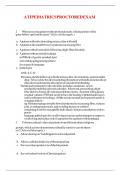
ATI PEDIATRICS PROCTORED EXAM f f f
2. When assessing patient with nutritional needs, which patients willre
f f f f f f f f f
quire follow-up from the nurse? (Select all that apply.)
f f f f f f f f
a. A patient with infection taking tetracycline with milk
f f f f f f f
b. A patient with irritable bowel syndrome increasing fiber
f f f f f f f
c. A patient with diverticulitis following a high-fiber diet daily
f f f f f f f f
d. A patient with an enteral feedinga
f f f f f f
nd 500 mL of gastric residual Apat
f f f f f f f
ient with dysphagia being referre
f f f f
d to a speech-language
f f f
e. pathologist
ANS: A, C, D f f f
The nurse should follow up with the tetracycline, diverticulitis, and enteralfee
f f f f f f f f f f f
ding. Tetracycline has decreased drug absorption with milk and antacids an
f f f f f f f f f f
d has decreased nutrient absorption of calcium from binding.
f f f f f f f f
Nutritional treatment for diverticulitis includes a moderate- or low- f f f f f f f f
residuediet until the infection subsides. Afterward, prescribing a high- f f f f f f f f f
fiber diet for chronic diverticula problems ensues. A patient with a gastric
f f f f f f f f f f f f
residual volume of 500 mL needs to have the feeding withheld and reasses f f f f f f f f f f f f
sed for tolerance to feedings. All the rest are normal and expected and do n
f f f f f f f f f f f f f f
ot require follow- f f
up. Patients manage irritable bowelsyndrome by increasing fiber, reducin
f f f f f f f f f
g fat, avoiding large meals, and avoiding lactose or sorbitol-
f f f f f f f f f
containing foods for susceptible individuals. Initiate consultation with a s f f f f f f f f f
peech-
language pathologist for swallowing exercises and techniques to improve f f f f f f f f f
swallowing and reduce risk of aspiration for a patient with dysphagia. f f f f f f f f f f
3. To honor cultural values of patients from different ethnic/religious
f f f f f f f f
groups, which actions demonstrate culturally sensitive care by thenu
f f f f f f f f f
rse? (Select all that apply.)
f f f f
a. Allows fasting on Yom Kippur for a Jewish patient
f f f f f f f f
b. Allows caffeine drinks for a Mormon patient f f f f f f
c. Serves no ham products to a Muslim patient f f f f f f f
1
d. Serves kosher foods to a Christian patient f f f f f f
,e. Serves no meat or fish to a Hindu patient f f f f f f f f
ANS: A, C, E f f f
The Jewish religion fasts 24 hours on Yom Kippur and must adhere to koshe
f f f f f f f f f f f f f
r food preparation methods. Hinduism requires no meats or fish.Muslims
f f f f f f f f f f
do not eat pork. Mormons do not drink caffeinated or alcoholic drinks.
f f f f f f f f f f f f
MULTIPLE CHOICE f
1. The nurse is caring for a surgical patient, when the family member
f f f f f f f f f f f
asks what perioperative nursing means. How should the nurse respond?
f f f f f f f f f
a. Perioperative nursing occurs in preadmission testing. f f f f f
b. Perioperative nursing occurs primarily in f f f f
the postanesthesia care unit. Perioperativ
f f f f f
e nursing includes activitiesbefore, durin
f f f f f
g, and after f f
c. surgery.
Perioperative nursing includes activities only during the surgicalpr f f f f f f f f
d. ocedure.
ANS: C f
Perioperative nursing care occurs before, during, and after surgery. f f f f f f f f
Preadmission testing occurs before surgery and is considered preoperativ f f f f f f f f
e. Nursing care provided during the surgical procedure is considered intra
f f f f f f f f f f
operative, and in the postanesthesia care unit, it is considered postoperati f f f f f f f f f f
ve. All of these are parts of the perioperative phase, but each individual ph
f f f f f f f f f f f f f
ase does not explain the term completely.f f f f f f
2. The nurse is caring for a patient who is scheduled to undergo a surgicalproc
f f f f f f f f f f f f f f
edure. The nurse is completing an assessment and reviews the patient’s
f f f f f f f f f f
laboratory tests and allergies and prepares the patient for surgery. In whichperioperat
f f f f f f f f f f f f
ive nursing phase is the nurse working?
f f f f f f
a. Perioperative
b. Preoperative
c. Intraoperative
d. Postoperative
2
ANS: B f
Reviewing the patient’s laboratory tests and allergies is done before
f f f f f f f f f
, surgery in the preoperative phase. Perioperative means before, during,an
f f f f f f f f f
d after surgery. Intraoperative means during the surgical procedure in the
f f f f f f f f f f f
operating suite; postoperative means after the surgery and couldoccur in t f f f f f f f f f f f
he postanesthesia care unit, in the ambulatory surgical area, or on the hos
f f f f f f f f f f f f
pital unit. f
3. The nurse is caring for a patient in the postanesthesia care unit. Thepati
f f f f f f f f f f f f f
ent has developed profuse bleeding from the surgical site, and the
f f f f f f f f f f
surgeon has determined the need to return to the operative area. How will thenurs
f f f f f f f f f f f f f f
e classify this procedure?
f f f
a. Major
b. Urgent
c. Elective
d. Emergency
ANS: D f
1) An emergency procedure must be done immediately to save a life or preserv
f f f f f f f f f f f f f
e the function of a body part. An example would be repair of a perforated ap
f f f f f f f f f f f f f f f
pendix, repair of a traumatic amputation, or control of internal hemorrhagi
f f f f f f f f f f
ng. An urgent procedure is necessary for a patient’shealth and often preven
f f f f f f f f f f f f
ts additional problems from developing. An example would be excision of
f f f f f f f f f f f
a cancerous tumor, removal of a gallbladder for stones, or vascular repair fo
f f f f f f f f f f f f
r an obstructed artery. An elective procedure is performed on the basis of th
f f f f f f f f f f f f f
e patient’s choice; it isnot essential and is not always necessary for health.
f f f f f f f f f f f f f f
An example wouldbe a bunionectomy, plastic surgery, or hernia reconstruc
f f f f f f f f f f
tion. A major procedure involves extensive reconstruction or alteration in b
f f f f f f f f f f
ody parts;it poses great risks to well-
f f f f f f f
being. An example would be a coronary artery bypass or colon resection.
f f f f f f f f f f f
LINKS FOR ALLATI RESOURCES: f f f f
ATI COMPREHENSIVE PREDICTOR EXAM ( 14 LAT
f f f f f f
EST VERSION ,2021) / COMPREHENSIVE ATI PREDI
f f f f f f
CTOR EXAM / PREDICTOR COMPREHENSIVE ATI E
f f f f f f
XAM(ABEST DOCUMENTFOR EXAM) f f f f
3
https://www.stuvia.com/doc/1113753/ati-comprehensive-predictor-exam-14-versionslatest-2021-a-
2. When assessing patient with nutritional needs, which patients willre
f f f f f f f f f
quire follow-up from the nurse? (Select all that apply.)
f f f f f f f f
a. A patient with infection taking tetracycline with milk
f f f f f f f
b. A patient with irritable bowel syndrome increasing fiber
f f f f f f f
c. A patient with diverticulitis following a high-fiber diet daily
f f f f f f f f
d. A patient with an enteral feedinga
f f f f f f
nd 500 mL of gastric residual Apat
f f f f f f f
ient with dysphagia being referre
f f f f
d to a speech-language
f f f
e. pathologist
ANS: A, C, D f f f
The nurse should follow up with the tetracycline, diverticulitis, and enteralfee
f f f f f f f f f f f
ding. Tetracycline has decreased drug absorption with milk and antacids an
f f f f f f f f f f
d has decreased nutrient absorption of calcium from binding.
f f f f f f f f
Nutritional treatment for diverticulitis includes a moderate- or low- f f f f f f f f
residuediet until the infection subsides. Afterward, prescribing a high- f f f f f f f f f
fiber diet for chronic diverticula problems ensues. A patient with a gastric
f f f f f f f f f f f f
residual volume of 500 mL needs to have the feeding withheld and reasses f f f f f f f f f f f f
sed for tolerance to feedings. All the rest are normal and expected and do n
f f f f f f f f f f f f f f
ot require follow- f f
up. Patients manage irritable bowelsyndrome by increasing fiber, reducin
f f f f f f f f f
g fat, avoiding large meals, and avoiding lactose or sorbitol-
f f f f f f f f f
containing foods for susceptible individuals. Initiate consultation with a s f f f f f f f f f
peech-
language pathologist for swallowing exercises and techniques to improve f f f f f f f f f
swallowing and reduce risk of aspiration for a patient with dysphagia. f f f f f f f f f f
3. To honor cultural values of patients from different ethnic/religious
f f f f f f f f
groups, which actions demonstrate culturally sensitive care by thenu
f f f f f f f f f
rse? (Select all that apply.)
f f f f
a. Allows fasting on Yom Kippur for a Jewish patient
f f f f f f f f
b. Allows caffeine drinks for a Mormon patient f f f f f f
c. Serves no ham products to a Muslim patient f f f f f f f
1
d. Serves kosher foods to a Christian patient f f f f f f
,e. Serves no meat or fish to a Hindu patient f f f f f f f f
ANS: A, C, E f f f
The Jewish religion fasts 24 hours on Yom Kippur and must adhere to koshe
f f f f f f f f f f f f f
r food preparation methods. Hinduism requires no meats or fish.Muslims
f f f f f f f f f f
do not eat pork. Mormons do not drink caffeinated or alcoholic drinks.
f f f f f f f f f f f f
MULTIPLE CHOICE f
1. The nurse is caring for a surgical patient, when the family member
f f f f f f f f f f f
asks what perioperative nursing means. How should the nurse respond?
f f f f f f f f f
a. Perioperative nursing occurs in preadmission testing. f f f f f
b. Perioperative nursing occurs primarily in f f f f
the postanesthesia care unit. Perioperativ
f f f f f
e nursing includes activitiesbefore, durin
f f f f f
g, and after f f
c. surgery.
Perioperative nursing includes activities only during the surgicalpr f f f f f f f f
d. ocedure.
ANS: C f
Perioperative nursing care occurs before, during, and after surgery. f f f f f f f f
Preadmission testing occurs before surgery and is considered preoperativ f f f f f f f f
e. Nursing care provided during the surgical procedure is considered intra
f f f f f f f f f f
operative, and in the postanesthesia care unit, it is considered postoperati f f f f f f f f f f
ve. All of these are parts of the perioperative phase, but each individual ph
f f f f f f f f f f f f f
ase does not explain the term completely.f f f f f f
2. The nurse is caring for a patient who is scheduled to undergo a surgicalproc
f f f f f f f f f f f f f f
edure. The nurse is completing an assessment and reviews the patient’s
f f f f f f f f f f
laboratory tests and allergies and prepares the patient for surgery. In whichperioperat
f f f f f f f f f f f f
ive nursing phase is the nurse working?
f f f f f f
a. Perioperative
b. Preoperative
c. Intraoperative
d. Postoperative
2
ANS: B f
Reviewing the patient’s laboratory tests and allergies is done before
f f f f f f f f f
, surgery in the preoperative phase. Perioperative means before, during,an
f f f f f f f f f
d after surgery. Intraoperative means during the surgical procedure in the
f f f f f f f f f f f
operating suite; postoperative means after the surgery and couldoccur in t f f f f f f f f f f f
he postanesthesia care unit, in the ambulatory surgical area, or on the hos
f f f f f f f f f f f f
pital unit. f
3. The nurse is caring for a patient in the postanesthesia care unit. Thepati
f f f f f f f f f f f f f
ent has developed profuse bleeding from the surgical site, and the
f f f f f f f f f f
surgeon has determined the need to return to the operative area. How will thenurs
f f f f f f f f f f f f f f
e classify this procedure?
f f f
a. Major
b. Urgent
c. Elective
d. Emergency
ANS: D f
1) An emergency procedure must be done immediately to save a life or preserv
f f f f f f f f f f f f f
e the function of a body part. An example would be repair of a perforated ap
f f f f f f f f f f f f f f f
pendix, repair of a traumatic amputation, or control of internal hemorrhagi
f f f f f f f f f f
ng. An urgent procedure is necessary for a patient’shealth and often preven
f f f f f f f f f f f f
ts additional problems from developing. An example would be excision of
f f f f f f f f f f f
a cancerous tumor, removal of a gallbladder for stones, or vascular repair fo
f f f f f f f f f f f f
r an obstructed artery. An elective procedure is performed on the basis of th
f f f f f f f f f f f f f
e patient’s choice; it isnot essential and is not always necessary for health.
f f f f f f f f f f f f f f
An example wouldbe a bunionectomy, plastic surgery, or hernia reconstruc
f f f f f f f f f f
tion. A major procedure involves extensive reconstruction or alteration in b
f f f f f f f f f f
ody parts;it poses great risks to well-
f f f f f f f
being. An example would be a coronary artery bypass or colon resection.
f f f f f f f f f f f
LINKS FOR ALLATI RESOURCES: f f f f
ATI COMPREHENSIVE PREDICTOR EXAM ( 14 LAT
f f f f f f
EST VERSION ,2021) / COMPREHENSIVE ATI PREDI
f f f f f f
CTOR EXAM / PREDICTOR COMPREHENSIVE ATI E
f f f f f f
XAM(ABEST DOCUMENTFOR EXAM) f f f f
3
https://www.stuvia.com/doc/1113753/ati-comprehensive-predictor-exam-14-versionslatest-2021-a-