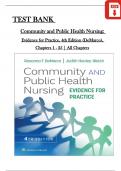
TEST BANK
Community and Public Health Nursing:
Evidence for Practice, 4th Edition (DeMarco),
Chapters 1 - 25 | All Chapters
Page 3
,TABLE OF CONTENTS
Page 3
,Chapter 1: Public Health Nursing
1. A nurse is striving to practice patient-centered care at a hospital. Which action best
exemplifies providing patient-centered care?
A) Having a client complete a self-reported functional status indicator and then
reviewing it with the client
B) Explaining to a client the benefits of computer-assisted robotic surgical
techniques, which the hospital recently implemented
C) Recording a client's signs and symptoms in an electronic health record
D) Performing continuous glucose monitoring of a client while the client is in the
hospital
ANSWER: A
Feedback:
Patient-centered care considers cultural traditions, personal preferences, values, families,
and lifestyles. Clients become active participants in their own care, and monitoring health
becomes the client's responsibility. To help clients and their healthcare providers make
better decisions, the Agency for Healthcare Research and Quality (AHRQ) has
developed a series of tools that empower clients and assist providers in achieving desired
outcomes, including client-reported functional status indicators. Computer-assisted
robotic surgical techniques, electronic health records, andcontinuous glucose monitoring
in the hospital are all technological advances in healthcare, but they do not help the client
become a more active participant in his or hercare, and thus are not good examples of
patient-centered care.
Origin: Chapter 1- Public Health Nursing, 2
2. A nurse is caring for an older client who is struggling to manage her type 2 diabetes
mellitus. The nurse should recognize which social determinants of this client's health?
(Select all that apply.)
A) Household income of $23,000 per year
B) Reading level of a third grader
Page 3
, C) Medication ineffective due to error in prescription
D) Originally from Sudan
E) No family in the area
ANSWER: A, B, D, E
Feedback:
The isocial iconditions iin iwhich ipeople ilive, itheir iincome, isocial istatus, ieducation,
iliteracy, i home iand iwork ienvironment, isupport inetworks, igender, iculture, iand
iavailability iof ihealth iservices iare ithe isocial ideterminants iof ihealth. iThese iconditions
ihave ian iimpact ion ithe iextent ito iwhich ia iperson ior icommunity ipossesses ithe iphysical,
isocial, iand ipersonal iresources inecessary ito iattain iand imaintain ihealth. iA imedical
ierrorion ithe ipart iof ithe iclient's iprimary icare iprovider ior inurse iwould inot iconstitute ia
isocial ideterminant iof ithe iclient's ihealth.
3. A inurse isuccessfully ipersuades ian iobese iclient ito iperform ia iweekly iweigh-in iat
ihomeiusing ia idigital iscale iand irecord ithe iweight iin ia ilog. iThis istrategy iis ian iexample
iof:
A) Telehealth
B) Health iinformation itechnology
C) Personal iresponsibility ifor ihealth
D) Evidence-based
inursingiANSWER: i C
Feedback:
Personal iresponsibility ifor ihealth iinvolves iactive iparticipation iin ione's iown ihealth
ithrough ieducation iand ilifestyle ichanges. iIn ithis icase, ithe iclient imakes ia ipositive
ichangeiin ilifestyle iby imonitoring ibody iweight iweekly. iTelehealth iis ithe iuse iof
ielectronic iinformation iand itelecommunications itechnologies ito isupport ilong-distance
iclinical ihealthcare, iclient iand iprofessional ihealth-related ieducation, ipublic ihealth, iand
ihealth iadministration. iHealth iinformation itechnology i(HIT) iis idefined ias ithe
icomprehensive imanagement iof ihealth iinformation iand iits iexchange ibetween
iconsumers, iproviders, igovernment, iand iinsurers iin ia isecure imanner. iEvidence-based
inursing iis ithe iintegrationiof ithe ibest ievidence iavailable iwith iclinical iexpertise iand ithe
ivalues iof ithe iclient ito iincrease ithe iquality iof icare.
Page 3
Community and Public Health Nursing:
Evidence for Practice, 4th Edition (DeMarco),
Chapters 1 - 25 | All Chapters
Page 3
,TABLE OF CONTENTS
Page 3
,Chapter 1: Public Health Nursing
1. A nurse is striving to practice patient-centered care at a hospital. Which action best
exemplifies providing patient-centered care?
A) Having a client complete a self-reported functional status indicator and then
reviewing it with the client
B) Explaining to a client the benefits of computer-assisted robotic surgical
techniques, which the hospital recently implemented
C) Recording a client's signs and symptoms in an electronic health record
D) Performing continuous glucose monitoring of a client while the client is in the
hospital
ANSWER: A
Feedback:
Patient-centered care considers cultural traditions, personal preferences, values, families,
and lifestyles. Clients become active participants in their own care, and monitoring health
becomes the client's responsibility. To help clients and their healthcare providers make
better decisions, the Agency for Healthcare Research and Quality (AHRQ) has
developed a series of tools that empower clients and assist providers in achieving desired
outcomes, including client-reported functional status indicators. Computer-assisted
robotic surgical techniques, electronic health records, andcontinuous glucose monitoring
in the hospital are all technological advances in healthcare, but they do not help the client
become a more active participant in his or hercare, and thus are not good examples of
patient-centered care.
Origin: Chapter 1- Public Health Nursing, 2
2. A nurse is caring for an older client who is struggling to manage her type 2 diabetes
mellitus. The nurse should recognize which social determinants of this client's health?
(Select all that apply.)
A) Household income of $23,000 per year
B) Reading level of a third grader
Page 3
, C) Medication ineffective due to error in prescription
D) Originally from Sudan
E) No family in the area
ANSWER: A, B, D, E
Feedback:
The isocial iconditions iin iwhich ipeople ilive, itheir iincome, isocial istatus, ieducation,
iliteracy, i home iand iwork ienvironment, isupport inetworks, igender, iculture, iand
iavailability iof ihealth iservices iare ithe isocial ideterminants iof ihealth. iThese iconditions
ihave ian iimpact ion ithe iextent ito iwhich ia iperson ior icommunity ipossesses ithe iphysical,
isocial, iand ipersonal iresources inecessary ito iattain iand imaintain ihealth. iA imedical
ierrorion ithe ipart iof ithe iclient's iprimary icare iprovider ior inurse iwould inot iconstitute ia
isocial ideterminant iof ithe iclient's ihealth.
3. A inurse isuccessfully ipersuades ian iobese iclient ito iperform ia iweekly iweigh-in iat
ihomeiusing ia idigital iscale iand irecord ithe iweight iin ia ilog. iThis istrategy iis ian iexample
iof:
A) Telehealth
B) Health iinformation itechnology
C) Personal iresponsibility ifor ihealth
D) Evidence-based
inursingiANSWER: i C
Feedback:
Personal iresponsibility ifor ihealth iinvolves iactive iparticipation iin ione's iown ihealth
ithrough ieducation iand ilifestyle ichanges. iIn ithis icase, ithe iclient imakes ia ipositive
ichangeiin ilifestyle iby imonitoring ibody iweight iweekly. iTelehealth iis ithe iuse iof
ielectronic iinformation iand itelecommunications itechnologies ito isupport ilong-distance
iclinical ihealthcare, iclient iand iprofessional ihealth-related ieducation, ipublic ihealth, iand
ihealth iadministration. iHealth iinformation itechnology i(HIT) iis idefined ias ithe
icomprehensive imanagement iof ihealth iinformation iand iits iexchange ibetween
iconsumers, iproviders, igovernment, iand iinsurers iin ia isecure imanner. iEvidence-based
inursing iis ithe iintegrationiof ithe ibest ievidence iavailable iwith iclinical iexpertise iand ithe
ivalues iof ithe iclient ito iincrease ithe iquality iof icare.
Page 3