Mental Health
EX am I
,
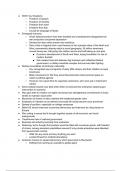
, EXAM #2 REVIEW – MENTAL HEALTH
Therapeutic vs Non-Therapeutic
Therapeutic Non-Therapeutic
Broad Openings – Tell me about what you are Excessive questioning – asking multiple
thinking? questioning, particularly close-ended,
Using silence consecutively, or rapidly which casts the nurse
Active listening in the role of interrogator who demands
Clarifying techniques information without respect for the patient’s
Use of self willingness or readiness to respond.
Presenting reality Giving approval or disapproval (disagreeing)
Restating – If a patient remarks, “My life is – Conveying approval or disapproval; giving
empty… it has no meaning,” additional praise and approval becomes much more
information may be gained by restating, “Your complex in a patient-nurse relationship.
life is empty?” Giving advice – when a nurse gives advice to a
Exploring – Describe this to me in more detail patient the nurse in interfering with the patient’s
Reflecting – In regard to our conversation ability to make personal decisions.
earlier, you should as if you have had many Asking why questions – why demands an
disappointments explanation and implies wrong doing.
Nurse Patient Interview
Cultural considerations
Ensure adequate space between you and client
Ensure minimize distractions
Ensure privacy
Mental Status Exam (MSE)
What is the client’s mood? – what they say they are feeling (sad,
happy, anxious)
o What the patient is saying
o Mood is subjective
What is the client’s affect? Outward expression of emotions? How is
it being shown on their face with their body language?
o Body language
o What is it that you are seeing when talking to the patient?
Mood is important to document what the patient tells you even if it
doesn’t match their affect… Remember it is subjective and based on
what patient states.
EX am I
,
, EXAM #2 REVIEW – MENTAL HEALTH
Therapeutic vs Non-Therapeutic
Therapeutic Non-Therapeutic
Broad Openings – Tell me about what you are Excessive questioning – asking multiple
thinking? questioning, particularly close-ended,
Using silence consecutively, or rapidly which casts the nurse
Active listening in the role of interrogator who demands
Clarifying techniques information without respect for the patient’s
Use of self willingness or readiness to respond.
Presenting reality Giving approval or disapproval (disagreeing)
Restating – If a patient remarks, “My life is – Conveying approval or disapproval; giving
empty… it has no meaning,” additional praise and approval becomes much more
information may be gained by restating, “Your complex in a patient-nurse relationship.
life is empty?” Giving advice – when a nurse gives advice to a
Exploring – Describe this to me in more detail patient the nurse in interfering with the patient’s
Reflecting – In regard to our conversation ability to make personal decisions.
earlier, you should as if you have had many Asking why questions – why demands an
disappointments explanation and implies wrong doing.
Nurse Patient Interview
Cultural considerations
Ensure adequate space between you and client
Ensure minimize distractions
Ensure privacy
Mental Status Exam (MSE)
What is the client’s mood? – what they say they are feeling (sad,
happy, anxious)
o What the patient is saying
o Mood is subjective
What is the client’s affect? Outward expression of emotions? How is
it being shown on their face with their body language?
o Body language
o What is it that you are seeing when talking to the patient?
Mood is important to document what the patient tells you even if it
doesn’t match their affect… Remember it is subjective and based on
what patient states.