lOMoARcPSD|1709022
lOMoARcPSD|1709022
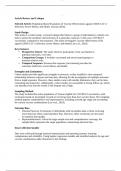
Article Review and Critique
Selected Article: Population-Based Evaluation of Vaccine Effectiveness against SARS-CoV-2
Infection, Severe Illness, and Death, Taiwan (2024).
Study Design
This study is a cohort study, a research design that follows a group of individuals (a cohort) over
time to assess the incidence and outcomes of a particular exposure, in this case, COVID-19
vaccination, compared to non-exposure. The study investigates vaccine effectiveness (VE)
against SARS-CoV-2 infection, severe illness, and death (Lee et al., 2024).
Key Features:
• Prospective Nature: The study observes participants, from vaccination to
potential outcomes, over time.
• Comparison Groups: It includes vaccinated and unvaccinated groups to
measure relative risks.
• Temporal Sequence: Ensures that exposure (vaccination) precedes the
outcomes (infection, severe illness, and death).
Strengths and Limitations:
Cohort studies provide significant strengths in research, as they establish a clear temporal
relationship between exposure and outcome, allowing for the investigation of multiple outcomes
from a single exposure. However, these studies come with notable limitations: they can be time-
consuming and expensive. Additionally, cohort studies are susceptible to losing follow-up, which
can introduce bias into the results if the dropout rate is high.
Sampling Method
The study included the entire population of Taiwan eligible for COVID-19 vaccination, with
exclusions based on incomplete records or receiving more than four vaccine doses. The sampling
method appears comprehensive and representative, including a broad age range and accounting
for various vaccine combinations (Lee et al., 2024).
Selection Bias:
• Potential Sources: Exclusions of individuals with incomplete data or those receiving
more than four doses could introduce bias. However, these exclusions are necessary
to maintain data quality.
• Representativeness: Given the large sample size and comprehensive coverage, the
sample likely represents the target population, minimizing selection bias.
Data Collection Quality
Data were collected through national immunization and reporting systems, ensuring
completeness and reliability. Using logistic regression models and stratified analyses by age and
vaccine combinations adds robustness to the findings.
lOMoARcPSD|1709022
Article Review and Critique
Selected Article: Population-Based Evaluation of Vaccine Effectiveness against SARS-CoV-2
Infection, Severe Illness, and Death, Taiwan (2024).
Study Design
This study is a cohort study, a research design that follows a group of individuals (a cohort) over
time to assess the incidence and outcomes of a particular exposure, in this case, COVID-19
vaccination, compared to non-exposure. The study investigates vaccine effectiveness (VE)
against SARS-CoV-2 infection, severe illness, and death (Lee et al., 2024).
Key Features:
• Prospective Nature: The study observes participants, from vaccination to
potential outcomes, over time.
• Comparison Groups: It includes vaccinated and unvaccinated groups to
measure relative risks.
• Temporal Sequence: Ensures that exposure (vaccination) precedes the
outcomes (infection, severe illness, and death).
Strengths and Limitations:
Cohort studies provide significant strengths in research, as they establish a clear temporal
relationship between exposure and outcome, allowing for the investigation of multiple outcomes
from a single exposure. However, these studies come with notable limitations: they can be time-
consuming and expensive. Additionally, cohort studies are susceptible to losing follow-up, which
can introduce bias into the results if the dropout rate is high.
Sampling Method
The study included the entire population of Taiwan eligible for COVID-19 vaccination, with
exclusions based on incomplete records or receiving more than four vaccine doses. The sampling
method appears comprehensive and representative, including a broad age range and accounting
for various vaccine combinations (Lee et al., 2024).
Selection Bias:
• Potential Sources: Exclusions of individuals with incomplete data or those receiving
more than four doses could introduce bias. However, these exclusions are necessary
to maintain data quality.
• Representativeness: Given the large sample size and comprehensive coverage, the
sample likely represents the target population, minimizing selection bias.
Data Collection Quality
Data were collected through national immunization and reporting systems, ensuring
completeness and reliability. Using logistic regression models and stratified analyses by age and
vaccine combinations adds robustness to the findings.