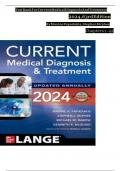
Test Bank For Current Medical Diagnosis And Treatment
v v v v v v v
2024, 63rd Edition
v v
By Maxine Papadakis, Stephen Mcphee
v v v v
Chapters 1 - 42
v v v
, Chapter 1. Disease Preventiong&Health Promotion
v v v v v
1.Whichofthe followingbehaviors indicates thehighestpotential forspreadingginfections amon g
v v v v v v v v v v v v v
clients? The nurse:
v v v
1) disinfects dirtyhands withgantibacterial soap. v v v v
2) allows alcohol-based rubgtodryfor 10 seconds. v v v v v v
3) washeshands onlyafter leavingeachroom. v v v v v v
4) usescold water formedical asepsis. v v v v v
2.What is the most frequent cause of the spread of infection among institutionalized
v v v v v v v v v v v v v
patients?
v
1) Airbornemicrobesfrom otherpatients v v v v
2) Contact with contaminated equipment v v v
3) Hands ofhealthcare workers v v v
4) Exposuregfrom familymembers v v
3.Whichofthefollowingnursingactivitiesisofhighestgpriorityformaintainingmedicala
v v v v v v v v v v v v v
sepsis?
v
1) Washinghands v
2) Donninggloves v
3) Applyinggsterile drapes v
4) Wearingagown v v
4.Apatientinfectedwithavirusbutwhodoesnothaveanyoutwardsignofthediseasegisc
v v v v v v v v v v v v v v v v v v
onsidered a:
v v
1) pathogen.
2) fomite.
3) vector.
4) carrier.
5.Apatientisadmittedtotheghospitalwithtuberculosis.Whichprecautionsmustthenursei
v v v v v v v v v v v v v v
nstitute when caring for this patient?
v v v v v v
1) Droplet transmission v
2) Airborne transmission v
3) Directcontact v
4) Indirect contact v
, 6. A patient becomes infected with oral candidiasis (thrush) while receiving intravenous
v v v v v v v v v v v
antibiotics to treat a systemic infection. Which typegof infection has the patient developed?
v v v v v v v v v v v v v
1) Endogenous nosocomial v
2) Exogenous nosocomial v
3) Latent
4) Primary
7.Thenurseassistsasurgeonwithcentralvenouscatheterinsertion.Whichaction is
v v v v v v v v v v v v
necessary to help maintain sterile technique?
v v v v v v
1) Closinggthepatients door to limit room traffic whilegpreparing thesterile field v v v v v v v v v v
2) Usingclean procedure gloves tohandle sterile equipment v v v v v v v
3) Placingthegnonsterile syringes containinggflush solution on the sterile field v v v v v v v v
4) Remaining6 inches awayfromthesterile fieldduringtheprocedure v v v v v v v v v v
8.Apatientgadmitted to the hospital withgpneumoniahas been receivingantibiotics for2 day
v v v v v v v v v v v v
s.Hisconditionhas stabilized,andhistemperaturehas returnedto normal.Whichstageofinfec tion is
v v v v v v v v v v v v v v v v v
the patient most likely experiencing?
v v v v v
1) Incubation
2) Prodromal
3) Decline
4) Convalescence
5) 8.
9.Apatientdevelopslocalizedheatanderythemaoveranareaonthelowerleg. Thesef
v v v v v v v v v v v v v v v v
indings are indicative of which secondary defense against infection?
v v v v v v v v v
1) Phagocytosis
2) Complement cascade v
3) Inflammation
4) Immunity
10.Thepatientsuddenlydevelopshives,shortnessofbreath,and wheezingafterreceivinga n
v v v v v v v v v v v v v v
antibiotic. Which antibody is primarily responsible for this patients response?
v v v v v v v v v v
1) IgA
2) IgE
3) IgG
4) IgM
11.Whattypeofimmunityisprovidedbyintravenous (IV)administrationofi
v v v v v v v v v v v v
mmunoglobulin G?
v v
1) Cell-mediated
2) Passive
, 3) Humoral
4) Active
v v v v v v v
2024, 63rd Edition
v v
By Maxine Papadakis, Stephen Mcphee
v v v v
Chapters 1 - 42
v v v
, Chapter 1. Disease Preventiong&Health Promotion
v v v v v
1.Whichofthe followingbehaviors indicates thehighestpotential forspreadingginfections amon g
v v v v v v v v v v v v v
clients? The nurse:
v v v
1) disinfects dirtyhands withgantibacterial soap. v v v v
2) allows alcohol-based rubgtodryfor 10 seconds. v v v v v v
3) washeshands onlyafter leavingeachroom. v v v v v v
4) usescold water formedical asepsis. v v v v v
2.What is the most frequent cause of the spread of infection among institutionalized
v v v v v v v v v v v v v
patients?
v
1) Airbornemicrobesfrom otherpatients v v v v
2) Contact with contaminated equipment v v v
3) Hands ofhealthcare workers v v v
4) Exposuregfrom familymembers v v
3.Whichofthefollowingnursingactivitiesisofhighestgpriorityformaintainingmedicala
v v v v v v v v v v v v v
sepsis?
v
1) Washinghands v
2) Donninggloves v
3) Applyinggsterile drapes v
4) Wearingagown v v
4.Apatientinfectedwithavirusbutwhodoesnothaveanyoutwardsignofthediseasegisc
v v v v v v v v v v v v v v v v v v
onsidered a:
v v
1) pathogen.
2) fomite.
3) vector.
4) carrier.
5.Apatientisadmittedtotheghospitalwithtuberculosis.Whichprecautionsmustthenursei
v v v v v v v v v v v v v v
nstitute when caring for this patient?
v v v v v v
1) Droplet transmission v
2) Airborne transmission v
3) Directcontact v
4) Indirect contact v
, 6. A patient becomes infected with oral candidiasis (thrush) while receiving intravenous
v v v v v v v v v v v
antibiotics to treat a systemic infection. Which typegof infection has the patient developed?
v v v v v v v v v v v v v
1) Endogenous nosocomial v
2) Exogenous nosocomial v
3) Latent
4) Primary
7.Thenurseassistsasurgeonwithcentralvenouscatheterinsertion.Whichaction is
v v v v v v v v v v v v
necessary to help maintain sterile technique?
v v v v v v
1) Closinggthepatients door to limit room traffic whilegpreparing thesterile field v v v v v v v v v v
2) Usingclean procedure gloves tohandle sterile equipment v v v v v v v
3) Placingthegnonsterile syringes containinggflush solution on the sterile field v v v v v v v v
4) Remaining6 inches awayfromthesterile fieldduringtheprocedure v v v v v v v v v v
8.Apatientgadmitted to the hospital withgpneumoniahas been receivingantibiotics for2 day
v v v v v v v v v v v v
s.Hisconditionhas stabilized,andhistemperaturehas returnedto normal.Whichstageofinfec tion is
v v v v v v v v v v v v v v v v v
the patient most likely experiencing?
v v v v v
1) Incubation
2) Prodromal
3) Decline
4) Convalescence
5) 8.
9.Apatientdevelopslocalizedheatanderythemaoveranareaonthelowerleg. Thesef
v v v v v v v v v v v v v v v v
indings are indicative of which secondary defense against infection?
v v v v v v v v v
1) Phagocytosis
2) Complement cascade v
3) Inflammation
4) Immunity
10.Thepatientsuddenlydevelopshives,shortnessofbreath,and wheezingafterreceivinga n
v v v v v v v v v v v v v v
antibiotic. Which antibody is primarily responsible for this patients response?
v v v v v v v v v v
1) IgA
2) IgE
3) IgG
4) IgM
11.Whattypeofimmunityisprovidedbyintravenous (IV)administrationofi
v v v v v v v v v v v v
mmunoglobulin G?
v v
1) Cell-mediated
2) Passive
, 3) Humoral
4) Active