MMI
Hot topics
NHS
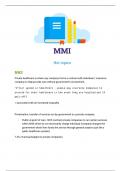
Private healthcare is where any company forms a contract with individual / insurance
company to help provide care without government’s involvement.
→2-tier system in healthcare : people pay insurance companies to
provide for their healthcare in the event they are hospitalised (4
well-off)
= associated with an increased inequality
Privatisation: transfer of services run by government to a private company
- Public at point of care : NHS contract private companies to run certain services
within NHS which do not necessarily charge individual (company charges the
government which then funds the service through general taxation just like a
public healthcare system)
7.3% of annual budget on private companies
, 2
Pros Cons
+ Unsustainable current system : - Goes against NHS core principles
private companies help to plug (healthcare free to all)
gaps where increasingly aging pop. - Private monopoly over care :
is associated with increased cost government pays private company
+ Good competition for contract to to build a hospital but may not get
help public and private companies good value for money
offer efficient value for money - Unnecessary treatments /
+ Still free for patients investigations
+ Faster treatment - Insurance systems (inequality)
+ Better working conditions - Companies are profit-motivates
(not have patients’ best interests at
heart = substandard care)
Challenges
● Lack of sufficient funds:
- Limited budget
- Increasing demand for healthcare services due to ageing population + rising
rates of chronic diseases.
→ long waiting times, staff shortages + inadequate facilities.
● Shortage of highly skilled + dedicated staff (heavily reliant on their
expertise)
- Insufficient funding
- High stress + burnout
- Ageing workforce
● Need for technological innovations / advancement: slow to adapt new 1s
- outdated infrastructure and processes
→ inefficiencies in healthcare delivery: long waiting times, missed
appointments, and delays in diagnosis and treatment.
● Health inequalities (differences in health outcomes and access to
healthcare services across different regions and socioeconomic groups) :
- Poverty
- Inadequate housing
- Limited access to education + employment opportunities
, 3
prioritising preventative healthcare measures and ensuring that all
patients have equal access to high-quality healthcare services.
Eg. increasing funding for community-based services (primary care and
mental health services) and developing targeted interventions to address
specific health inequalities (related to obesity, smoking, and alcohol
consumption).
● Integrated & coordinated care for the ageing population: elderly mL have
complex healthcare needs
Eg. multiple chronic conditions requiring ongoing support and management.
NHS needs to adapt to meet the needs of the ageing population by
developing new healthcare models tailored to the needs of older people.
Eg. providing more integrated and coordinated care across different
healthcare settings & investing in technologies that support independent living
and remote monitoring.
● Increased pressure on General Practice:
- to manage patient demand
- provide effective care
- support the wider healthcare system
growing demand for healthcare services, coupled with staff
shortages and limited resources →long waiting times for
appointments and reduced access to GP services.
NHS needs to prioritise investment in primary care services and provide
additional support for GPs to manage patient demand and deliver effective
care.
● Cancelled operations & Delayed Diagnosis:
Healthcare staff have been redeployed to COVID-19 wards and other high-
risk areas, reducing capacity in other healthcare system areas.
, 4
NHS needs to provide additional support for staff and patients affected by
redeployment and cancelled operations and develop strategies to address
the backlog of patients waiting for treatment.
● Preventive measures for disease and Infection control:
- providing appropriate personal protective equipment 4 staff
- implementing social distancing measures
- healthcare facilities are regularly cleaned and disinfected
● Private hospital care :
NHS has worked with private hospitals to provide additional capacity and
support for patients
→ raises Qs abt : role of the private sector in healthcare provision
and the potential impact on healthcare inequalities
NHS needs to develop clear policies and strategies to ensure that private
hospital care is used appropriately and does not undermine the principles of
universal healthcare provision.
challenges complex + multifaceted: opportunities for NHS to overcome them by:
- embracing new technologies and innovations,
- prioritising preventative healthcare measures
- investing in the recruitment and training of healthcare professionals.
Impact of COVID-19
additional funding needed to support the increased demand for healthcare
services and the development of new facilities and technologies to fight the
pandemic.
healthcare staff working longer hours and facing increased levels of stress and
exhaustion.
highlighted the need for the NHS to embrace new technologies and innovations,
such as telemedicine, remote monitoring, and artificial intelligence, to improve
healthcare delivery and increase efficiency.
Hot topics
NHS
Private healthcare is where any company forms a contract with individual / insurance
company to help provide care without government’s involvement.
→2-tier system in healthcare : people pay insurance companies to
provide for their healthcare in the event they are hospitalised (4
well-off)
= associated with an increased inequality
Privatisation: transfer of services run by government to a private company
- Public at point of care : NHS contract private companies to run certain services
within NHS which do not necessarily charge individual (company charges the
government which then funds the service through general taxation just like a
public healthcare system)
7.3% of annual budget on private companies
, 2
Pros Cons
+ Unsustainable current system : - Goes against NHS core principles
private companies help to plug (healthcare free to all)
gaps where increasingly aging pop. - Private monopoly over care :
is associated with increased cost government pays private company
+ Good competition for contract to to build a hospital but may not get
help public and private companies good value for money
offer efficient value for money - Unnecessary treatments /
+ Still free for patients investigations
+ Faster treatment - Insurance systems (inequality)
+ Better working conditions - Companies are profit-motivates
(not have patients’ best interests at
heart = substandard care)
Challenges
● Lack of sufficient funds:
- Limited budget
- Increasing demand for healthcare services due to ageing population + rising
rates of chronic diseases.
→ long waiting times, staff shortages + inadequate facilities.
● Shortage of highly skilled + dedicated staff (heavily reliant on their
expertise)
- Insufficient funding
- High stress + burnout
- Ageing workforce
● Need for technological innovations / advancement: slow to adapt new 1s
- outdated infrastructure and processes
→ inefficiencies in healthcare delivery: long waiting times, missed
appointments, and delays in diagnosis and treatment.
● Health inequalities (differences in health outcomes and access to
healthcare services across different regions and socioeconomic groups) :
- Poverty
- Inadequate housing
- Limited access to education + employment opportunities
, 3
prioritising preventative healthcare measures and ensuring that all
patients have equal access to high-quality healthcare services.
Eg. increasing funding for community-based services (primary care and
mental health services) and developing targeted interventions to address
specific health inequalities (related to obesity, smoking, and alcohol
consumption).
● Integrated & coordinated care for the ageing population: elderly mL have
complex healthcare needs
Eg. multiple chronic conditions requiring ongoing support and management.
NHS needs to adapt to meet the needs of the ageing population by
developing new healthcare models tailored to the needs of older people.
Eg. providing more integrated and coordinated care across different
healthcare settings & investing in technologies that support independent living
and remote monitoring.
● Increased pressure on General Practice:
- to manage patient demand
- provide effective care
- support the wider healthcare system
growing demand for healthcare services, coupled with staff
shortages and limited resources →long waiting times for
appointments and reduced access to GP services.
NHS needs to prioritise investment in primary care services and provide
additional support for GPs to manage patient demand and deliver effective
care.
● Cancelled operations & Delayed Diagnosis:
Healthcare staff have been redeployed to COVID-19 wards and other high-
risk areas, reducing capacity in other healthcare system areas.
, 4
NHS needs to provide additional support for staff and patients affected by
redeployment and cancelled operations and develop strategies to address
the backlog of patients waiting for treatment.
● Preventive measures for disease and Infection control:
- providing appropriate personal protective equipment 4 staff
- implementing social distancing measures
- healthcare facilities are regularly cleaned and disinfected
● Private hospital care :
NHS has worked with private hospitals to provide additional capacity and
support for patients
→ raises Qs abt : role of the private sector in healthcare provision
and the potential impact on healthcare inequalities
NHS needs to develop clear policies and strategies to ensure that private
hospital care is used appropriately and does not undermine the principles of
universal healthcare provision.
challenges complex + multifaceted: opportunities for NHS to overcome them by:
- embracing new technologies and innovations,
- prioritising preventative healthcare measures
- investing in the recruitment and training of healthcare professionals.
Impact of COVID-19
additional funding needed to support the increased demand for healthcare
services and the development of new facilities and technologies to fight the
pandemic.
healthcare staff working longer hours and facing increased levels of stress and
exhaustion.
highlighted the need for the NHS to embrace new technologies and innovations,
such as telemedicine, remote monitoring, and artificial intelligence, to improve
healthcare delivery and increase efficiency.