

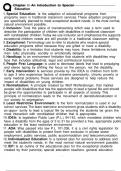
Chapter 1: An Introduction to Special zx zx zx zx zx
Education zx
StudyEducation:
1. Special online at https://quizlet.com/_3lvwev
Is the adaption of educational programs from
zx
zx zx zx
zx zx zx zx zx zx zx
programs seen in traditional classroom services. These adaption programs
zx zx zx zx zx zx zx zx zx
are specifically planned to meet exceptional student needs, in the most normal,
zx zx zx zx zx zx zx zx zx zx zx zx
natural environment possible.
zx zx zx
2. Inclusion: Took the place of mainstreaming which was a term used to
zx zx zx zx zx zx zx zx zx zx zx
describe the participation of children with disabilities in traditional classroom
zx zx zx zx zx zx zx zx zx zx
with nondisabled children. Today we use inclusion as it emphasizes the supports
zx zx zx zx zx zx zx zx zx zx zx zx
exceptional children needs are still provide in a traditional classroom setting.
zx zx zx zx zx zx zx zx zx zx zx
3. Exceptional: Terminology use to refer to students who receive special zx zx zx zx zx zx zx zx zx
education programs either because they are gifted or have a disability.
zx zx zx zx zx zx zx zx zx zx zx
4. Disability: Is a limitation that students may have, these limitations include
zx zx zx zx zx zx zx zx zx zx
men- tally; physically, socially or emotionally delayed.
zx zx zx zx zx zx zx
5. Handicap: Is an environment limitation that students with disabilities may
zx zx zx zx zx zx zx zx zx
face that includes attitudinal, legal and architectural barriers.
zx zx zx zx zx zx zx zx
6. People First Language: is used to decrease labels that lead to prejudging
zx zx zx zx zx zx zx zx zx zx zx
and stereo typing by shifting the focus on the person, not the disability.
zx zx zx zx zx zx zx zx zx zx zx zx zx
7. Early Intervention: Is services provide by the IDEA to children from birth
zx zx zx zx zx zx zx zx zx zx zx
to age 3 who experience factors of extreme prematurity, chronic poverty or
zx zx zx zx zx zx zx zx zx zx zx zx
early medical problems. These services are designed to help reduce the
zx zx zx zx zx zx zx zx zx zx zx
impact of disabilities on young children.
zx zx zx zx zx zx
8. Normalization: A principle created by Wolf Wolfersberger, that implies zx zx zx zx zx zx zx zx
people with disabilities that has the opportunity to lead a typical life and should
zx zx zx zx zx zx zx zx zx zx zx zx zx zx
be given the opportunities to participate in all aspects of society. This
zx zx zx zx zx zx zx zx zx zx zx zx
principle of normalization leads to the movement of deinstitutionalization in
zx zx zx zx zx zx zx zx zx zx
our society to segregation.
zx zx zx zx
9. Least Restrictive Environment: Is the form normalization is used in our
zx zx zx zx zx zx zx zx zx zx
school services. The least restrictive environment gives students with a disability
zx zx zx zx zx zx zx zx zx zx zx
an oppor- tunity to lead a typical life by ensuring the students be given the
zx zx zx zx zx zx zx zx zx zx zx zx zx zx zx
most interaction with nondisabled children that is appropriate.
zx zx zx zx zx zx zx zx
10. IDEA: Is legislation Public Law (P.L.) 94-142, which mandates children who
zx zx zx zx zx zx zx zx zx zx
have a disability from the ages of 3 to 21 be provided a free, appropriate public
zx zx zx zx zx zx zx zx zx zx zx zx zx zx zx zx
education in the least restrictive environment.
zx zx zx zx zx zx
11. ADA: Was passed into law P.L 101-336, it is a civil rights legislation for
zx zx zx zx zx zx zx zx zx zx zx zx zx
people with disabilities to protect them from exclusion in private sector
zx zx zx zx zx zx zx zx zx zx zx
employment, public services, public accommodation and telecommunication.
zx zx zx zx zx zx zx
12. Individualized Education: Is a tailored plan for services to address and zx zx zx zx zx zx zx zx zx zx
meet the student's needs, in the most normal natural environment possible.
zx zx zx zx zx zx zx zx zx zx zx
13. IEP: Is an outline of the educational plan for the exceptional students
zx zx zx zx zx zx zx zx zx zx zx
created by their parent(s) special education teachers, general education
zx zx zx zx zx zx zx zx zx
1 zx/
zx3
Education zx
StudyEducation:
1. Special online at https://quizlet.com/_3lvwev
Is the adaption of educational programs from
zx
zx zx zx
zx zx zx zx zx zx zx
programs seen in traditional classroom services. These adaption programs
zx zx zx zx zx zx zx zx zx
are specifically planned to meet exceptional student needs, in the most normal,
zx zx zx zx zx zx zx zx zx zx zx zx
natural environment possible.
zx zx zx
2. Inclusion: Took the place of mainstreaming which was a term used to
zx zx zx zx zx zx zx zx zx zx zx
describe the participation of children with disabilities in traditional classroom
zx zx zx zx zx zx zx zx zx zx
with nondisabled children. Today we use inclusion as it emphasizes the supports
zx zx zx zx zx zx zx zx zx zx zx zx
exceptional children needs are still provide in a traditional classroom setting.
zx zx zx zx zx zx zx zx zx zx zx
3. Exceptional: Terminology use to refer to students who receive special zx zx zx zx zx zx zx zx zx
education programs either because they are gifted or have a disability.
zx zx zx zx zx zx zx zx zx zx zx
4. Disability: Is a limitation that students may have, these limitations include
zx zx zx zx zx zx zx zx zx zx
men- tally; physically, socially or emotionally delayed.
zx zx zx zx zx zx zx
5. Handicap: Is an environment limitation that students with disabilities may
zx zx zx zx zx zx zx zx zx
face that includes attitudinal, legal and architectural barriers.
zx zx zx zx zx zx zx zx
6. People First Language: is used to decrease labels that lead to prejudging
zx zx zx zx zx zx zx zx zx zx zx
and stereo typing by shifting the focus on the person, not the disability.
zx zx zx zx zx zx zx zx zx zx zx zx zx
7. Early Intervention: Is services provide by the IDEA to children from birth
zx zx zx zx zx zx zx zx zx zx zx
to age 3 who experience factors of extreme prematurity, chronic poverty or
zx zx zx zx zx zx zx zx zx zx zx zx
early medical problems. These services are designed to help reduce the
zx zx zx zx zx zx zx zx zx zx zx
impact of disabilities on young children.
zx zx zx zx zx zx
8. Normalization: A principle created by Wolf Wolfersberger, that implies zx zx zx zx zx zx zx zx
people with disabilities that has the opportunity to lead a typical life and should
zx zx zx zx zx zx zx zx zx zx zx zx zx zx
be given the opportunities to participate in all aspects of society. This
zx zx zx zx zx zx zx zx zx zx zx zx
principle of normalization leads to the movement of deinstitutionalization in
zx zx zx zx zx zx zx zx zx zx
our society to segregation.
zx zx zx zx
9. Least Restrictive Environment: Is the form normalization is used in our
zx zx zx zx zx zx zx zx zx zx
school services. The least restrictive environment gives students with a disability
zx zx zx zx zx zx zx zx zx zx zx
an oppor- tunity to lead a typical life by ensuring the students be given the
zx zx zx zx zx zx zx zx zx zx zx zx zx zx zx
most interaction with nondisabled children that is appropriate.
zx zx zx zx zx zx zx zx
10. IDEA: Is legislation Public Law (P.L.) 94-142, which mandates children who
zx zx zx zx zx zx zx zx zx zx
have a disability from the ages of 3 to 21 be provided a free, appropriate public
zx zx zx zx zx zx zx zx zx zx zx zx zx zx zx zx
education in the least restrictive environment.
zx zx zx zx zx zx
11. ADA: Was passed into law P.L 101-336, it is a civil rights legislation for
zx zx zx zx zx zx zx zx zx zx zx zx zx
people with disabilities to protect them from exclusion in private sector
zx zx zx zx zx zx zx zx zx zx zx
employment, public services, public accommodation and telecommunication.
zx zx zx zx zx zx zx
12. Individualized Education: Is a tailored plan for services to address and zx zx zx zx zx zx zx zx zx zx
meet the student's needs, in the most normal natural environment possible.
zx zx zx zx zx zx zx zx zx zx zx
13. IEP: Is an outline of the educational plan for the exceptional students
zx zx zx zx zx zx zx zx zx zx zx
created by their parent(s) special education teachers, general education
zx zx zx zx zx zx zx zx zx
1 zx/
zx3


