1
Surfaces
Two common ways to represent surfaces in ℝ3 are:
1) 𝑓(𝑥, 𝑦, 𝑧) = 0 ; 𝑥 2 + 𝑦 2 + 𝑧 2 − 1 = 0 is the unit sphere
2) Parametrically: Φ ⃗⃗⃗ : 𝑈 ⊆ ℝ2 → ℝ3
⃗Φ⃗⃗ (𝑢, 𝑣 ) = (𝑥(𝑢, 𝑣 ), 𝑦(𝑢, 𝑣 ), 𝑧(𝑢, 𝑣 ))
e.g. ⃗Φ
⃗ (𝑢, 𝑣 ) = (cos 𝑣 sin 𝑢 , sin 𝑣 sin 𝑢 , cos 𝑢)
where 0 ≤ 𝑢 ≤ 𝜋 , 0 ≤ 𝑣 ≤ 2𝜋 is also a representation of the
unit sphere.
If ⃗Φ
⃗ is 𝐶 1 (i.e. 𝑥 (𝑢, 𝑣 ), 𝑦(𝑢, 𝑣 ), and 𝑧(𝑢, 𝑣) have continuous partial
derivatives), then 𝑆 = ⃗Φ
⃗ (𝑈) is called a 𝐶 1 surface.
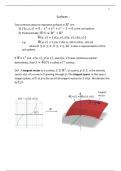
Def. A tangent vector to a surface, 𝑆 ⊆ ℝ3 , at a point, 𝑝 ∈ 𝑆, is the velocity
vector at 𝑝 of a curve in 𝑆 passing through 𝑝. The tangent space, in this case a
tangent plane, of 𝑆 at 𝑝 is the set of all tangent vectors to 𝑆 at 𝑝. We denote this
by 𝑇𝑝 𝑆.
, 2
If γ(𝑡 ) = (𝑢(𝑡 ), 𝑣 (𝑡 )) is a smooth regular curve (i.e. γ′(𝑡) ≠ (0, 0) at any
⃗⃗⃗ (𝑢(𝑡), 𝑣 (𝑡)) is a smooth curve on 𝑆 if Φ
point), then Φ ⃗⃗ is smooth.
By the chain rule:
𝑑
⃗Φ
⃗ (𝑢(𝑡), 𝑣 (𝑡 )) ⃗⃗ 𝑢 (𝑑𝑢) + ⃗Φ
= ⃗Φ ⃗ 𝑣 (𝑑𝑣)
𝑑𝑡 𝑑𝑡 𝑑𝑡
where:
⃗⃗⃗ 𝑢 = (𝜕𝑥 , 𝜕𝑦 , 𝜕𝑧 ) ;
Φ ⃗⃗⃗ 𝑣 = (𝜕𝑥 , 𝜕𝑦 , 𝜕𝑧).
Φ
𝜕𝑢 𝜕𝑢 𝜕𝑢 𝜕𝑣 𝜕𝑣 𝜕𝑣
𝑑
⃗Φ
⃗ (𝑢(𝑡0 ), 𝑣 (𝑡0 )) is a tangent vector to 𝑆 at 𝑝 = ⃗Φ
⃗ (𝑢(𝑡0 ), 𝑣 (𝑡0 )).
𝑑𝑡
In fact if we take 𝑢(𝑡 ) = 𝑡, 𝑣 (𝑡 ) = 0, we see that ⃗Φ
⃗ 𝑢 is a tangent vector to 𝑆
at 𝑝. Similarly, if we take 𝑢(𝑡 ) = 0, 𝑣 (𝑡 ) = 𝑡, we see ⃗Φ
⃗⃗ 𝑣 is a tangent vector to
𝑆 at 𝑝.
⃗⃗ (𝑢, 𝑣) is called a regular surface at Φ
Def. 𝑆 = Φ ⃗⃗⃗ (𝑢0 , 𝑣0 ) if:
⃗Φ ⃗ 𝑣 (𝑢0 , 𝑣0 ) ≠ ⃗0
⃗⃗ 𝑢 (𝑢0 , 𝑣0 ) × ⃗Φ
The surface is called regular if it is regular at every point.
Notice that Φ ⃗ 𝑣 ≠ ⃗0 means that Φ
⃗⃗⃗ 𝑢 × ⃗Φ ⃗⃗ 𝑢 and Φ ⃗⃗⃗ 𝑣 are a basis for the tangent
space of 𝑆 at 𝑝, because ⃗Φ
⃗ 𝑢 and ⃗Φ
⃗⃗ 𝑣 are linearly independent so they must span
the tangent plane at 𝑝.
Surfaces
Two common ways to represent surfaces in ℝ3 are:
1) 𝑓(𝑥, 𝑦, 𝑧) = 0 ; 𝑥 2 + 𝑦 2 + 𝑧 2 − 1 = 0 is the unit sphere
2) Parametrically: Φ ⃗⃗⃗ : 𝑈 ⊆ ℝ2 → ℝ3
⃗Φ⃗⃗ (𝑢, 𝑣 ) = (𝑥(𝑢, 𝑣 ), 𝑦(𝑢, 𝑣 ), 𝑧(𝑢, 𝑣 ))
e.g. ⃗Φ
⃗ (𝑢, 𝑣 ) = (cos 𝑣 sin 𝑢 , sin 𝑣 sin 𝑢 , cos 𝑢)
where 0 ≤ 𝑢 ≤ 𝜋 , 0 ≤ 𝑣 ≤ 2𝜋 is also a representation of the
unit sphere.
If ⃗Φ
⃗ is 𝐶 1 (i.e. 𝑥 (𝑢, 𝑣 ), 𝑦(𝑢, 𝑣 ), and 𝑧(𝑢, 𝑣) have continuous partial
derivatives), then 𝑆 = ⃗Φ
⃗ (𝑈) is called a 𝐶 1 surface.
Def. A tangent vector to a surface, 𝑆 ⊆ ℝ3 , at a point, 𝑝 ∈ 𝑆, is the velocity
vector at 𝑝 of a curve in 𝑆 passing through 𝑝. The tangent space, in this case a
tangent plane, of 𝑆 at 𝑝 is the set of all tangent vectors to 𝑆 at 𝑝. We denote this
by 𝑇𝑝 𝑆.
, 2
If γ(𝑡 ) = (𝑢(𝑡 ), 𝑣 (𝑡 )) is a smooth regular curve (i.e. γ′(𝑡) ≠ (0, 0) at any
⃗⃗⃗ (𝑢(𝑡), 𝑣 (𝑡)) is a smooth curve on 𝑆 if Φ
point), then Φ ⃗⃗ is smooth.
By the chain rule:
𝑑
⃗Φ
⃗ (𝑢(𝑡), 𝑣 (𝑡 )) ⃗⃗ 𝑢 (𝑑𝑢) + ⃗Φ
= ⃗Φ ⃗ 𝑣 (𝑑𝑣)
𝑑𝑡 𝑑𝑡 𝑑𝑡
where:
⃗⃗⃗ 𝑢 = (𝜕𝑥 , 𝜕𝑦 , 𝜕𝑧 ) ;
Φ ⃗⃗⃗ 𝑣 = (𝜕𝑥 , 𝜕𝑦 , 𝜕𝑧).
Φ
𝜕𝑢 𝜕𝑢 𝜕𝑢 𝜕𝑣 𝜕𝑣 𝜕𝑣
𝑑
⃗Φ
⃗ (𝑢(𝑡0 ), 𝑣 (𝑡0 )) is a tangent vector to 𝑆 at 𝑝 = ⃗Φ
⃗ (𝑢(𝑡0 ), 𝑣 (𝑡0 )).
𝑑𝑡
In fact if we take 𝑢(𝑡 ) = 𝑡, 𝑣 (𝑡 ) = 0, we see that ⃗Φ
⃗ 𝑢 is a tangent vector to 𝑆
at 𝑝. Similarly, if we take 𝑢(𝑡 ) = 0, 𝑣 (𝑡 ) = 𝑡, we see ⃗Φ
⃗⃗ 𝑣 is a tangent vector to
𝑆 at 𝑝.
⃗⃗ (𝑢, 𝑣) is called a regular surface at Φ
Def. 𝑆 = Φ ⃗⃗⃗ (𝑢0 , 𝑣0 ) if:
⃗Φ ⃗ 𝑣 (𝑢0 , 𝑣0 ) ≠ ⃗0
⃗⃗ 𝑢 (𝑢0 , 𝑣0 ) × ⃗Φ
The surface is called regular if it is regular at every point.
Notice that Φ ⃗ 𝑣 ≠ ⃗0 means that Φ
⃗⃗⃗ 𝑢 × ⃗Φ ⃗⃗ 𝑢 and Φ ⃗⃗⃗ 𝑣 are a basis for the tangent
space of 𝑆 at 𝑝, because ⃗Φ
⃗ 𝑢 and ⃗Φ
⃗⃗ 𝑣 are linearly independent so they must span
the tangent plane at 𝑝.