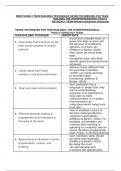
D025 PHASE 2 TEAM BUILDING TECHNIQUES SEVEN TECHNIQUES FOR TEAM
BUILDING THE INTERPROFESSIONAL POLICY
ADVOCACY TEAM Western Governors University
SEVEN TECHNIQUES FOR TEAM BUILDING: THE INTERPROFESSIONAL
POLICY ADVOCACY TEAM
TEAM BUILDING TECHNIQUE IMPORTANCE
- must have a shared vision or
1. Clear goals that everyone on the goals that align or team will
fail because of conflicting
team works towards or shared opinions, turf wars, etc
purpose (DeNisco & Barker, 2016)
- clear goals set are to keep
team
focused/on track with what
specific goals are needed to be
achieved
- without clearly defined roles
2. Clarity about each team for each team member,
conflict can result and lead
member’s role and contribution
to decrease team
functioning (DeNisco &
Barker, 2016).
- each profession has a
3. Clear and open communication language or jargon that may
not be understood by
everyone. It is important to
have open & frank
communication in a context
that everyone can
understand which helps build
trust also
- vital to establish culture of
4. Effective decision making & decision making/collective
cognitive responsibility
engagement of all members in
(DeNisco & Barker, 2016). For
the work of the team example, all members are
involved with reaching or
agreeing to a majority vote on
issues therefore engaging the
team mates, & allowing sharing
- each members voice should
5. Appreciation of diversity in terms be heard and respected
(DeNisco & Barker, 2016).
of generation, culture, and By doing this trust
thinking can also develop and
members feel appreciated,
BUILDING THE INTERPROFESSIONAL POLICY
ADVOCACY TEAM Western Governors University
SEVEN TECHNIQUES FOR TEAM BUILDING: THE INTERPROFESSIONAL
POLICY ADVOCACY TEAM
TEAM BUILDING TECHNIQUE IMPORTANCE
- must have a shared vision or
1. Clear goals that everyone on the goals that align or team will
fail because of conflicting
team works towards or shared opinions, turf wars, etc
purpose (DeNisco & Barker, 2016)
- clear goals set are to keep
team
focused/on track with what
specific goals are needed to be
achieved
- without clearly defined roles
2. Clarity about each team for each team member,
conflict can result and lead
member’s role and contribution
to decrease team
functioning (DeNisco &
Barker, 2016).
- each profession has a
3. Clear and open communication language or jargon that may
not be understood by
everyone. It is important to
have open & frank
communication in a context
that everyone can
understand which helps build
trust also
- vital to establish culture of
4. Effective decision making & decision making/collective
cognitive responsibility
engagement of all members in
(DeNisco & Barker, 2016). For
the work of the team example, all members are
involved with reaching or
agreeing to a majority vote on
issues therefore engaging the
team mates, & allowing sharing
- each members voice should
5. Appreciation of diversity in terms be heard and respected
(DeNisco & Barker, 2016).
of generation, culture, and By doing this trust
thinking can also develop and
members feel appreciated,