1
Directional Derivatives and Gradients
So far, given 𝑧 = 𝑓(𝑥, 𝑦), we have the partial derivatives at (𝑥0 , 𝑦0 ):
𝑓 (𝑥0 + ℎ, 𝑦0 ) − 𝑓(𝑥0 , 𝑦0 )
𝑓𝑥 (𝑥0 , 𝑦0 ) = lim
ℎ→0 ℎ
𝑓 (𝑥0 , 𝑦0 + ℎ) − 𝑓(𝑥0 , 𝑦0 )
𝑓𝑦 (𝑥0 , 𝑦0 ) = lim
ℎ→0 ℎ
𝑓𝑥 is the rate of change of 𝑧 in the 𝑥 direction (in direction of 𝑖⃑) and 𝑓𝑦 is the rate
of change of 𝑧 in the 𝑦 direction (in direction of 𝑗⃑).
How do we find the rate of change of 𝑧 in the direction of any (unit) vector
< 𝑎, 𝑏 > = 𝑢
⃑⃑ ?
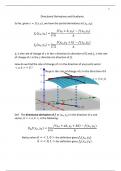
Slope is the rate of change of 𝑧 in the direction of 𝑢
⃑
𝑧 = 𝑓(𝑥, 𝑦)
𝐶
(𝑥0 , 𝑦0 ) 𝑢
⃑
(𝑥, 𝑦)
Def. The directional derivative of 𝒇 at (𝑥0 , 𝑦0 ) in the direction of a unit
vector, 𝑢
⃑⃑ = < 𝑎, 𝑏 >, is the following:
𝑓(𝑥0 + 𝑎ℎ, 𝑦0 + 𝑏ℎ) − 𝑓(𝑥0 , 𝑦0 )
𝐷𝑢⃑⃑ 𝑓(𝑥0 , 𝑦0 ) = lim
ℎ→0 ℎ
Notice when 𝑢
⃑⃑ = < 1, 0 > the definition gives 𝑓𝑥 (𝑥0 , 𝑦0 )
⃑⃑ = < 0, 1 > the definition gives 𝑓𝑦 (𝑥0 , 𝑦0 ).
𝑢
, 2
That is: 𝐷𝑖⃑𝑓(𝑥0 , 𝑦0 ) = 𝑓𝑥 (𝑥0 , 𝑦0 )
𝐷𝑗 𝑓(𝑥0 , 𝑦0 ) = 𝑓𝑦 (𝑥0 , 𝑦0 ).
Theorem: If 𝑓 is a differentiable function of 𝑥 and 𝑦, then 𝑓 has a
directional derivative in the direction of any unit vector, 𝑢
⃑⃑ = < 𝑎, 𝑏 >, and:
𝐷𝑢⃑⃑ 𝑓(𝑥0 , 𝑦0 ) = 𝑓𝑥 (𝑥0 , 𝑦0 )𝑎 + 𝑓𝑦 (𝑥0 , 𝑦0 )𝑏.
Proof: Define a function of ℎ by 𝑔(ℎ) = 𝑓(𝑥0 + ℎ𝑎, 𝑦0 + ℎ𝑏),
then by definition
𝑔(ℎ) − 𝑔(0) 𝑓 (𝑥0 + 𝑎ℎ, 𝑦0 + 𝑏ℎ) − 𝑓(𝑥0 , 𝑦0 )
𝑔′ (0) = lim = lim
ℎ→0 ℎ ℎ→0 ℎ
= 𝐷𝑢⃑⃑ 𝑓(𝑥0 , 𝑦0 ).
On the other hand, we can write: 𝑔(ℎ) = 𝑓(𝑥, 𝑦) where
𝑥 = 𝑥0 + 𝑎ℎ
𝑦 = 𝑦0 + 𝑏ℎ
By the Chain Rule:
𝜕𝑓 𝑑𝑥 𝜕𝑓 𝑑𝑦
𝑔′ (ℎ) = + = 𝑓𝑥 (𝑥, 𝑦)𝑎 + 𝑓𝑦 (𝑥, 𝑦)𝑏.
𝜕𝑥 𝑑ℎ 𝜕𝑦 𝑑ℎ
When ℎ = 0 ; 𝑥 = 𝑥0 , 𝑦 = 𝑦0 we get:
𝑔′ (0) = 𝑓𝑥 (𝑥0 , 𝑦0 )𝑎 + 𝑓𝑦 (𝑥0 , 𝑦0 )𝑏
So we have:
𝐷𝑢⃑⃑ 𝑓(𝑥, 𝑦) = 𝑓𝑥 (𝑥, 𝑦)𝑎 + 𝑓𝑦 (𝑥, 𝑦)𝑏.
Notice that:
𝐷𝑢⃑⃑ 𝑓(𝑥, 𝑦) = 𝑓𝑥 (𝑥, 𝑦)𝑎 + 𝑓𝑦 (𝑥, 𝑦)𝑏 = < 𝑓𝑥 (𝑥, 𝑦), 𝑓𝑦 (𝑥, 𝑦) >∙< 𝑎, 𝑏 >
So we can write: 𝐷𝑢⃑⃑ 𝑓(𝑥, 𝑦) = ∇𝑓(𝑥, 𝑦) ∙ 𝑢
⃑⃑.
Directional Derivatives and Gradients
So far, given 𝑧 = 𝑓(𝑥, 𝑦), we have the partial derivatives at (𝑥0 , 𝑦0 ):
𝑓 (𝑥0 + ℎ, 𝑦0 ) − 𝑓(𝑥0 , 𝑦0 )
𝑓𝑥 (𝑥0 , 𝑦0 ) = lim
ℎ→0 ℎ
𝑓 (𝑥0 , 𝑦0 + ℎ) − 𝑓(𝑥0 , 𝑦0 )
𝑓𝑦 (𝑥0 , 𝑦0 ) = lim
ℎ→0 ℎ
𝑓𝑥 is the rate of change of 𝑧 in the 𝑥 direction (in direction of 𝑖⃑) and 𝑓𝑦 is the rate
of change of 𝑧 in the 𝑦 direction (in direction of 𝑗⃑).
How do we find the rate of change of 𝑧 in the direction of any (unit) vector
< 𝑎, 𝑏 > = 𝑢
⃑⃑ ?
Slope is the rate of change of 𝑧 in the direction of 𝑢
⃑
𝑧 = 𝑓(𝑥, 𝑦)
𝐶
(𝑥0 , 𝑦0 ) 𝑢
⃑
(𝑥, 𝑦)
Def. The directional derivative of 𝒇 at (𝑥0 , 𝑦0 ) in the direction of a unit
vector, 𝑢
⃑⃑ = < 𝑎, 𝑏 >, is the following:
𝑓(𝑥0 + 𝑎ℎ, 𝑦0 + 𝑏ℎ) − 𝑓(𝑥0 , 𝑦0 )
𝐷𝑢⃑⃑ 𝑓(𝑥0 , 𝑦0 ) = lim
ℎ→0 ℎ
Notice when 𝑢
⃑⃑ = < 1, 0 > the definition gives 𝑓𝑥 (𝑥0 , 𝑦0 )
⃑⃑ = < 0, 1 > the definition gives 𝑓𝑦 (𝑥0 , 𝑦0 ).
𝑢
, 2
That is: 𝐷𝑖⃑𝑓(𝑥0 , 𝑦0 ) = 𝑓𝑥 (𝑥0 , 𝑦0 )
𝐷𝑗 𝑓(𝑥0 , 𝑦0 ) = 𝑓𝑦 (𝑥0 , 𝑦0 ).
Theorem: If 𝑓 is a differentiable function of 𝑥 and 𝑦, then 𝑓 has a
directional derivative in the direction of any unit vector, 𝑢
⃑⃑ = < 𝑎, 𝑏 >, and:
𝐷𝑢⃑⃑ 𝑓(𝑥0 , 𝑦0 ) = 𝑓𝑥 (𝑥0 , 𝑦0 )𝑎 + 𝑓𝑦 (𝑥0 , 𝑦0 )𝑏.
Proof: Define a function of ℎ by 𝑔(ℎ) = 𝑓(𝑥0 + ℎ𝑎, 𝑦0 + ℎ𝑏),
then by definition
𝑔(ℎ) − 𝑔(0) 𝑓 (𝑥0 + 𝑎ℎ, 𝑦0 + 𝑏ℎ) − 𝑓(𝑥0 , 𝑦0 )
𝑔′ (0) = lim = lim
ℎ→0 ℎ ℎ→0 ℎ
= 𝐷𝑢⃑⃑ 𝑓(𝑥0 , 𝑦0 ).
On the other hand, we can write: 𝑔(ℎ) = 𝑓(𝑥, 𝑦) where
𝑥 = 𝑥0 + 𝑎ℎ
𝑦 = 𝑦0 + 𝑏ℎ
By the Chain Rule:
𝜕𝑓 𝑑𝑥 𝜕𝑓 𝑑𝑦
𝑔′ (ℎ) = + = 𝑓𝑥 (𝑥, 𝑦)𝑎 + 𝑓𝑦 (𝑥, 𝑦)𝑏.
𝜕𝑥 𝑑ℎ 𝜕𝑦 𝑑ℎ
When ℎ = 0 ; 𝑥 = 𝑥0 , 𝑦 = 𝑦0 we get:
𝑔′ (0) = 𝑓𝑥 (𝑥0 , 𝑦0 )𝑎 + 𝑓𝑦 (𝑥0 , 𝑦0 )𝑏
So we have:
𝐷𝑢⃑⃑ 𝑓(𝑥, 𝑦) = 𝑓𝑥 (𝑥, 𝑦)𝑎 + 𝑓𝑦 (𝑥, 𝑦)𝑏.
Notice that:
𝐷𝑢⃑⃑ 𝑓(𝑥, 𝑦) = 𝑓𝑥 (𝑥, 𝑦)𝑎 + 𝑓𝑦 (𝑥, 𝑦)𝑏 = < 𝑓𝑥 (𝑥, 𝑦), 𝑓𝑦 (𝑥, 𝑦) >∙< 𝑎, 𝑏 >
So we can write: 𝐷𝑢⃑⃑ 𝑓(𝑥, 𝑦) = ∇𝑓(𝑥, 𝑦) ∙ 𝑢
⃑⃑.